Bats Are Cute. Prove Me Wrong.

Sometimes, daily prompts are quite wonderfully bizarre. For example:

Jot down the first thing that comes to your mind.

Okay, you asked for it. The very first thing …

Bats are cute. A lot cuter than people give them credit for.

Maybe I should have waited until Halloween to do this.

Anyway, bats are adorable and get a bad rap for being scary, bloodsucking, grotesque monsters akin to rats on wings. This is untrue and unjust to bats. Even ugly bats wrap around the event horizon and come shooting back out into the realm of cuteness. Bats deserve to be respected.

I mean, look at this. Is this the terror that flaps in the night? No, it’s a cute little baby bundle of fluff. Or this. And this, too. Respect the bat!

And that’s all I have to say about that. The first thing that came to mind for today’s blog post.

***

Many thanks for visiting my blog. I post updates on my writing career, I muse over storytelling and fiction, and I reflect on the curious and wonderful things in life.

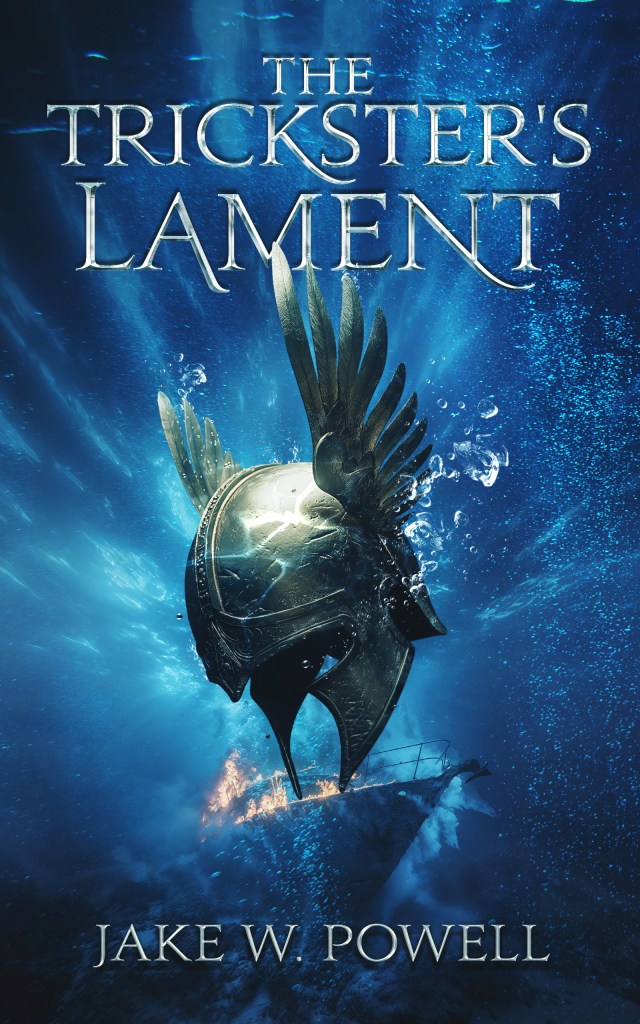
“Hermes is not having the best time. He walks a fine line, and his duty as messenger of Olympus weighs heavily on him. Being a god in the modern age means living in a world that no longer believes in gods. How much can one deity accomplish when no one respects him anymore? And why do his instincts tell him that he, the son of Zeus, is losing favor with his own family?

Tensions abound. The upstart Young Gods play dangerous games using entire cities as their boards. Formless monsters strike from the nighttime shadows, terrorizing hapless mortals. Agents of rival pantheons scheme to thwart Olympus’ designs. In the thick of it all, Hermes does what he does best: trick, lie, and cheat his way to victory.

Reasons to Laugh

What makes you laugh?

I laugh at irony. I laugh at observations on the absurdities of life. I laugh at wordplay and cleverness. I enjoy sardonic jokes, jokes that push themselves up from the common denominator. I like humor that people put effort into, that has a setup and a punchline that makes you think for a moment, scratch your head, and then break out laughing.

I like being a bit of a gadfly. Nothing taken too far, but I get a giggle out of throwing people for a loop. Maybe I’m a Groucho Marx at heart, with a sharp tongue that I need to keep in check. But then, sometimes I’m laughing inside, watching politely and quietly as the world goes insane and carries itself with the utmost seriousness like a toad in a tuxedo being interviewed on the red carpet. Inside, I’m roaring.

The world isn’t getting madder; it’s always been mad. Lewis Carroll knew, and so did Abbott and Costello. Jonathan Swift was dead certain and let everyone know it. The Three Stooges made it abundantly clear. Donald Duck and Mickey Mouse proclaimed it with pomp and ceremony. Life is weird, and all the more so because we pretend it isn’t. The world goes on in utmost seriousness, and that makes me laugh, because if you ignore the layers of respectability, the jokes write themselves. An innocent child laughs at what adults believe is the most important thing in the world.

Most of all, I laugh at myself. We pretend that we can’t laugh at ourselves, that we are serious people on a serious Earth, but often that is who we should laugh at the most. So, laugh a little.

***

Many thanks for visiting my blog. I post updates on my writing career, I muse over storytelling and fiction, and I reflect on the curious and wonderful things in life.

“Hermes is not having the best time. He walks a fine line, and his duty as messenger of Olympus weighs heavily on him. Being a god in the modern age means living in a world that no longer believes in gods. How much can one deity accomplish when no one respects him anymore? And why do his instincts tell him that he, the son of Zeus, is losing favor with his own family?

Tensions abound. The upstart Young Gods play dangerous games using entire cities as their boards. Formless monsters strike from the nighttime shadows, terrorizing hapless mortals. Agents of rival pantheons scheme to thwart Olympus’ designs. In the thick of it all, Hermes does what he does best: trick, lie, and cheat his way to victory.

A Little Room for Failure

Heeded my words not, did you? Pass on what you have learned. Strength, mastery. But weakness, folly, failure also. Yes, failure most of all. The greatest teacher, failure is.

Master Yoda, The Last Jedi

Leave it to the most controversial Star Wars movie to present one of the best lessons in the series. While people debate and rage over The Last Jedi’s merits as a film, an extremely valuable and important real life lesson slips by unnoticed. Somehow appropriate, in a poetic sort of way.


Failure is a fact of life, and it sticks with you more than success. It has a knack for engraving itself in your memory, whereas success is more like a sticker that peels off easily.


But what wise Master Yoda says (and many, many others beforehand – the quote didn’t originate with him) is true: Failure is a teacher. Do we learn from success? We are supposed to succeed, says society at large, and thus we tend to take it for granted. The shock of failing is a slap in the face. The wise person takes time to evaluate this shock and think over what went wrong.


When you fail and learn how you failed, you understand how to avoid making the same mistakes. You also learn generally uncomfortable truths, such as the limits of your abilities, your blind spots, skills that you need to practice or simply don’t have. So, you can either fail and learn and move on with life, or fail again and again in the exact same way, refusing to learn at all. Which is worse?


Failure is good and, dare I say, healthy. Kids should be allowed to fail at school. We shouldn’t be scared to let our children flunk exams. They’re in school to learn, so let them learn. And we adults aren’t so infallible, either. We mess up and trip over problems and don’t always make the right choices. We’re always learning, from our own mistakes and from others’.


So, don’t be afraid of failure. It will happen. When you goof up, it’s better to learn and move on than brood over a missed victory. Life has plenty of victories, but they tend to stay mum over their secret. Failure is always eager to teach.

***

Many thanks for visiting my blog. I post updates on my writing career, I muse over storytelling and fiction, and I reflect on the curious and wonderful things in life.

“Hermes is not having the best time. He walks a fine line, and his duty as messenger of Olympus weighs heavily on him. Being a god in the modern age means living in a world that no longer believes in gods. How much can one deity accomplish when no one respects him anymore? And why do his instincts tell him that he, the son of Zeus, is losing favor with his own family?

Tensions abound. The upstart Young Gods play dangerous games using entire cities as their boards. Formless monsters strike from the nighttime shadows, terrorizing hapless mortals. Agents of rival pantheons scheme to thwart Olympus’ designs. In the thick of it all, Hermes does what he does best: trick, lie, and cheat his way to victory.

A Letter to 100-Year-Old Me

Write a letter to your hundred-year-old self.

Well, Jake, I have a few things to say. First of all, since you’re such a worrywort, I just want to let you know that if you’re whining and cringing over how much worse society has gotten, let me remind you that it always had problems and they’re probably still the same ones. Get over it and carry on.

I am curious, though, if someone finally invented functional jetpacks or rocket cars. Are they affordable? Do they make traffic better or worse? I kind of doubt they’re around though, are they? Back to the Future thought we’d have hoverboards and weather control by 2015, after all. And that Jaws would still be getting sequels.

Speaking of entertainment, is virtual reality still a thing? If it is, are they making VR movies yet? I don’t mean demos, I mean full, 120-minute films. I’d love to know how those turned out.

You’ve lived a long life and seen a lot of things happen. More than most people in the last millennium could expect to see in their lifetime. A lot of it is amazing and wonderful. A lot of it is probably scary and disappointing. But that’s life in general – good and bad, sweet and sour. Some people bemoan modern times as the downfall of civilization. I imagine they said the same thing when the Roman Empire fell, and when the Normans invaded England, and in between the fall of every Chinese dynasty, and when Disney bought Marvel Comics.

You’ve lived a long life, and I know you’ve learned to make the best of it. Maybe you managed to do everything you wanted to do. Maybe you didn’t, but knowing how life goes, you’ve probably been surprised by good things you never saw coming. Either way, just remember this tidbit: Life is too short to spend in regret and frustration. Relax, take what comes, and do your best. Enjoy it.

Best regards from 2025 A.D.

***

My latest book, The Trickster’s Lament, is currently available on Amazon in both Kindle and paperback format.

“Hermes is not having the best time. He walks a fine line, and his duty as messenger of Olympus weighs heavily on him. Being a god in the modern age means living in a world that no longer believes in gods. How much can one deity accomplish when no one respects him anymore? And why do his instincts tell him that he, the son of Zeus, is losing favor with his own family?

Tensions abound. The upstart Young Gods play dangerous games using entire cities as their boards. Formless monsters strike from the nighttime shadows, terrorizing hapless mortals. Agents of rival pantheons scheme to thwart Olympus’ designs. In the thick of it all, Hermes does what he does best: trick, lie, and cheat his way to victory.

Many thanks for visiting my blog. I post updates on my writing career, I muse over storytelling and fiction, and I reflect on the curious and wonderful things in life.

Thoughts on Boredom

What bores you?

Boredom bores me. Okay, that’s a bit of a glib answer. Let me try again.

What bores me? Being unable to exercise my artistic skills. Being unable to imagine and create gets under my skin if I’m not careful. Maybe it’s a curse of the artistic mind, but I often feel like I need to create , to write something down and let my flight of fancy run its course.

However, I’ve learned that there is a distinct difference between being bored and embracing boredom. Boredom doesn’t bar me from productivity in other areas of my life and doesn’t condemn me to sit around twiddling my thumbs, lamenting the ennui of my existence. It just means I need to be a little patient. I have a job and other obligations. They come first. They are a responsibility and a privilege. I’m not in a place right now where I can make a living off my creativity. Writing books is a hobby, so it oftentimes simply cannot be a priority.

Are there times when I wish I was elsewhere doing something I consider more interesting? Well, yes, but that’s part of growing up. Play is the work of children. Work is the work of adults. Boredom is a side effect and a nuisance. I wish I could write 24/7, but I can’t. So, I learn to persevere through the boring times. They don’t last forever. It’s a fact of life, and it makes times of relaxation and artistic indulgence all the more sweet.

***

My latest book, The Trickster’s Lament, is currently available on Amazon in both Kindle and paperback format.

“Hermes is not having the best time. He walks a fine line, and his duty as messenger of Olympus weighs heavily on him. Being a god in the modern age means living in a world that no longer believes in gods. How much can one deity accomplish when no one respects him anymore? And why do his instincts tell him that he, the son of Zeus, is losing favor with his own family?

Tensions abound. The upstart Young Gods play dangerous games using entire cities as their boards. Formless monsters strike from the nighttime shadows, terrorizing hapless mortals. Agents of rival pantheons scheme to thwart Olympus’ designs. In the thick of it all, Hermes does what he does best: trick, lie, and cheat his way to victory.

Many thanks for visiting my blog. I post updates on my writing career, I muse over storytelling and fiction, and I reflect on the curious and wonderful things in life.

I Long to Destroy a Single Word

If you could permanently ban a word from general usage, which one would it be? Why?

Censorship is something I generally take a dim view of, but if I was given the power to ban just one word, I would ban – well, let’s see, there are several words that irk me, but if I had to pick only one

Literally. I would scour all media and erase the word “literally” from existence.

I acknowledge that language evolves. It changes. Meanings change. What a word meant last decade is completely unrelated to its usage today. But that doesn’t mean I have to like the evolution of a word that originally described a thing or action conforming to its own description as fact rather than metaphor, i. e., the expression “hit the road” taken literally by beating the pavement with a stick or someone who is “feeling blue” literally turning a shade of blue. The adverb once had a very specific meaning that applied in very specific circumstances, and using it outside of that purpose was incorrect.

Oh, how the mighty have fallen.

That was literally the best concert I’ve ever been to. Stephen Spielberg is literally the best director in history. I literally almost died in that car collision. I literally read ten books in a single month. This is literally not how you use the word.

It’s just another word to emphasize a point. Somewhere along the line, someone decided that “really” and “very” and “extremely” and “superlatively” and “quite possibly” and “definitely” were all too boring and decided to give the English language another disembowelment.

And that’s the evolution of language. Words take on entirely new meanings and the old ones are left behind. It’s natural. But that doesn’t mean I have to like it.

The worst part, in my opinion, is that it shrinks our daily vocabulary. “Literally” could be replaced by a slew of options in everyday conversation, but we fall back to the quick and easy method of using one over and over and over again. It’s a shame that we gradually decrease our ability to express ourselves by loading a single word with a hundred different meanings rather than learning a hundred different words with very particular, targeted meanings. It’s more work, true, but it makes speech so much more interesting.

But that’s enough of me preaching. Language is language and things will go the way that society drives them, regardless of whether or not it knows how to steer. If I had the power, I would immolate the word “literally,” sweep up the ashes, and dump them in the sea. Alas, that I cannot literally do such a thing to a word.

***

My latest book, The Trickster’s Lament, is currently available on Amazon in both Kindle and paperback format.

“Hermes is not having the best time. He walks a fine line, and his duty as messenger of Olympus weighs heavily on him. Being a god in the modern age means living in a world that no longer believes in gods. How much can one deity accomplish when no one respects him anymore? And why do his instincts tell him that he, the son of Zeus, is losing favor with his own family?

Tensions abound. The upstart Young Gods play dangerous games using entire cities as their boards. Formless monsters strike from the nighttime shadows, terrorizing hapless mortals. Agents of rival pantheons scheme to thwart Olympus’ designs. In the thick of it all, Hermes does what he does best: trick, lie, and cheat his way to victory.

Many thanks for visiting my blog. I post updates on my writing career, I muse over storytelling and fiction, and I reflect on the curious and wonderful things in life.

A Law for Learning Language

If you had the power to change one law, what would it be and why?

There’s a joke that I’m far too fond of reciting to friends and family. It goes like this:

“If you speak three languages, you’re trilingual. If you speak two languages, you’re bilingual. If you speak only one language, you’re American.”

Sad but true.

If I had the power to change one law in my country, it would be to make mandatory that every American elementary and high school student be taught at least one non-English language. It’s an important skill, especially in a world that is growing more interconnected with every passing year.

English may be the lingua franca of today’s society, and your average English-speaker may be able to travel to nearly any country expecting someone to cater to his limited lingual skills, but that won’t last forever, will it? And besides, just because someone can speak English doesn’t mean they’ll humor you. And they can say mean things about you that you can’t understand.

Alright, cynicism and paranoia aside, besides the practical uses of speaking multiple language is the joy of learning and fluency. It opens doors, it draws people together and, quite frankly, it makes life a little easier if you’re not hobbled by ignorance of what others are saying.

America is a very cosmopolitan place. Lots of ethnicities and cultures exist here. And learning to speak Spanish or Mandarin or Arabic or French when you’re a kid is a lot easier than when you’re an adult.

Someday, I imagine, English won’t be a language that other countries’ students are required to learn. There ought to be a law that thinks that far ahead, and that’s the law I’d like to make: Students must become fluent in another language.

***

My latest book, The Trickster’s Lament, is currently available on Amazon in both Kindle and paperback format.

“Hermes is not having the best time. He walks a fine line, and his duty as messenger of Olympus weighs heavily on him. Being a god in the modern age means living in a world that no longer believes in gods. How much can one deity accomplish when no one respects him anymore? And why do his instincts tell him that he, the son of Zeus, is losing favor with his own family?

Tensions abound. The upstart Young Gods play dangerous games using entire cities as their boards. Formless monsters strike from the nighttime shadows, terrorizing hapless mortals. Agents of rival pantheons scheme to thwart Olympus’ designs. In the thick of it all, Hermes does what he does best: trick, lie, and cheat his way to victory.

Many thanks for visiting my blog. I post updates on my writing career, I muse over storytelling and fiction, and I reflect on the curious and wonderful things in life.

Nostalgia Courtesy of a Snickers Bar

What is your favorite candy?

Food is such a nostalgic thing. Memories of my favorites conjure up childhood memories of family outings and fun with friends. I get warm fuzzies thinking of my mother’s old cooking, or a particularly memorable birthday party, or that one time I was allowed to have a pizza when my parents left me home alone one night. And, of course, the memory of favorite candies.

Mine are Snickers. Nuts and caramel covered in chocolate. Not airy fluff like 3 Musketeers and with more texture than a Kit Kat, Snickers bars are the perfect blend of dense, crunchy, tasty and buttery smooth.

I don’t eat them much anymore, but I remember when I was young that every time I went with my parents on our monthly shopping trip to the navy exchange I would get a Snickers from the candy kiosk before check out. I had to finish it before getting back in the car, or I’d get chocolate stains all over the seat.

Snickers isn’t just a favorite candy. It’s a catalyst for fond memories. I can recall nearly every part of that store: the maze of grocery aisles; the home and garden section with kitchen supplies and clothes and magazines and knick knacks; the garden greenhouse, which had a fun corner where they kept the action figures and other toys; the tiny food court where we occasionally grabbed McDonald’s (and where I confirmed that McDonald’s will never be as good as Burger King).

I haven’t thought about any of this in a long time. Food really is a key to nostalgia’s lock. Good days long gone, but readily remembered with a little gastronomic prompting. I miss them.

***

My latest book, The Trickster’s Lament, is currently available on Amazon in both Kindle and paperback format.

“Hermes is not having the best time. He walks a fine line, and his duty as messenger of Olympus weighs heavily on him. Being a god in the modern age means living in a world that no longer believes in gods. How much can one deity accomplish when no one respects him anymore? And why do his instincts tell him that he, the son of Zeus, is losing favor with his own family?

Tensions abound. The upstart Young Gods play dangerous games using entire cities as their boards. Formless monsters strike from the nighttime shadows, terrorizing hapless mortals. Agents of rival pantheons scheme to thwart Olympus’ designs. In the thick of it all, Hermes does what he does best: trick, lie, and cheat his way to victory.

Many thanks for visiting my blog. I post updates on my writing career, I muse over storytelling and fiction, and I reflect on the curious and wonderful things in life.

If I Won the Lottery

What would you do if you won the lottery?

I’m assuming we’re talking large numbers here. I won four bucks once. It’s still in my wallet.

In all seriousness, if I won a million dollars, I’d invest it. I know, not fancy or decadently extravagant, but what’s the point of having a Lamborghini now when retirement comes and you have no money for food or rent? I’d rather live comfortably in my golden years than stare at my extremely expensive purchases and realize I can’t eat them.

That being said, I doubt I would invest all of it. I think I would put half in savings and keep half for spending on accoutrements more important than fast cars and humongous yachts. Like, say, sturdy clothing, a good, reliable commuter car, maybe a new computer or TV if I felt like splurging. Basics first, then luxuries.

Funny thing about money, the more I imagine having, the more I realize I would want more. Right now, if I were given $20,000, then that would be a lot and I would be satisfied, but if I ever received $1,000,000, all I would think about is why couldn’t it have been $2,000,000? The bigger the number is, the bigger I want the number to be.

Maybe I’m better off not winning the lottery at all … Or just sticking with a million and leaving it at that.

***

My new book, The Trickster’s Lament, is currently available on Amazon in both Kindle and paperback format.

“Hermes is not having the best time. He walks a fine line, and his duty as messenger of Olympus weighs heavily on him. Being a god in the modern age means living in a world that no longer believes in gods. How much can one deity accomplish when no one respects him anymore? And why do his instincts tell him that he, the son of Zeus, is losing favor with his own family?

Tensions abound. The upstart Young Gods play dangerous games using entire cities as their boards. Formless monsters strike from the nighttime shadows, terrorizing hapless mortals. Agents of rival pantheons scheme to thwart Olympus’ designs. In the thick of it all, Hermes does what he does best: trick, lie, and cheat his way to victory.

He may be disrespected. He may be kicked about. He may even be falling out with his pantheon. But Hermes is a trickster. He knows how to play dirty in a world that doesn’t play fair. But though he can best man, beast, and god, he isn’t prepared for his wiliest opponent yet: his own conscience.”

Many thanks for visiting my blog. I post updates on my writing career, I muse over storytelling and fiction, and I reflect on the curious and wonderful things in life.

The Ancient Age of Computers

Write about your first computer.

It was a big deal in my life owning a computer for the first time. Oh, I grew up using my parent’s, but having my own was almost a rite of passage into adulthood.

As many of you already know, I’m a writer, and I’ve been writing for most of my life. My first typed ramblings were done on a word processor, the grandaddy of modern computers where the only thing you could do was type and print. No fonts, no editing, no formatting. The missing link between the typewriter and the computer.

My first proper computer, though, was a birthday gift. It was a big deal, as you might imagine, especially since I was in, what? Fifth or sixth grade? A long time ago, in the days of yore when computers were big solid blocks, the mouse and keyboard were wired, the monitor was tiny, and it was the really big towers tucked away behind the desk that held all the processing power. These were the days of floppy discs that could hold maybe a single magazine issue’s worth of information before filling up and needing you to buy another one. No memory sticks here.

Before touch screens. Before iPhones. Before Bluetooth. Yes, the time when there was only – shudder – dial-up.

Some of you reading this remember dial-up. Using a landline phone connection to hook up to the Internet. When I wanted to go online, I had to tell my parents, because we couldn’t use the phone and be online at the same time. And then there was the sound. All I can really say is, if you know, you know. The sinister symphony of beeps, honks and screaming static. The sound of an age before instant convenience. Back in my day, we waited minutes to get online.

I liked that computer. Well, it was my only one, so I had better like it, but it was fun. Surfing the old version of the web, playing computer games that required actual discs (sometimes more than one for a single game!) and using the old Microsoft Word that came in an actual package rather than be an online service.

But that computer is gone now. It died, as computers tend to do. A moment of silence for the Ancient Age of Computers. But not for dial-up. Dial-up will not be missed.

***

My new book, The Trickster’s Lament, is currently available on Amazon in both Kindle and paperback format.

“Hermes is not having the best time. He walks a fine line, and his duty as messenger of Olympus weighs heavily on him. Being a god in the modern age means living in a world that no longer believes in gods. How much can one deity accomplish when no one respects him anymore? And why do his instincts tell him that he, the son of Zeus, is losing favor with his own family?

Tensions abound. The upstart Young Gods play dangerous games using entire cities as their boards. Formless monsters strike from the nighttime shadows, terrorizing hapless mortals. Agents of rival pantheons scheme to thwart Olympus’ designs. In the thick of it all, Hermes does what he does best: trick, lie, and cheat his way to victory.

He may be disrespected. He may be kicked about. He may even be falling out with his pantheon. But Hermes is a trickster. He knows how to play dirty in a world that doesn’t play fair. But though he can best man, beast, and god, he isn’t prepared for his wiliest opponent yet: his own conscience.”

Many thanks for visiting my blog. I post updates on my writing career, I muse over storytelling and fiction, and I reflect on the curious and wonderful things in life.