Lessons I Learned Writing My First Book, Part 2: Discipline

You’re running at a steady pace. You’ve been running for the past thirty minutes. Sweat streams down your back and drips from your brow onto your nose and neck. The marathon is halfway done. Only halfway. Your thoughts stray. You think of a cold glass of water. You think of resting – just for a moment – and catching your breath. Or maybe longer than a moment. You ran half a marathon. That’s good enough.

But you don’t stop. You keep running. You stumble and nearly trip. You regain your balance. You find your rhythm again and keep running. You feel out of breath. Now, the temptation to stop feels more like a necessity. Can’t finish the marathon if you can’t breathe. You feel like you’ll faint from exhaustion.

You remember your breathing exercises. You’ve trained for this. And you find your second wind. A burst of new energy propels you forward. You keep running. At last, you reach the end.

Marathons are a discipline. They take training, practice, and the determination to finish what you started. Writing is the same way. Crafting a book isn’t a quick sprint. It’s not a pole vault or long jump where you throw all of your strength into a few seconds of exertion. Writers must pace themselves and must be willing to get up every day, sit down at their computer, avoid the temptation to get hooked on Youtube or Facebook, and write their word count for the day.

For all that we exalt discipline and admire it in people, it’s not exactly the most well-practiced quality. We like people who accomplish great things: maybe build a skyscraper, or paint a masterpiece, or simply make a million bucks. We look at those people and we think how much patience and hard work must have gone into their achievements. We see the results of discipline, and think we should give it a go, but so many of us just can’t push ourselves. Why? Because discipline sucks.

It’s a slow-burning candle. It isn’t fancy and it isn’t glamorous. The results of discipline are glamorous. That fancy skyscraper, that painting, those million dollars. Wowee! I want that! But putting in the work is a pain.

Writing isn’t exactly a glamorous, exciting process either. Silently typing away at a computer doesn’t make for a great show. It’s not something you show off to others. “Look, Bob, watch me write my story! Isn’t it so cool?” Yeah, nobody’s going to care about the process. They want to see the end product.

Do you want to write? I mean really write, as a lifelong hobby or career? Do you envision yourself as a published author? That vision is the end result of discipline. You must train yourself to write on a schedule that works for you. Every day, every couple days, whatever you find works best. And then you must train yourself to be consistent about it. It’s not always pleasant, especially starting out, but it does get easier over time.

I have a day job. I had to find the time to write. Frequently, coming home from work, I didn’t want to. But I did it anyway. And the end result is, I wrote a book! I published it! I accomplished what I set out to do!

I don’t meant to scare away any of you potential writers out there. But writing can feel like a chore at times. Even so, when we set our minds to doing the things we love, we’ll make the time and effort to do them. But it does take dedication. Dreams are all well and good, but they’re nothing without action, and discipline demands action. Even a dream job has its drudgery, right?

And it’s sweeter in the end, to run toward your goal and finally reach it after a long, tiring run.

The gods and beings of ancient myth never went away. They just moved on with the times.

My book, A God Walks up to the Bar, is currently available on Amazon.com. Venture into the world of the Greek god Hermes, a world filled with demigods, vampires, nymphs, ogres, magic, and trickery. It’s a tough job, being a god!

Enjoying my blog? Don’t want to miss a single post? Subscribe for updates on when I post and follow my writing career, musings on fiction and storytelling, and reflections about life in general!

Lessons I Learned Writing My First Book, Part 1

My first book was quite the educational experience. There’s nothing quite like diving into a new challenge and learning as you go. It’s sink or swim, sometimes, and not knowing quite what you’re doing is as exhilarating as it is terrifying!

So, I’ve made it through, and looking back on the years-long trek, I realize that I actually may have learned a thing or two. Not just the technical aspects of writing, but general takeaways, as well. So, for all you fellow authors out there, and those of you who are thinking of entering the wonderful world of writing, here are my lessons learned from writing my first book.

First and foremost: Discipline. Writing takes effort. More than that, it takes the willingness to sit down and just do the work. It takes a willingness to push yourself beyond your boundaries, to organize a time that’s best for writing, and just do it. Dedication is a big part of being an author, because writing takes time, and time is precious, right? You got to be willing to make that sacrifice.

Writing also taught me perseverance. I felt like I was running a marathon when I was writing my book. It’s not a quick and easy thing when writing a book of any length. This isn’t a blog article or a social media post. I was in it for the long haul, and sometimes I just felt apathetic about what I was doing. I wondered if there was even a point to writing, if it would mean anything in the end. That’s when I had to roll up my sleeves and keep going. You got to be willing to motor on.

Thirdly, I learned patience. Writing takes lots and lots of patience. Whether words come easily to you when you write or not, the process is not necessarily a quick one. Maybe that first draft takes no time at all, but then you got to go back and revise. And revise again. And again. And then you get it read by beta readers. And by editors. And then you go back and write a new draft. You got to be willing to be patient to make your story the best it can be.

And finally, the hardest lesson of all: Humility. To be a published writer means putting your work – and yourself – out there for all to see. That makes you feel quite vulnerable at times. Putting out your book invites criticism and commentary, some positive, some not. When I first gave out drafts of my book to be read by others, I got a heaping helping of flaws and bad habits set down before me. It’s not pleasant, but it’s needed. You got to be willing to admit you’re not perfect and develop a tough skin to take necessary criticism.

That’s the quick summary. Over the next week or so, I’d like to dive deeper into each lesson and go into more detail about how I grew over the course of this book. I hope you all enjoy it!

The gods and beings of ancient myth never went away. They just moved on with the times.

My book, A God Walks up to the Bar, is currently available on Amazon.com. Venture into the world of the Greek god Hermes, a world filled with demigods, vampires, nymphs, ogres, magic, and trickery. It’s a tough job, being a god!

Enjoying my blog? Don’t want to miss a single post? Subscribe for updates on when I post and follow my writing career, musings on fiction and storytelling, and reflections about life in general!
Mind of a Child: Confidence and Growing Up

As a child, I looked at adults with a mixture of awe and envy. Oh, if only I could be like an adult, always knowing the right thing to say and the right thing to do! My parents could do no wrong, my teachers knew everything. Adults made everything better because they knew exactly what to do in every situation.

Then I became an adult.

We don’t know any better as children, do we? Lacking any breadth of experience, we don’t understand that nobody has any real idea what they’re doing. We’re all sort of stumbling through life, learning as we go, getting tossed into the deep end of the pool and working out how to tread water just enough to keep from sinking. It’s equal parts fun and terrifying. We’re all figuring it out together.

And we adults get philosophical about everything. What’s it all about? Why are we here? How can we do right? All the big questions.

Kids are cool. They don’t let deep thoughts and existential angst get in the way of living. They accept what they’re told, but are just innocent enough to ask those piercing questions that puncture our adult pretensions. It is grown-ups who tie themselves into knots trying to justify and rationalize every action they take at every moment of every day. Or maybe that’s just me. Ah, the tortured mind of the intellectual.

In all seriousness, confidence is a good thing. In many ways, kids are more confident than adults. They trust adult authorities because the thought of them being wrong doesn’t enter their minds. They trust things to work out without hesitation. They enjoy life wholeheartedly and unironically.

Confidence is an attitude. It’s not the magic formula to a perfect life, but it sure can help us endure hard times. Why? Because we become willing to work to succeed. If we expect to fail, we’re probably going to. And while failure isn’t something we should be afraid of, is it really healthy to sabotage ourselves? Where would the world be if we didn’t put our best foot forward and give it our all?

Kids give it their all. Childlike enthusiasm is a force of nature. When you see children playing on the playground, don’t you see the sheer grit and determination and lack of hesitation to throw themselves into their play? Kids never stop and have no fear, as many weary parents can attest to.

It’s funny. As children, we want to be adults. As adults, we envy the life of a child. I respect kids. They see the world differently and a little more simply than we clever grown-ups do. Maybe a confident and peaceful attitude comes from simplicity. Simple living, simple comforts, simple enjoyments. Or maybe I’m overthinking things … again.

Enjoy what you’re reading? Subscribe by email for updates on new posts and follow my writing career, musings on fiction and storytelling, and reflections about life in general.

The Greatest Teacher: What’s the Role of Failure in Life?

Do you know the magic word that society loves to hear? The Pied Piper’s song, leading us along without us giving it serious thought.

SUCCESS.

It’s the ultimate carrot on a stick.

SUCCESS.

It’s a wonderful word, so supreme and comfy in its vagueness that we rarely worry that we don’t really know what we mean by it.

SUCCESS. It’s the defining feature of happy people. If you’re not successful, then you must be … a loser!

Kids learn from an early age: Success is good. Failure is bad. Don’t fail. You must succeed at everything you do.

I submit for your consideration an alternative perspective: Failure is good. Failure is necessary. In fact, we should allow ourselves to fail. Failure is a good thing. Well, sort of. Let me explain.

Failure is the greatest teacher, as a very wise person once said. Think back on your life. Do you remember a great triumph? Maybe you finished a project that you were really satisfied with? Or gave an excellent presentation at work, or made a great speech to an audience? How do we get to these triumphs? Well, a couple ways. There’s sheer dumb luck, of course, but Lady Luck is a little fickle and I don’t trust her. She smiles too much.

Then there’s hard work, practice, and trial and error.

Wait a minute … Trial and error? Does that mean … mistakes are a part of succeeding? Well, yes. We learn from our mistakes. When everything is business as usual – let’s be honest – do we really notice? When I’m writing my book draft and all the words come out smoothly, I’m happy. But then the time for the next draft comes around and HOLY SMOKES WHERE DID ALL THESE TYPOS COME FROM? How did I misspell that word? I know the difference between “their” and “there!” And how could I use so many cliches? Shameful.

But I don’t forget the mistakes I made.

When you flunk a test in school, you’ll probably never remember the answers you got right. But you certainly remember the ones you got wrong. Failure educates us. And if we’re smart, we’ll remember our lessons for the next time.

It’s healthy to fail. In fact, it’s inevitable that we will, at some point and in some way, experience setbacks. Might as well learn that lesson ASAP.

Success is nice. We should try to achieve our goals in life. But success is kind of dimwitted. Success can’t really tell you anything you don’t already know. Failure is much more interesting. Failure has plenty to say. It will gladly talk your ear off if you pay attention. Failure is always willing to point out our shortcomings. And I’m very thankful for that, because otherwise I’d go through the rest of my life blissfully ignorant of flaws that could be remedied if I just put myself in a situation where they become obvious. Awkward? Yes. Useful? Very.

We shouldn’t seek to fail. But we should be more open to it. We should allow ourselves to fail. Don’t reject it. Don’t shun it. Learn from it, dust yourself off, and move on.

Think about it. If you want to succeed at something, how many times are you willing to deal with failure before you achieve it?

Enjoy what you’re reading? Subscribe by email for updates on new posts and follow my writing career, musings on fiction and storytelling, and reflections about life in general.

Sometimes, You Just Have to Laugh

There’s something special about laughter. A good laugh can not only brighten your day, it gives you the strength to get through it.

Life is a jerk. If Life is a person, it would be tall and bulky, with a bad haircut, an unbearably smug grin, and an annoying laugh. That’s certainly the impression one can get when you receive unexpected bills in the mail or your brand-new car that you just brought home two hours ago and haven’t had a chance to take out for a spin won’t start. Or when you’re cleaning the dishes and your favorite plate slips out of your hands and shatters on the floor. Life sure can be petty, can’t it?

So, what’s the deal with laughing it off? You can’t laugh off everything, right? True, but sometimes a good chuckle is good medicine. It takes the edge off your tension and helps you gather yourself to persevere through a tough time. Laughter can help you overcome difficulty. It’s like a shot of coffee – it gives you the pep you need.

There’s humor in our lives if you know where to look. Often, I find you just need to let go of your ego.

Laughing at ourselves. Now THERE’S something that takes Life off-guard. If Life, with its obnoxious grin, sees you laughing at your own antics and not taking things too seriously, it really takes away Life’s thunder, doesn’t it? And there it stands, dumbfounded that you’re not squashed by the difficulties and the trials, being content and joyful for a change, and Life realizes it really is just a big buffoon with a bad haircut. It sulks away and lets you go about your business.

It’ll come back –irritating little problems always do – but you have laughter on your side. Good humor is like good armor. It helps you weather Life’s next shove.

Laughter’s contagious, too. There aren’t enough good things that are contagious. You start laughing, your friends start laughing, you break down in giggles and hysterics. And for a few moments, problems and worries are pushed aside. There’s just the bond of guffawing over what is no doubt a very silly joke.

Let’s face it: a body can only take so much moping before all that angst builds up and you want to explode. A good cry can work wonders, too. I suspect crying and laughing are secret twins separated at birth. And there is a time for crying, don’t get me wrong. There’s a time for everything. But laughter is a good friend, always there for you in a tight spot. Let’s try not to forget that.

Enjoy what you’re reading? Subscribe by email for updates on new posts and follow my writing career, musings on fiction and storytelling, and reflections about life in general.

The Importance of Silence

I’ve been thinking lately on how important silence is.

We need to embrace quietness every once in a while. I don’t mean locking ourselves in a noise-proofed room. I mean just taking time to not do anything for a few minutes. A few minutes of getting away from the hustle and the bustle and the honking traffic and the bombastic concerts and the blockbuster movies. A brief stretch of time containing nothing but the thoughts inside our own heads.

Why do I think that’s important? Well, as a creative type whose mind spins with new story ideas like a hamster running its wheel, being still for a couple minutes helps me recharge my mind. It revitalizes and refreshes me. Silence is rest. When I sleep at night, my body recharges its batteries. Silence helps me recharge my creative batteries, so to speak.

Silence can also be healthy simply for allowing us to exercise non-physical attributes, like patience and thoughtfulness. When we strip away all the noise of daily living, we’re left with our own thoughts. No outside influence or stimuli going into our brain. Just us. That can be a little scary, facing our own thoughts. But it’s good for us, too, to consider ourselves and rest our minds from the constant influx of media messages and the general racket of everyday busyness.

Or maybe I’m just biased. I’m an introvert, I like peace and quiet. Maybe more extroverted people are able to endure the busyness and noise better than I can. Never stopping to collect one’s thoughts sounds exhausting to me. I could sit in a chair and just think all day long.

Even so, if you’ve never tried it before, just take a couple minutes out of your day and do nothing. Turn down the TV or the computer, sit back, and enjoy quietness. See what it does for you. See for yourself if you agree that silence is important.

Enjoy what you’re reading? Subscribe by email for updates on new posts and follow my writing career, musings on fiction and storytelling, and reflections about life in general.

Why Even Bother? Thoughts About Motivation

What motivates me? I want to be a published author, but why even bother in the first place? And why stick to it after I’ve started?

Well, going after big questions today, aren’t I? Before I dive headlong into existentialism, I think I better draw the boundary right here: Why am I motivated to write and publish a book?

For me, the impulse to start a task comes in waves. I’ll begin a writing project and when I first start, I’m just thrilled. Think of all the things I’ll get done! Come two days later, I can’t muster up the effort to finish it. The document languishes in the depths of my computer’s files, neglected and lonely. But then, six months later, I’ll come back to it, because suddenly the urge has hit me again.

Truth be told, coming this far with my current novel is a milestone in my life. I started a project and stuck with it, whether I felt like it or not.

What’s the deal? What does it take to stay motivated?

Motivation. How is that word used in conversation? “Be motivated.” “Got to stay motivated.” “Keep yourself motivated.” We make it sound like a state of mind. Remain in that state and only then will you get things done.

You can accomplish a lot when you’re motivated enough …
Climb Ev’ry Mountain“//jermudgeon//CC BY-SA 2.0.

I don’t know about you, but I flip through about three dozen states of mind every day. Maybe it’s just me, but my emotions tend to jump around constantly. It’s kind of annoying, really. But it doesn’t matter. Seriously motivated people aren’t focused on their emotions, they’re looking at the goal. The climber ascending the mountain and the runner approaching the finish line aren’t driven by their feelings, they’re driven by what’s at the end of the struggle.

I’ve worked on my book when I was angry, when I was discouraged, when I was happy, and when I was convinced I was the hottest new thing in the industry. But it didn’t matter how I felt. The book had to get done. No amount of psyching myself up or putting it aside until I was “in the right mood” was going to produce tangible results. I just had to sit down, shut up, and do the work.

Motivation isn’t a state of mind. It’s actively striving. I didn’t just keep myself motivated; my motivation kept me in action.

I’m almost finished with my book. I’ll be releasing in within the next two months. I want people to read it and enjoy it. That’s my goal. That’s the thing that motivates me to finish it. And I believe that’s worth working towards.

Why bother? Because I choose to. And on that last, suitably dramatic note, I wish you a good day and your own goals to motivate you to do something great.

Enjoy what you’re reading? Subscribe by email for updates on new posts and follow my writing career, musings on fiction and storytelling, and reflections about life in general.

How to Slay a Dragon, Part 2

Daddy?

What is it, kiddo?

I’m afraid to go to sleep. There’s a dragon outside my window.

Don’t be afraid. Be brave.

But dragons are scary! They’re so big and mean!

Then settle down here with me. Let me read you a story …

Do you remember being a kid? Do you remember the joys and the wonders? And the fears?

Kids quickly learn what fear is. Bravery takes a little longer to catch on. Sometimes, we need a helping hand.

Good thing we have fairy tales to teach us. They tell us that no dragon – no monster, obstacle, or problem – is invincible. They inspire us to surmount the impossible.

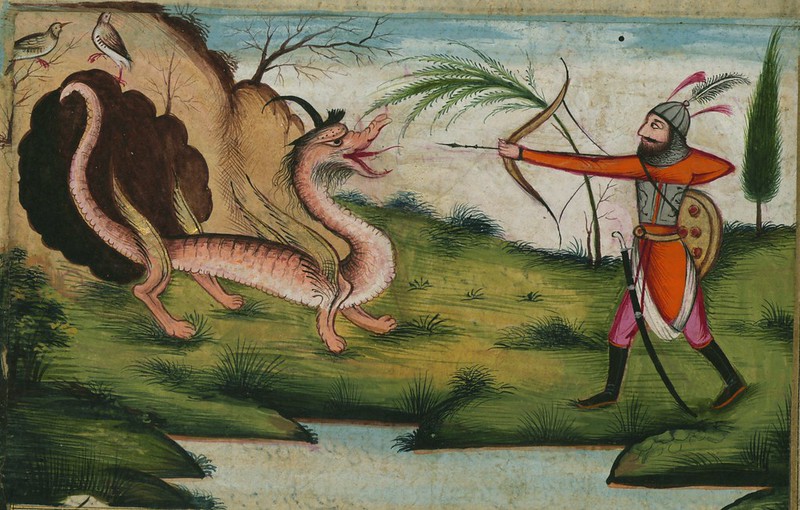
First, you have the setup: A dragon appears. The people tremble. It gobbles up their herds and destroys their homes. It sets up shop, and who’s going to ask a razor-toothed lizard the size of a semi to move? It may demand tribute – your daughters and sons will do, nicely, for starters. Oh, terrible day! What can they do to free themselves from this beast?

The dragon may have a name – Fafnir, Cetus, Smaug, Yamata no Orochi, Apophis – but just as often it does not. It varies in appearance, but its function is always the same.

Enter the dragon slayer. He, too, has many names, and he, too, is always the same person. He is the courageous one, the honorable one, the compassionate one. He takes pity on the poor villagers and vows to help them. He may be an underdog or he may already be renowned. Whatever the case, he fights the dragon. He slays the dragon. He wins.

Evil is beaten. Good triumphs. The nightmare ends.

These are the stories children read in fairy tales. These are the messages passed down by folklore from generation to generation. Evil doesn’t always have to win. There is a spark of hope in the darkness. The dragon slayer inspires us to realize that we aren’t stuck in the mud for the rest of our lives. Dragons aren’t unbeatable.

We grow up, and the dragons no longer look like giant lizards. They take many shapes and forms. They may be different for each of us depending on our circumstances, but we learn to recognize them. And we know that they can be beaten. Not with sword and spear, mind you. But with courage, perseverance, knowledge, and hope.

Because fairy tales taught us so.

Enjoy what you’re reading? Subscribe by email for updates on new posts and follow my writing career, musings on fiction and storytelling, and reflections about life in general.

How to Slay a Dragon, Part 1

Fairy tales do not give the child his first idea of bogey. What fairy tales give the child is his first clear idea of the possible defeat of bogey. The baby has known the dragon intimately ever since he had an imagination. What the fairy tale provides for him is a St. George to kill the dragon

G. K. Chesterton

Fairy tales are just for kids. That’s what they say, at any rate. Stories of adolescent fluff, beneath the notice of adults. When you grow up, you leave behind the silliness of youth, after all. Bogeymen and monsters and dragons are the stuff of kids’ nightmares, nothing more. Aren’t they?

Ponder this: Parents don’t teach their children that there is a monster under the bed. Where does the idea come from? Do kids instinctually understand that there are bad things in the world? The monster under the bed, the one hiding in the closet, the ghouls and dragons out to get you … Children fear these things. Indeed, children learn very quickly what it means to be afraid.

Every child knows in their heart that monsters are real.

Oh, dragons and bogeymen aren’t real. Those are just trappings. But evil is very much a real thing in this world. The monsters of youth never go away. Adults just learn to recognize them for what they really are.

What does all this grim talk have to do with fairy tales? Think of fairy tales as road maps. Entertainment combined with important facts about life. Stories are tricky things, wrapping up lessons in playful guises.

They teach us that yes, evil things do exist, and yes, they are scary. They give a shape to that indefinable dread all children feel. And then the child is able to give evil its first names: the Big Bad Wolf, the Bogeyman, and of course, the Dragon.

Children’s stories are a primer’s guide to evil. How’s that for a fractured fairy tale? And no, I’m not trying to ruin your childhood. We shouldn’t rip a fairy tale out of a child’s hand because it’s scary. Children already know what scary is. I certainly did growing up. But fairy tales teach children why monsters are scary.

The Big Bad Wolf will trick you and gobble you up! The Dragon is a greedy beast that breathes fire and burns down villages! Be afraid! Fear isn’t weakness, it’s smart to be afraid of things that are dangerous.

But what else is there to do? Are we to spend our whole lives shivering in terror of what lurks outside?

No, that’s not what fairy tales teach us. The Big Bad Wolf is slain by the brave woodsman. A hundred dragon slayers have slain a hundred dragons.

Evil can be defeated. That is the greatest lesson of fairy tales. That is why they endure. They give us hope. Like Mr. Chesterton said, they provide children with the knowledge that monsters can be beaten.

Fairy tales are primers on the dragons of life. They are also primers on how to slay those dragons.

Enjoy what you’re reading? Subscribe by email for updates on new posts and follow my writing career, musings on fiction and storytelling, and reflections about life in general.

Being Patient in Today’s World

We live in the world of “now.” Want a cup of coffee? Stop by Starbucks and get it now. Want to watch a movie? Stream it online now. Want to talk face-to-face with your third cousin twice-removed who lives on the other side of the planet? Schedule a Zoom meeting on your computer right now. This is the age of the instantaneous. Everything can be gotten at the moment you decide you want it.

I’m not knocking on modern conveniences. Technology has improved life across the board. Medicine and communications and transportation have all benefited from technological progress. But progress has its price. We don’t value patience that much, anymore. And I can only really say that because being a writer has made me much more aware of the importance of patience.

Writing a book isn’t a quick and easy task. I have to invest a great deal of time in crafting my story, outlining it, going through multiple drafts, editing and formatting the final product. It’s easy to feel antsy at times and just want to push it to the side because I’ve been working on it for over a year and still don’t have a published product. Will it ever get done? Is it worth it? Should I just move on to something else that yields immediate results?

Patience isn’t something that comes naturally to everyone. Maybe there are people out there who don’t struggle with staying level-headed and calm in all situations. I’m not one of them. I tend to rush through life and need to remind myself to slow down. It isn’t a virtue I’m inclined towards because, quite frankly, being patient is scary.

Hourglass” by John-Morgan is licensed under CC BY 2.0.

After all, to wait for something implies trust in that thing’s value and worthwhileness. Grabbing an egg sandwich from McDonald’s is different from cooking an omelet. One is quick and easy, the other takes time and effort to prepare. And time is precious, isn’t it? It’s the ultimate currency. We only have a fixed amount in the bank. So, what we are willing to wait for determines what we value the most. And when you spend time on something, that’s time you can’t get back.

Writing has taught me patience, bit by bit. The value of taking time to prepare the story and to make sure that I’ve chosen the right words. The time to submit my work to others for evaluation and feedback. Patience leads to quality, too. A rushed product is often a shoddy product. The best things in life take time to make. And patience takes courage. I invest time in writing because I trust it is worthwhile in the end.

One last thought: Patience entails an assurance and certainty that waiting will bear results. It is a form of faith, if you will, because it requires one to trust that a future we cannot yet grasp will yield something positive for us. Otherwise, why wait for it at all?

Enjoy what you’re reading? Subscribe by email for updates on new posts and follow my writing career, musings on fiction and storytelling, and reflections about life in general.