Why Do You Create?

Christmas vacation has given me more time than usual to spend on my writing and passion. That needling desire – that need – to write is stronger than ever within me. With this awareness fresh in mind, I want to ask a question to my readers. No need to answer in the comments if you don’t want to, of course. This is just something to ponder when you have a moment.

Why do you create?

This isn’t just a question for authors, or for artists, sculptors, songwriters, musicians, poets, filmmakers, and those who doodle in their notebooks during class. This is for all who feel the urge to create something, to tinker with something, to take something apart and put it back together again.

This is for those who enjoy the act of producing and modifying and bringing into being a thing that wasn’t there before. The car mechanics, the dance choreographers, the sketchers, the gardeners, the woodcarvers, the fashion designers, the computer programmers, the origami enthusiasts, the crocheters, the embroiderers, and the engravers. The shoemakers, the tailors, the welders, the carpenters, the jewelers, and the chemists. The people who sing in the shower and the people who love decorating for Christmas. The people who color coordinate their clothes and the ones who sew blankets for their friends’ children. This is for all of you.

Why do you create?

What is this burning desire? This all-consuming thought that strikes us out of the blue: I want to make something. Why? What does it do for you? What is this amazing, crazy facet of human nature, this ability and impulse to make something new in the world?

And what happens if we don’t answer the desire? How do you feel if you can’t create, or if you experience a blockage?

Just a thought to ponder as the new year approaches. Whatever the answer, I wish you luck with your creations, and the fervent hope you can share them with others. To create is a gift, and the best gifts are shared with others.

If you just so happen to be enjoying my blog, feel free to subscribe. I post updates on my writing career, I muse over storytelling and fiction, and I reflect on the curious and wonderful things in life.

Image: “Another Bosque Sunrise” by snowpeak; Licensed under CC BY 2.0.

Legacy: What We Are Remembered For

As we get older, we start having deep thoughts. Questions run through our minds, questions like, “What will I leave behind when I’m gone?” and “How will people remember me?” With age comes an acute awareness that our time on Earth is finite, and with that come musings on what our legacy will be. What mark will our lives leave on the world? Will we, to get to the heart of things, have done anything that mattered?

Legacy is a loaded word. It’s a word associated with empires and rulers. It invokes monuments that endure for centuries. Legacies are connected to greatness. The greatest men and women of history, whether good or bad, are remembered by all.

And look at what society says to us. We must work hard to leave our own mark. We must strive to improve the world, to improve society, to make positive changes, to “be the change you want to see.” Or even, just to leave the world a little better than when we found it. A burden, one might say. It is something imposed on people from a young age to aspire to greatness.

I say it’s a distraction from what’s truly important. Today’s great accomplishments are tomorrow’s misguided attempts. We simply don’t know how we will be remembered, or by whom, or for what. That guy you accidentally cut off on the freeway is going to remember you very differently than your favorite uncle who loves the sweater you bought him for Christmas. And that piece of litter you picked up in the park without a second thought might inspire some passing child to pursue a career in conservation. The door you held open for an old lady might have given her new hope in life.

Farfetched, you say? What do we truly know about what will affect others the most? Media tells us that big causes and organizations are what change the world. But not everyone is going to make a mark on that scale. What does that tell us? That those who don’t measure up to vaguely defined goals are failures?

Right, right, this is all very deep and philosophical, but maybe you’re wondering what this means for you. Or you’re wondering who this pretentious nit with a blog is, anyhow. Well, the long and short of it is: Your legacy is everything you do, big and small. And the small things, in my experience, tend to matter more than the big.

We’re not all going to be famous when we die. We’re not all going to found a world-spanning charity or find the cure to a terrible disease or invent a new technology. But we are all capable of acts of kindness. Compassion and sympathy go a long, long way. There might not be any prizes or awards, and nobody’s going to erect a monument for a gentle word, so maybe it doesn’t appeal to everyone. At least, until you need a kind word yourself on a bad day.

We can’t control our own legacies. We can maybe dictate what’s written on our tombstone, and will our possessions to others, but how we truly affected the world – for better or ill – is a far more complex thing that can’t be summed up in a few brief achievements.

Legacies shift and change and what we consider our magnum opus might be forgotten within a few years. So, if you ever find yourself getting worried over how people remember you, just relax. Just do your best and be kind. I suspect we’d all be surprised if we were aware of the things we did that truly mattered most to others.

If you just so happen to be enjoying my blog, feel free to subscribe. I post updates on my writing career, I muse over storytelling and fiction, and I reflect on the curious and wonderful things in life.

Image: “The mountains are calling and I must go. John Muir” by blmiers2; Licensed under CC BY-NC-SA 2.0.

Putting Your Best Foot Forward: Thoughts on Confidence

You ever see someone walking down the street with an easy stride, good posture, and a sure expression on their face? You think to yourself, “Man, they’ve got it together. They know they’re going places in life.” You ever question if they actually did know what they were doing and where they’d end up? After all, if they look like they know what they’re doing, they probably do, right?

Well, maybe not.

How often did you ask mom and dad questions about the world when you were a kid? And you took their answers as gospel truth. Parents always know why the sky is blue, and why the moon disappears during the day, and how car engines work, and when Santa is coming down the chimney on Christmas Eve. They were the all-knowing arbiters of wisdom.

Then we grew up and figured out that our parents were barely keeping it together. Blazes if they knew the right answers to a young child’s innocent curiosity. We become parents ourselves and end up playing the same part, only to discover that we can barely manage a coherent sentence in response to our children’s relentless torrent of questions.

But our parents always LOOKED like they knew what they were talking about. And because of that, we never thought to question anything they said. They could have told us the world really was black and white with no color in the 1950s, and our young selves would have believed them.

What about the inverse? An expert – in mathematics, let’s say – lectures in front of an audience. He’s giving one of those TED talks or what have you. He knows exactly what he’s talking about. He’s foremost in his field. But he stutters. He’s nervous being out in public like this. Consequently, he can’t explain the concepts very well. He has a nervous laugh and shuffles his feet. An expert? Sure. But we aren’t inclined to take him seriously. Not like Dad, who has no idea how photosynthesis works, but is able to bluff his three-year-old with a bold smile and a ready answer.

Confidence is a funny thing. It’s no guarantee of truth or accuracy, but it is such a vital component of how others perceive us. We trust confident people. They at least have the decency to look like they know what they’re about. And hey, if they trust their own skill, why shouldn’t we? Well, that way lies potential catastrophe, but that’s the point. We follow those who look like they know where they’re going. Confidence is no substitute for competence, but it is an important ingredient in leadership and successful undertakings.

Writing your book is one thing. Selling it is another. The Internet is full of ways to advertise, but if you don’t believe in the product yourself, why should others? If you don’t have the self-assurance that your story is worth reading, how are you going answer the question, “Why should I care?” If you don’t have any confidence, any trust in your book’s quality, people notice. And who wants to read a book that even the author doesn’t think is very good? Have a little faith in your work!

We live in a superficial world. Sad, but true. People look at our appearance and how we carry ourselves. Before they get to know us, they spot little details –shirt stains, unkempt hair, untied shoelaces. And thus, our self-presentation impresses itself on people’s memories for far longer than a good conversation or a well-informed lecture. Likewise, if any aspiring writers are trying to convince someone to read their book and looks nervous and withdrawn when discussing the thing, that’s what our would-be readers will remember, not that we actually wrote a good story that they’ll enjoy.

Is that fair? Not really. But it’s real. Writing requires skill and practice and patience. But to get people to read that story? That requires the belief that the story you told is worth sharing with others. It requires confidence to say that your story is worth the effort.

If you just so happen to be enjoying my blog, feel free to subscribe. I post updates on my writing career, I muse over storytelling and fiction, and I reflect on the curious and wonderful things in life.

Image: “BASE jump” by santimolina; Licensed under CC BY-NC-ND 2.0.

Escapism: A Necessary Respite

Escapist entertainment. What thoughts run through your head when you hear that phrase? Positive? Negative? Joy? Disapproval?

Escapism gets a bit of a bad rap. Life is serious business, and there’s a lot of work to be done. People are suffering. Injustice is rampant. And when are you going to pay those bills? Why are you wasting time on fluff?

But is escapism a bad thing?

Imagine yourself going up against the hard knocks of life every day. Life is a jerk. It hits you hard without letting up. And it doesn’t play fair. It pulls your hair, throws sucker punches, and it cheats you out of a rightful win.

Even when life lets up, work and responsibilities can weigh heavily. Imagine a rock on the coast, battered by the waves every hour of every day of every year. The rock stands tall for a time, but every wave takes a little bit of it into the sea. The stone is smoothed and weathered. Eventually, it wears away completely. That is a person who works and works and works, but never takes time for a moment’s respite. Life just … wears you down to nothing.

We need to escape, sometimes.

Some light reading, a silly movie, an action-filled comic book, a walk in the park, a thrilling sports activity. For someone somewhere in the world, they’re all ways to distance oneself from the daily grind and relax. They are ways to refresh the mind and body and forget about our troubles for a few precious moments. We need escapism for the sake of our sanity.

Escapist fiction allows us to suspend disbelief and accept that there can be stories that don’t have to reflect reality. Superman and James Bond and Indiana Jones aren’t high art, but they are fun. And what’s the point of entertainment that isn’t fun? There is art and literature that dwells on philosophical questions and searches for meaning in the tragedies of life, but here’s another nugget to chew on: Real life never goes away. It’s waiting for you right outside the door. There is plenty of time to dwell on the deep questions. But don’t we just want to – need to – take a break from it once in a while?

Ah, but here comes the counterpoint: Escapism is withdrawing from responsibility to society and ourselves. It’s evading the important things in life, the things that we must do to live healthily and productively. But all things in moderation. A life of nothing but escapist fantasy is as bad as a life of nothing but grim obligation to work.

Still, there’s a reason why people like fluff entertainment. There’s a reason why people want to laugh at silliness and cheer on the hero fighting the evil villain. Such stories are simple and inspiring. Why do you think cartoons and comics were thriving during the Great Depression? Or during the more recent Great Recession, for that matter? People need something good in their lives, and for many, that can only be found in stories. And it is a healthy thing, because people need hope. We all need a counterbalance against the mundane and dreary.

The greatest responsibility, then, of the escapist is to remember that there is a time and place for everything. A time to mourn, and a time to laugh. A time to work, and a time to play. But don’t forget to take a moment’s respite. You might need it more than you think.

Enjoying my blog? Don’t want to miss a single post? Subscribe for updates on when I post and follow my writing career, musings on fiction and storytelling, and reflections about life in general!

Image: “Pittsfield Hot Air Balloon Rally – 2006” by Heartlover1717; Licensed under CC BY-NC-ND 2.0.

Thankful for the Unexpected

You walk through life. Everything is going according to plan. Every day like the one before – the grating yet comforting grind of monotony. Then BAM. You’re caught by a curveball. A piece of bad news or a freak event. Something you could never have possibly foreseen. Your plans implode, and you’re left with your head spinning.

On the other hand …

Something joyous happens, something spectacular that you never dared hope for. It’s the greatest news ever, the most wonderful unplanned thing to happen to you. Your plans are upended in the best way possible.

What do you do when life hands you the unexpected? I like plans. I like organization. I like to go through life knowing what’s going to happen next. When something pops up that isn’t part of the plan, I bristle. Even good things, sometimes. My control freak tendencies take a hit from things in life beyond my control. The older I get, the more thankful I am for that.

I could go on about how life is a test and molds us and so forth, but let’s dispense with the cliches. What I’m most thankful for is that the unexpected in life – good and bad – show us who we really are. We dig deep when confronted with a crisis to prove our real mettle. A disaster buffets us, and cracks in our supposed good character can appear. We get to know ourselves a little better. No need to fret, though. Knowing that they are there gives us a chance to address them.

I don’t believe that anyone can truly know themselves fully. Our “real” selves are a bit of a mystery to our own minds. We humans are simply simply too complex and too multilayered to be able to completely comprehend ourselves, much less others. But we do get glimpses of insight every now and then. Life isn’t the only thing full of the unexpected. We can defy our own expectations. We accomplish things we didn’t know we could, we possess virtues we never, ever suspected we had, and we also display vices we never thought we possessed.

Okay, life is a test at times. But testing isn’t meant to break. I’m very glad that life has thrown curve balls at me. I’d be stagnating in my own self-satisfaction if I didn’t know where and how I could improve. Always room for growth and all that jazz.

This naturally extends to writing. No great writer ever rested on his or her laurels. They keep improving, working, pushing themselves to become better. And writing is a career where you put yourself into the public’s eye. Readers can detect if you’re improving or not. Scary, no? And no writer can ever 100% predict how readers will react. What form will the criticism take? What will be the readers’ reactions? Are we ready? Can we ever be ready? But we roll with the punches as best we can and figure out what went right and what went wrong. And we write a better story next time.

Expect the unexpected. Welcome it. You’re going to be thrown for a loop someday anyway. Might as well as learn to embrace the good that comes from it.

Enjoying my blog? Don’t want to miss a single post? Subscribe for updates on when I post and follow my writing career, musings on fiction and storytelling, and reflections about life in general!

Image: “River meander, outside of Kobuk Valley National Park” by AlaskaNPS; Licensed under Public Domain Mark 1.0.

Climbing Out of Your Burrow: Read New Things!

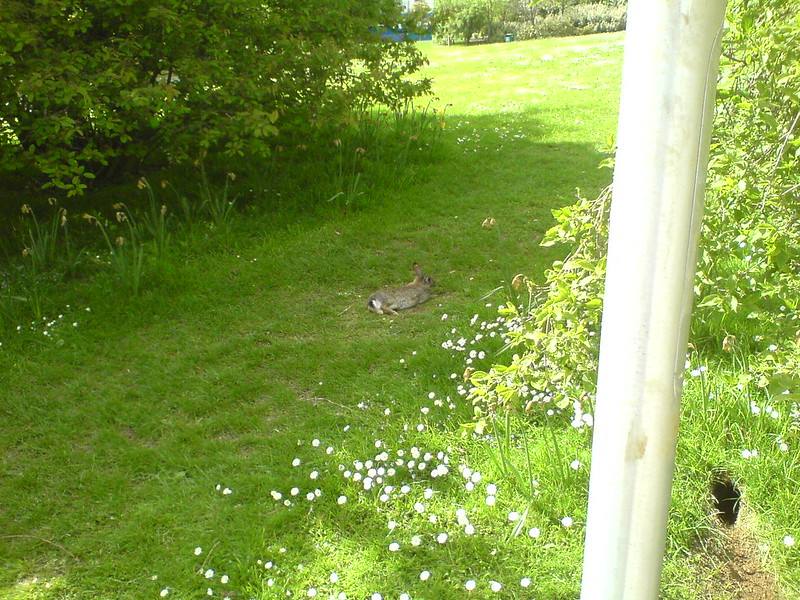
Image: “Rabbit and Burrow” by Stephen.G; Licensed under CC BY-NC 2.0.

“Cuddling up with a good book” is a phrase that invites images of coziness and comfort. It’s like being a rabbit holed up in your burrow, safe and secure. And we do like being comfortable. The same predictable genre or series over and over is a safe choice for when we get the itch to read something. But we are not rabbits. We humans benefit greatly from trying new things. Sometimes, we need to climb out of our burrows and take a close look at the landscape. A new book, a new genre, a new experience.

It’s not easy to do something we’ve never tried before, even with something as seemingly trivial as trying a new book. But it’s not trivial, is it? For some of us (myself included), it can be very daunting indeed. Reading is a time investment. Sinking time into something we might not even enjoy is time forever lost to us. Dare we take the risk?

I say we should. Life is short enough without limiting ourselves to a narrow view of it. Stories grow us and expand our perspective on the world. And who knows? You just might discover something new to love in literature. Trying new things is its own reward, and challenging ourselves to grow is always beneficial.

Rabbits are nervous, wary creatures. But rabbits can’t read and know the joy of encountering a new tale, of being lost in a new world of words. There are so many worlds out there, contained in the pages of a book or imprinted in the code of an eBook, and they’re all there for us to visit whenever we want. Why shouldn’t we try to explore as much as we can?

Alright, I’ll be honest. I’ve read books I didn’t enjoy. I’ve tried things recommended to me that I didn’t get much of a thrill doing. But, as they say, you never know until you try. On the other hand, I discovered some of my favorite franchises thanks to a friend or family member. And sometimes just from idle curiosity.

Whether you’re a writer or not, if you love literature, than never stop exploring its many corners. Leave your burrow and go out and see what there is to see!

Enjoying my blog? Don’t want to miss a single post? Subscribe for updates on when I post and follow my writing career, musings on fiction and storytelling, and reflections about life in general!

When You Feel Like You Don’t Have Enough Time…

Old Clock” by Davmi Pics is licensed under CC BY 2.0.

Do you ever feel the crunch of time? Like your to-do list is too long to fit into the hours in the day? You feel those minutes sliding by and try to cram in as much as you can. But it just isn’t enough, and you concede defeat to the march of time.

So much to do, and so little time. If only we could do it all in one go. If only we could freeze the clock in place and do everything we ever wanted to do for as long as we wanted. What a dream, huh? But what does that say about the things we do manage to accomplish when time is short?

Maybe it’s not comfortable to think about the fact that we accomplish, first and foremost, the things that matter most to us. Maybe we don’t want to think about what that says about us if we go first to the couch to watch TV, put together a jigsaw puzzle, play video games, or eat junk food. What do we prioritize? What matters most to us? Do we want to peer into that corner of ourselves?

Most of the items on our checklists are personal indulgences. A lot of the things we feel we must do are really just trifles that we enjoy more than taking out the trash or cleaning the house. Hey, entertainment is more fun than chores. That’s why it’s called entertainment. We like to have fun, and in a world where most of our time is consumed by business and work, we try to sneak it into the 16 or 18 hours we spend awake.

I find that there is a difference between what we want to do and what we actually do. The first is our conscious preference. The second is what we subconsciously place real value on. I suspect we don’t even realize it unless we’re paying close attention. We don’t recognize what we hold dear until forced to choose between this or that to wrap up in the last hour. Time crunch can lead to interesting revelations.

But how much do we really have to do in 16 hours? We tell ourselves that “this and that” must be finished, and “this and that” turns into “anything and everything.” A bit of a self-imposed burden, isn’t it? I’m not preaching procrastination, but rather that most of the troubles we face in task management is self-imposed. Cramming means we don’t want to compromise. It’s all or nothing! I want to do everything I want to do and I’m not going to cross anything off today’s to-do list! And we wear ourselves out, not from hard work, but from the exhaustion of trying to satisfy the expectations we’ve built up in our heads.

There’s more time in the day than we may think, because so many of the things we convince ourselves are absolutely vital are really just busy work and trifles. If we were to strip away everything except what is truly important in our lives, we’d end up with a much shorter list. Because those are the things we will dedicate time to. Those are the things we truly value and will not sacrifice.

Take a step back and look not at what you plan to do, but at what you actually do during the day. You may be surprised at what you see.

The gods and beings of ancient myth never went away. They just moved on with the times.

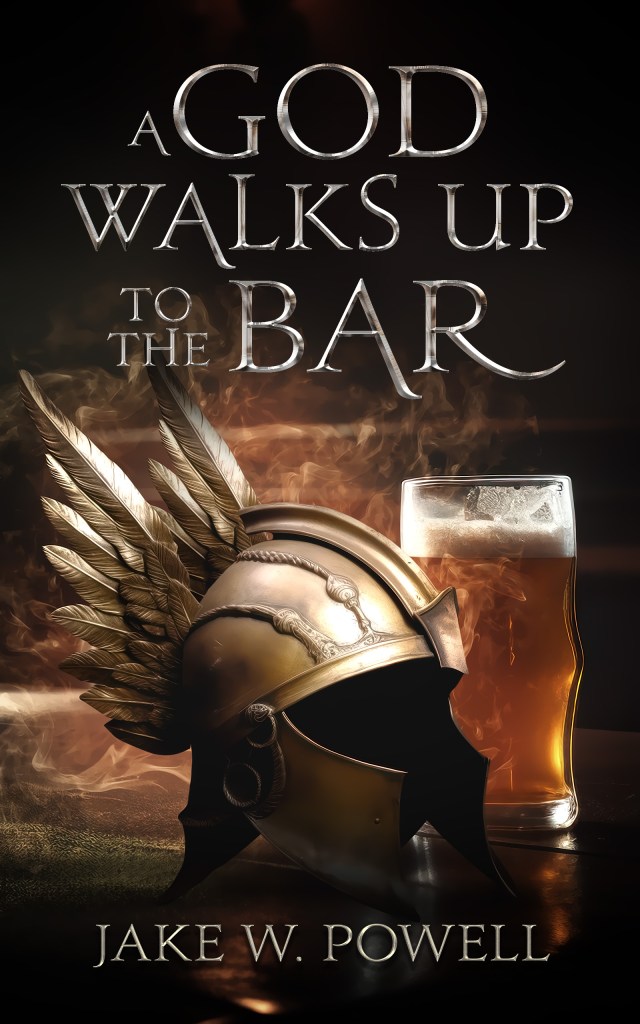
My book, A God Walks up to the Bar, is currently available on Amazon.com. Venture into the world of the Greek god Hermes, a world filled with demigods, vampires, nymphs, ogres, magic, and trickery. It’s a tough job, being a god!

Enjoying my blog? Don’t want to miss a single post? Subscribe for updates on when I post and follow my writing career, musings on fiction and storytelling, and reflections about life in general!

The Myth of the Easy Masterpiece

We’ve all heard the glorious stories of the writer who dashed out a masterpiece over the course of a weekend, solicited it, and made big bucks. Or we hear about someone writing a book for kicks, posting in on Amazon, and suddenly getting offers from film studios to turn their sudden runaway success into a show. It’s a tempting motivation to become an author, or scriptwriter, or whatever. These guys made it. How hard can it be?

Pretty hard, actually. After all, we only hear about the successes. What about those stories written over a weekend that never took off? How many books on Amazon do you think there are that nobody’s ever read?

I don’t know where I first heard the story that the screenplay for Good Will Hunting was written by Matt Damon and Ben Affleck over a weekend. Probably one of those motivational stories my teachers told me as an example of how life doesn’t actually work. It’s not true, by the by. Matt Damon wrote the original 40-page script as a drama class project, then worked with Affleck on revising it into a full Hollywood script. So, no, they didn’t conjure a masterpiece out of thin air in just a couple days. The foundation was already there, and they still had to work hard to translate it from written word to big screen.

Hugh Howey wrote Wool as a one-off short story that he put up for sale on Amazon. And yes, it did become so successful that he ended up writing sequels and selling the film rights and getting a good deal out of the whole thing. But as unusual as the success of Wool is, it was still based on years of writing experience and hard work. Howey had already been a diligent writer long before he published Wool. The story may have been a one-off, but Howey’s efforts weren’t. He goes into detail at length about his writing on his own blog.

All of which is to say, if you hear about a runaway success, that success is probably the result of a lot of hard work, blood, sweat, and tears that rarely make their way into the story told in magazines. The humdrum routine of writing, or scripting, or painting, or sculpting, or whatever medium you can think of doesn’t usually make for a good story, after all. Customers want the end product. The tedious hours of chipping away at marble or revising a fourth draft aren’t what they’re buying. And, quite frankly, do they even need to know about all that sweat and work?

If you’re truly devoted to something, you’ll put in the effort necessary to see it through to completion. Writing isn’t a “get rich quick” scheme. In fact, it may be the worst method possible for getting rich quickly. Sure, there are plenty of authors out there who make a living off their books. Many of them are quite wealthy, even. But only because they work to an almost obsessive degree on their projects. They devote extreme amounts of time to writing to the near-exclusion of all else. That’s not the easy path to wealth.

So, no, there aren’t any “easy masterpieces” in the world. Just a lot of grunt work and diligence that is never seen by the public eye.

Do what you love, not what you think will make you rich. That’s one thing that can make life a bit easier.

The gods and beings of ancient myth never went away. They just moved on with the times.

My book, A God Walks up to the Bar, is currently available on Amazon.com. Venture into the world of the Greek god Hermes, a world filled with demigods, vampires, nymphs, ogres, magic, and trickery. It’s a tough job, being a god!

Enjoying my blog? Don’t want to miss a single post? Subscribe for updates on when I post and follow my writing career, musings on fiction and storytelling, and reflections about life in general!

Lessons I Learned Writing My First Book, Part 5: Humility

What’s the greatest challenge you face as a writer? The hours of hard work spent crafting your story? Pushing back against writer’s block? Trying to research a key piece of your book that you can’t quite get right? Finding a publisher? Finding the money to publish independently?

After all the effort you put into your book, there comes a point where you crave vindication of your efforts. After everything is said and done, you put it out onto the market and …

Where’s the jubilee? Where’s the praise? It’s MY book, it’s MY effort. Don’t I deserve it?

And here comes a hard truth: No, you actually don’t.       

We should all dream big, because big dreams encourage us to strive for excellence. But dreams alone are not the key to any sort of success. Hard work, diligence, and consistency are far greater allies in that regard. It’s easy to look at examples of literary success and think that somehow, through the mere act of wanting, we not only are able to join them, we deserve to join them. To stand up there with Hugh Howey, Brandon Sanderson, Dan Abnett, Jim Butcher, Ursula K. Le Guin, Terry Pratchett, et al.

Or, going even further, to see ourselves as the next William Faulkner or Charles Dickens or F. Scott Fitzgerald. And then we complete our book, we’re proud of it, and we put in on the market and … it’s another book.

A good book, maybe, but there are no laurels or songs or movie deals. It’s a book. One among hundreds of thousands. Roll up your sleeves if you want to get more notice, because it won’t get noticed by itself. You’re an author. Not THE author, not the greatest author. An author.

Harsh? Maybe. But eating humble pie is a bittersweet affair. Reflecting on my journey to where I am now, I’m darn proud of what I’ve done. I enjoyed writing my book, and I’m enjoying starting my second one. If I wanted glory, I’d pursue a different profession.

It still stings a little, though.

Humility comes in many different forms. Sometimes it whirls in and knocks us off our haughty high ground. Sometimes it’s a series of events that remind us we’re not as self-important as we thought. Sometimes, it’s doing something that others look down on as unimportant. It’s not something that’s enjoyable to learn (a running theme with my past few articles, I’m noticing) but, as I’ve already said before, it’s necessary. Pride and egotism can take a good job and hard-earned goodwill built up with your audience and turn it to ash. We’ve all seen it. Maybe you’ve even been there before.

Keeping ourselves in perspective can, I hope, help us to understand our place in the very big and crowded world of publishing and, rather than discourage us with delusions of insignificance, drive us to work harder toward a successful and fulfilling career. Humility helps us see ourselves clearly and to see the things we can do to make ourselves the best people we can be.

The gods and beings of ancient myth never went away. They just moved on with the times.

My book, A God Walks up to the Bar, is currently available on Amazon.com. Venture into the world of the Greek god Hermes, a world filled with demigods, vampires, nymphs, ogres, magic, and trickery. It’s a tough job, being a god!

Enjoying my blog? Don’t want to miss a single post? Subscribe for updates on when I post and follow my writing career, musings on fiction and storytelling, and reflections about life in general!

Lessons I Learned Writing My First Book, Part 3: Perseverance

Seventy-eight, seventy-nine, eighty …

Do you like doing pushups? What about arm curls? Or squats?

Eighty-five, eighty-six, eighty … eighty-seven …

They can take a lot out of you. How often have you been tempted to stop halfway through your exercise routine?

Ninety … ninety … ninety-FIVE … Ninety … SIX.

Or have you only gone as far as you could before the burn set in?

Ninety-NINE … ONE … HUNDRED.

Perseverance is when you keep going even when your body and mind don’t want to.

There’s an element of stubbornness in persistent people. They refuse to give up or go home when things are looking down, when the weather is cruddy, when they just want to curl up and sleep the afternoon away. Perseverance is the tenacious insistence on never leaving a task half-done.

Writers need to persevere. We need to never give up no matter the circumstances. How many books have been left half-finished, never to be read by others? How many books have never been written at all?

The most important thing, I’ve found, is to focus on the end goal. It’s easier (not easy, mind you, but certainly more bearable) to stick with it when you know how close you are to the end. And as I look back, I see how quickly that work time passed. Rather than focusing on present difficulties with drafting my book or stumbling over writer’s block, I quietly focused on the goal of finishing and publishing. It really does help.

Sometimes, I felt like I had nothing worthwhile to say, or that nothing I did say could measure up to other authors. What do you do during such times? You motor on. Perseverance is, quite simply, never giving up.

There’s a lot of books that will never be written. I take satisfaction in putting one more out into the world.

The gods and beings of ancient myth never went away. They just moved on with the times.

My book, A God Walks up to the Bar, is currently available on Amazon.com. Venture into the world of the Greek god Hermes, a world filled with demigods, vampires, nymphs, ogres, magic, and trickery. It’s a tough job, being a god!

Enjoying my blog? Don’t want to miss a single post? Subscribe for updates on when I post and follow my writing career, musings on fiction and storytelling, and reflections about life in general!