Committing to First-Person Narratives

When you think of writing a book, “commitment” is a word you might associate with time discipline, writing a certain number of words per day, or setting aside a chunk of your budget for publishing and marketing. You wouldn’t necessarily think of the writing itself. After all, writing is all about making changes. That’s what drafts are for! But there is at least one piece of the puzzle on which you have to make a choice early on, and from which backing out can be painful. That is choosing your narrative point-of-view.

Now, third-person is common and popular, but what if you go for first-person? Ah, then you really have to commit, because first-person narrative has a whole set of pros and cons to it that change the way you tell the story.

The pros? Writing in first-person lets you get inside the head of your POV character, whether they be the protagonist or someone else, and really dig into their psychology and the world they live in. It’s a very personal method of storytelling. You really get to know who this character is as a person. Plus, you get to shape the story and its twists and surprises in a fairly organic way. The reader can only know what the narrator knows (or thinks they know). And the narrator doesn’t have to be honest or reliable.

On the other hand, first-person limits the scope of your storytelling. You can’t describe a distant scene two countries over, you can’t pull back and dedicate a few paragraphs to an unbiased history of the setting, and most importantly, you are restricted to the one character. You can’t jump between multiple peoples’ perspectives.

Ok, that’s not true. Crazy geniuses can write books that feature multiple POV characters told from multiple first-person perspectives, but I’m not brave enough to try it. But if you have written or read such a book, let me know in the comments. I’d be interested in reading it.

Your narrative is narrow in scope. That’s not to say the story itself has to be . It can be a sprawling epic, but you will only see it through the eyes of one person. That’s why you have to be sure of yourself before you start. You’re gonna have to commit.

Many thanks for visiting my blog. I post updates on my writing career, I muse over storytelling and fiction, and I reflect on the curious and wonderful things in life.
Writers, You Can’t Be Perfect

There is no such thing as a perfect story.

To strive for perfection is something that writers do. We put all our effort into writing stories that are perfectly plotted, that contain no plot holes or leaps of logic, that are devoid of unnecessary fluff, that are devoid of grammar and spelling mistakes. Perhaps even more, we want to write a story that everyone loves and that has no detractors whatsoever, a story that perfectly conveys the message we want to share with the world. We strive to be perfect, but we will never get there.

But this fact should not lead to discouragement. If an author wrote a book that everyone somehow agreed was perfect, what point would there be to continue writing anything else? If you’ve achieved the absolute height of the craft, why keep going?

Perfection is a hypothetical. We may use it as a target to direct our efforts, but we won’t ever “get there.” No, the best writers keep writing to refine their craft and to improve. Always improving, always discovering new ways to tell stories and make them exciting, interesting, impactful. I’m not a particularly good writer, but I look back on past work and see the maturity that’s taken place.

Aim for excellence. Aim for quality. Don’t worry about writing the next great American novel. Don’t despair at the mistakes you see in your work after it’s published. Recognize them sure, and learn from them. And then look forward to writing an even better novel next time.

Many thanks for visiting my blog. I post updates on my writing career, I muse over storytelling and fiction, and I reflect on the curious and wonderful things in life.

Improve Your Writing … By Writing

If there was a magic trick to becoming a better writer, if there was a special class or a magic book, I’d be recommending that here instead. But, obvious as it may sound, the only way to become a better writer is to, well, write.

It’s one of those facts of life that’s so simple that you think there must be a catch. There isn’t, except that it requires hard work and discipline. To become better at something, you need to do it as often as you can.

But, you might ask, what about writing classes? What about exercises? What about reading and research? Those are important, make no mistake. There are plenty of good resources for writers nowadays, especially online. There are tons of excellent blogs that I personally peruse for advice. But if you want to be the best writer you can be, you have to delve headfirst into turning that idea that’s been clattering inside your head into reality. You need to practice your craft.

Write, keep writing, and never stop writing. Practice, practice, practice. And after you write, go over what you’ve written. Look at it with a critical eye. Learn your strengths and recognize your weaknesses. Improve upon them. Seek feedback from friends and family and writer groups. And keep writing.

With every new project, with every completed draft, and with every review, you will improve. Don’t let up. Keep pushing yourself. Accept no substitutes.

Many thanks for visiting my blog. I post updates on my writing career, I muse over storytelling and fiction, and I reflect on the curious and wonderful things in life.

A Word of Wisdom from Terry Pratchett

Miss Tick sniffed. “You could say this advice is priceless,” she said. “Are you listening?”

“Yes,” said Tiffany.

“Good. Now … if you trust in yourself …”

“Yes?”

“… and believe in your dreams …”

“Yes?”

“… and follow your star …” Miss Tick went on.

“Yes?”

“… you’ll still get beaten by people who spent their time working hard and learning things and weren’t so lazy. Good-bye.”

Courtesy of The Wee Free Men by Sir Terry Pratchett, 2003

It’s true, you know.

What Do You Do With Your Time?

When I was a kid, the thing I wanted to be when I grew up was an “everyologist.” I wanted to do everything: science, literature, travel, architecture, painting, history. A five-year-old can easily imagine doing all those things. After all, he has all the time in the world. When a single year is one-fifth your total lifespan, the future stretches out to infinity.

Of course, our lives aren’t infinite, and as we grow up we learn that we don’t have all the time we want. I’m not an “everyologist,” though I do maintain a variety of interests and love to learn new things. I focus on my writing, my job, being with friends, reading, and living quietly. The more I learn I can’t do everything, the more I learn to focus on what I actually find worth doing.

I’d probably be a lousy architect, for one. And I’ve toyed with the visual arts, but it doesn’t hold my attention like writing does. And hey, I can always cheat: the Internet has lots of ways to learn and explore without actually, well, doing anything. It’s something, right?

But the Internet itself takes up our time (yes, I am aware of the irony of that statement on a blog). Too much? Well, that’s up to you. What else do you hope to do today?

All that being said, something else I’ve learned in life is that I have a lot more time than I sometimes suspect. It’s the things I feel I have to do – little things, like finish this book by such-and-such a date, or catch up on that TV series everyone is talking about – that eat away at our “free” time. It’s not really free if we treat our hobbies as a strange set of obligations. A career is one thing, but entertainment quite another. Anyway, the point I’m trying to make is that viewing our lives from new angles reveals that we don’t need much to fill up our time in a satisfying way.

I’m not a master of everything, and I’m okay with that. I have time enough for what I enjoy.

Many thanks for visiting my blog. I post updates on my writing career, I muse over storytelling and fiction, and I reflect on the curious and wonderful things in life.

Seizing Opportunity from Reader Feedback

Submitting your book to beta readers can be a daunting prospect. What if they don’t like it? What if their suggestions mean you have to overhaul your entire book? What if the book is no good at all? Writing for the public is always underpinned by a certain amount of nervousness. But we can prosper from reader feedback, both positive and negative. Responding to how other readers view your work, as opposed to what you see through your own eyes, requires a willingness to adapt, but it also offers a broad range of new opportunities.

Every reader is a different person with different experiences. That means that everyone has different ideas about the same thing. The point of hiring beta readers is to gain an understanding of how your book is perceived by others. We as writers tend to get too close to our own work. It’s our baby, and we coddle it. It’s not that we overlook flaws or plot holes, but rather that we don’t even realize they’re there. Having them pointed out to us can be painful, sometimes.

But once we take a day or two to mull over the feedback and start our next draft, a whole new world of possibilities opens up. Weaknesses in the story can be turned into new strengths. Filling in plot holes unlocks new avenues for the story and new directions for character development. Glorious opportunities to make your story even better, to develop themes and plot points that never even occurred to you.

None of us are perfect writers. We’ll never be perfect writers, and we won’t see every shortcoming in our work or the chances to capitalize on half-formed ideas. We need an extra set of eyes to see what we ourselves cannot, both the good and the bad. A little encouragement and a kick in the pants to sharpen those details that don’t sit right with readers.

Every book we publish will be better than the one before. Your first book might be hot garbage. Your second book is a slight improvement. You third is a breakthrough in quality. And so forth and so on. Can’t do it without listening to constructive opinions, though. No writer is an island. If you plan on publishing your work, you’re going to need to listen to your readers. And often, they have a lot of worthwhile things to say.

Many thanks for visiting my blog. I post updates on my writing career, I muse over storytelling and fiction, and I reflect on the curious and wonderful things in life.

It’s Only an Event if It Doesn’t Happen Every Day: My Thoughts on Crossovers

Crossover, crossovers. People from different worlds smashing into each other. Different genres, different styles, different stories. Throw them in a mixer and see what happens.

What’s the appeal? I’d say it comes down to simple curiosity. What would happen if Superman met Captain America? How would Greek myths get on with Chinese myths? Can a pirate really defeat a ninja?

It’s a popular trend these days. Maybe not so much in novel writing, but movies love them, video games really love them, and comics are practically built on them. And they’re fun. But there’s something about these companies’ strategy that is missing the point of a crossover. Every time one occurs (multiple times a year), it’s built up as the MOST INCREDIBLE THING EVER. And people get excited sure. But not like they used to.

Way back in 2008, when Nick Fury stepped out of the shadows at the end of the first Iron Man film to talk about “the Avenger Initiative,” fans squealed with joy and anticipation. Nowadays, the next big Marvel crossover film elicits a non-committal “Eh,” at best.

As a writer, my professional opinion is that crossovers are not easy to pull off anymore, largely because they’ve been done to death.

And that, I think, is the strength and weakness of the concept. Crossovers are big events. They’re something special, something noteworthy. Two completely different worlds colliding is interesting, and fans are curious to see if it can be pulled off. Batman and Elmer Fudd? Yeah, it’s been done, and it won’t be done again because you can’t capture that kind of lightning in a bottle twice. Crossovers are like a fine wine, best in small sips. Overuse just makes you feel overwhelmed. Try imagining a world where the Super Bowl happens every month.

Another example: Back in the 1980s, Mario and Sonic the Hedgehog were the pinnacle of dueling video game mascots. Who was better? Who was cooler? Then, one fateful day, they appeared together in the same game. Awesome! But they’ve done so again and again, and what was something that nobody ever saw coming is now ho-hum, another day in the neighborhood. Video game characters appear in each other’s franchises all the time, now. It’s practically an industry standard.

As it turns out, such “events” are best when served rare. Very rare. Otherwise, they aren’t events. They’re business as usual.

Many thanks for visiting my blog. I post updates on my writing career, I muse over storytelling and fiction, and I reflect on the curious and wonderful things in life.

Remembering Dinotopia

Do you remember your favorite book from your childhood?

In truth, there are so many books I loved as a child that I can’t remember them all. I just remember the hours spent in my room, lost in words and pictures. But there is one that does stick out in my memory.

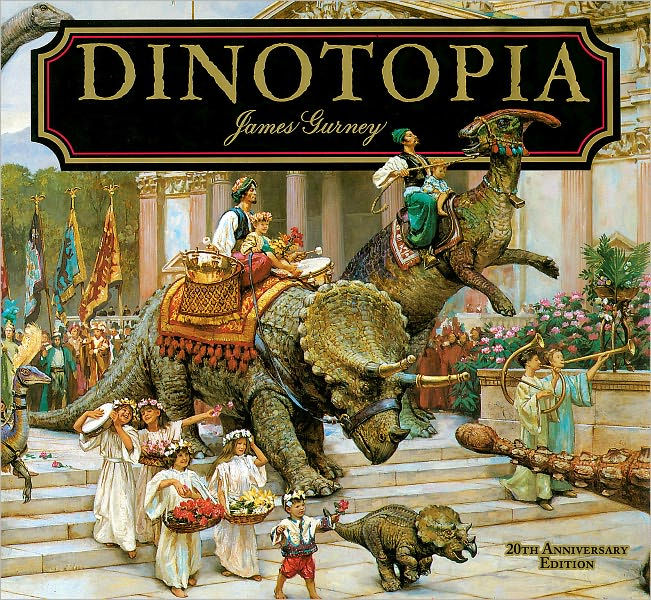
I have very fond memories of an illustrated book called Dinotopia: A Land Apart from Time. It has beautiful imagery, wonderful worldbuilding, and is a tour de force of creating a fully-realized fictional world, courtesy of National Geographic artist James Gurney.

Dinotopia is about an island hidden from the rest of the world where dinosaurs and humans live in peace and harmony. It is presented through the eyes of a 19th-century explorer and his son who are shipwrecked on the island and gradually become a part of its strange, beautiful, and intricate society. Gurney put a lot of thought into how such a world would function, not just the cities and the clothing and the festivals and the government, but such mundane things as bedding, waste disposal, and timekeeping.

And it’s gorgeous.

Remember what it was like to be a kid? When there were no strange grown-up responsibilities and nagging worries? Remember when nobody could take away your joy because you clung to it so fiercely? Dinotopia reminds me of those days, and it reminds me that we are still able to keep that joy throughout our lives.

Most of all, it reminds me how fun it is to curl up with a good book.

Many thanks for visiting my blog. I post updates on my writing career, I muse over storytelling and fiction, and I reflect on the curious and wonderful things in life.

Image: Cover of Dinotopia by James Gurney; Fair use

What is a Masterpiece?

Masterpiece. It’s a word you hear often. So often, I feel that its meaning has been drained out of it. Like “genius” and “magnum opus,” it’s a label we often apply to something that we enjoy on a personal level, regardless of whether it deserves the title.

A little harsh? Probably. There’s nothing wrong with liking something. In fact, I encourage you to like lots of things. Enjoy life. But I like to overthink things and write them down, so why not dig a little deeper?

Masterpiece. It’s actually two words. Master. Piece. A master piece. In ye olden days, guilds and academies required their apprentices and journeymen to submit a masterpiece as part of their application to the status of master. Hence, they presented a piece that marked mastery of their craft, be it carpentry, smithing, jewelry, baking, or what have you. Proof and demonstration that they were worthy of attaining the highest rank, as judged by their superiors.

So, it was something that was measured against quantifiable standards. A masterpiece was actually a lot like today’s college senior capstones: a final paper or project that demonstrates the graduate’s understanding of their degree subject. Or perhaps more appropriately, it is like a doctorate or master’s thesis (and there’s the word “master” again!). That’s not really surprising, considering that guilds, like schools, train people for careers.

But the word’s meaning changed over time, as words are wont to do. Now, a masterpiece has come to hold an even more elevated meaning. It is not simply proof of an individual’s skill, but it is the apex of their skill. Mona Lisa is Leonardo da Vinci’s masterpiece. Not his first work, but widely considered his best. 1984 is George Orwell’s masterpiece, and Star Wars is George Lucas’s.

So what does the word mean nowadays? It means something superlative, something that represents the epitome of the creator’s talent and understanding of the art. It is applied to anything that can be considered great or notable. And in so doing, we have, oddly enough, brought the word down. A masterpiece is declared as such by critics who are not necessarily practitioners of the art. Anyone who favors a particular artist or author and is eager to share that love can declare their favorite work to be a masterpiece, regardless of what merit it actually represents. That happens with all words – their meanings change and are shaped by usage into something quite different, and will again in a hundred years or so – but looking back at a word’s origin can make you look at it a little differently. A little more carefully.

A masterpiece was originally something that proved the apprentice was worthy of the master’s rank as judged by his teachers. It was a stepping stone from a lower tier to a higher one. It was a gateway and a turning point in one’s life. It was something singular and unique. It was the masterpiece of your career. It was something special.

Call me grumpy, but I think we can be more mindful when using words like masterpiece. They are powerful words, and applying them more prudently can in turn make us consider the media we consume more carefully. A bit of critical thinking put into evaluating whether something is truly a master’s piece. And that’s good practice for any artist.

Many thanks for visiting my blog. I post updates on my writing career, I muse over storytelling and fiction, and I reflect on the curious and wonderful things in life.

Of Apple Seeds and Dreams

Lately, I’ve been thinking of apple seeds.

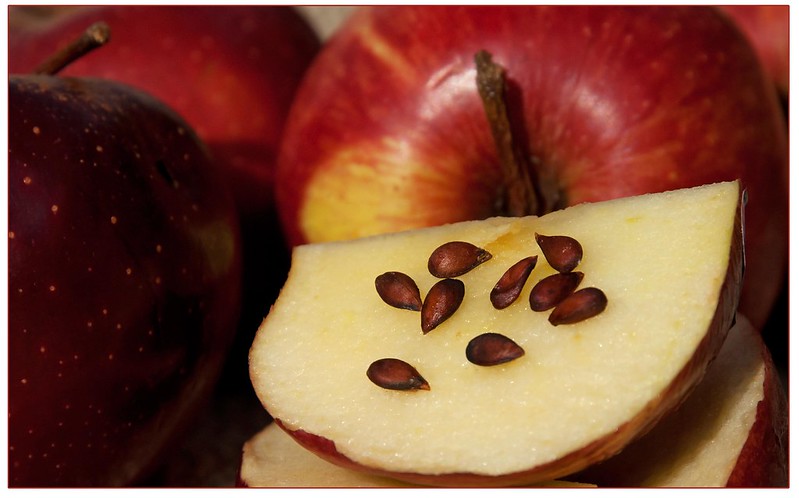
Apple seeds are small and insignificant. They’re tiny specks of black that you carve out of an apple and throw away. They’re detritus tossed on the ground. But give it rich soil to take root in …

The apple tree comes from the small and insignificant seed. It is tall and strong. It’s branches are broad and its leaves green. It bears good fruit. Just give it time. Be patient. Nurture it. Graft in healthy branches. Care for it and watch it produce an abundance. Time invested is time rewarded.

So it is with dreams. Nurture your dreams, give them care, treat them patiently. They won’t emerge fully formed in a day. Months and years and decades. These are the lifespans of realized dreams. Work. Wait. Watch. They will grow. They will bear fruit.

Many thanks for visiting my blog. I post updates on my writing career, I muse over storytelling and fiction, and I reflect on the curious and wonderful things in life.

Image: “Apple Seeds” by Leonard J Matthews; Licensed under CC BY-NC-SA 2.0.