Quirks and Tics: Characterization through Minor Details

You ever think about how traits and habits can shape a character? Everyone has their own flavor of mannerisms: body posture, repeating gestures, facial expressions, verbal expressions, nervous habits. For the sake of simplicity, let’s call them “quirks.” They’re the little details that don’t play a part in the unfolding plot, but simply help flesh out the world you’re creating. Being visual cues, for the most part, they also aren’t always the easiest thing to describe in writing. Movies love them, though, and they can definitely help liven up a scene and make characters more relatable.

It’s all about humanizing your characters. Real people have habits and tics. They do or say things on a regular basis that are uniquely a part of them. You – yes, you – have habits and gestures of your own that make you, well, you. The devil is in the details, but so is good writing. Experienced authors can make even a bit character memorable by throwing in a couple of notable traits and letting those emblazon themselves in readers’ minds. Movies have it even easier. Being visual by nature, a film or TV show can display those quirks without pausing to describe them, letting such details blend more seamlessly into the narrative.

Mostly, quirks are all about worldbuilding, aren’t they? Not necessary to the plot, not vital to understanding the hero and supporting cast. They’re like sprinkles on ice cream. They’re a little something extra.

Or are they?

Quirks can be used as plot devices and can even deliver good payoffs. Someone recognizes her long-lost lover because of the specific way in which he twirls his hair. A secret agent’s habit of spinning his knife causes him to drop it and nearly trigger a motion-sensor alarm. A villain always unconsciously taps her fingers at the prospect of playing a game. A protagonist with OCD compulsively touches and counts poles on the sidewalk. He misses one and goes back for it – just in time to miss being run down by an oncoming car.

These are all examples taken from real movies and TV shows. Can you figure out where they come from?

Do you want your story to feel real? Do you want your characters to feel like people you might actually meet on the street? Or maybe you just want to challenge yourself with producing something a little more creative than past works? Consider using quirks to ad spice to your story. How? Well, take a look at the people you already know. Watch them carefully (but don’t be weird about it). Look at how they act and talk and move. Real life is good inspiration. Everyone has quirks.

Are there ways in which you have used quirks in your writing? Please feel free to share!

If you just so happen to be enjoying my blog, feel free to subscribe. I post updates on my writing career, I muse over storytelling and fiction, and I reflect on the curious and wonderful things in life.
Putting Your Best Foot Forward: Thoughts on Confidence

You ever see someone walking down the street with an easy stride, good posture, and a sure expression on their face? You think to yourself, “Man, they’ve got it together. They know they’re going places in life.” You ever question if they actually did know what they were doing and where they’d end up? After all, if they look like they know what they’re doing, they probably do, right?

Well, maybe not.

How often did you ask mom and dad questions about the world when you were a kid? And you took their answers as gospel truth. Parents always know why the sky is blue, and why the moon disappears during the day, and how car engines work, and when Santa is coming down the chimney on Christmas Eve. They were the all-knowing arbiters of wisdom.

Then we grew up and figured out that our parents were barely keeping it together. Blazes if they knew the right answers to a young child’s innocent curiosity. We become parents ourselves and end up playing the same part, only to discover that we can barely manage a coherent sentence in response to our children’s relentless torrent of questions.

But our parents always LOOKED like they knew what they were talking about. And because of that, we never thought to question anything they said. They could have told us the world really was black and white with no color in the 1950s, and our young selves would have believed them.

What about the inverse? An expert – in mathematics, let’s say – lectures in front of an audience. He’s giving one of those TED talks or what have you. He knows exactly what he’s talking about. He’s foremost in his field. But he stutters. He’s nervous being out in public like this. Consequently, he can’t explain the concepts very well. He has a nervous laugh and shuffles his feet. An expert? Sure. But we aren’t inclined to take him seriously. Not like Dad, who has no idea how photosynthesis works, but is able to bluff his three-year-old with a bold smile and a ready answer.

Confidence is a funny thing. It’s no guarantee of truth or accuracy, but it is such a vital component of how others perceive us. We trust confident people. They at least have the decency to look like they know what they’re about. And hey, if they trust their own skill, why shouldn’t we? Well, that way lies potential catastrophe, but that’s the point. We follow those who look like they know where they’re going. Confidence is no substitute for competence, but it is an important ingredient in leadership and successful undertakings.

Writing your book is one thing. Selling it is another. The Internet is full of ways to advertise, but if you don’t believe in the product yourself, why should others? If you don’t have the self-assurance that your story is worth reading, how are you going answer the question, “Why should I care?” If you don’t have any confidence, any trust in your book’s quality, people notice. And who wants to read a book that even the author doesn’t think is very good? Have a little faith in your work!

We live in a superficial world. Sad, but true. People look at our appearance and how we carry ourselves. Before they get to know us, they spot little details –shirt stains, unkempt hair, untied shoelaces. And thus, our self-presentation impresses itself on people’s memories for far longer than a good conversation or a well-informed lecture. Likewise, if any aspiring writers are trying to convince someone to read their book and looks nervous and withdrawn when discussing the thing, that’s what our would-be readers will remember, not that we actually wrote a good story that they’ll enjoy.

Is that fair? Not really. But it’s real. Writing requires skill and practice and patience. But to get people to read that story? That requires the belief that the story you told is worth sharing with others. It requires confidence to say that your story is worth the effort.

If you just so happen to be enjoying my blog, feel free to subscribe. I post updates on my writing career, I muse over storytelling and fiction, and I reflect on the curious and wonderful things in life.
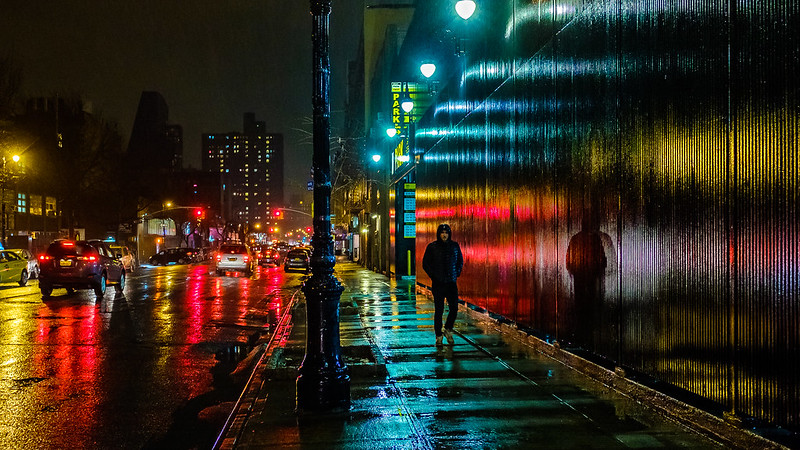
Image: “BASE jump” by santimolina; Licensed under CC BY-NC-ND 2.0.

Writing Your First Draft: The Vomit Draft

Having gotten halfway through the first draft of my second book, I look back on the progress I’ve already made and have mixed feelings about it. On the one hand, I’m fairly confident my skill has improved somewhat since my first book. On the other hand, I see the myriad flaws still there and wish I could write a perfect book straight out of the gate. But writing is a feat where one plays the tortoise more than the hare. Slow and steady wins the race.

Also, the first draft of anything is going to be garbage no matter how hard you try. It’s just the nature of the beast.

In fact, I’ve come up with a nickname for first drafts: the vomit draft.

The first bout of writing isn’t necessarily pretty or neat. In fact, it can be downright ugly as you not only try to type out a coherent story, but also struggle with phrasing, dialogue, vocabulary, writer’s block, and coming to the grim realization that your story’s direction is slowly but surely veering away from your original vision. It’s a beautiful mess.

Knowing this, my goal in the first draft isn’t to write a masterpiece. It’s to just get all the words written. Spewing them out as they come to mind, as it were. Hence, the vomit draft.

We got to start somewhere, right?

Sometimes, I get frustrated and think that the garbage I’m writing is going to stay garbage regardless of rewrites. Sometimes, I go through a brief existential crisis as I wonder if being a writer is even my calling in life and maybe I should just stick to my day job. Sometimes, my mind struggles with even the most basic words. Who will want to read this?

But that’s not what the vomit draft is about. Making your story readable comes later. Right now, just get it all out. No holding back, no second-guessing, no graceful prose. Just write something to fill in the pages. It’s the foundation for what comes later. Every beautiful building is built upon a pool of poured cement. It’s not pretty, and it isn’t supposed to be.

Fortunately, nobody ever has to see our vomit drafts except ourselves. And we get a small consolation in knowing that this sorry state of affairs can and will become something much, much better.

If you just so happen to be enjoying my blog, feel free to subscribe. I post updates on my writing career, I muse over storytelling and fiction, and I reflect on the curious and wonderful things in life.

Image: “A sick cat” by wwhyte1968; Licensed under CC BY-SA 2.0.

History: The Greatest Source of Inspiration for Any Writer

Fact is stranger than fiction, they say. And it’s true. But have you ever considered the inverse: Fiction is never stranger than fact.

No matter a writer’s imagination, no matter his ability to craft new worlds out of his own mind and populate it with characters who seem as real and unique as anyone you meet on the street, and no matter how engaging, grandiose, bizarre, or heartfelt the events portrayed in his work, he will never be able to surpass the parade of the unexpected that is world history.

History IS story. It’s right there in the word, isn’t it? And it’s real. Just think about that for a moment. Think about all the things you’ve read in the history books. Adventure. Romance. Mystery. Tragedy. War. Friendship. Triumph. Defeat. Despair. Hope. All of it is there, all of it waiting to be discovered by that one author seeking a mote of inspiration.

Where am I going with this? Just to say this: We writers have so much to draw from just by browsing the history section at our local library or bookstore. Heck, just go online. We live in the age of information. The World Wide Web contains everything. Try a quick surf of your hometown’s newspaper archives. Stories aplenty. Ideas in abundance.

And now I’m starting to think that there are so many tales in history that haven’t been given their due. Forgotten stories that need a time to shine. Eras and events that have been lost in the bustle of modern progress. Martin Scorsese’s Killers of the Flower Moon highlighted a time in Native American history that deserves more recognition. A terrible time, but one that should be known.

What else have we misplaced? What battles and victories waiting for their recognition? Unsung heroes waiting for their song to be written? Tragedies yet to be acknowledged? Villains who thought they got away with it?

Apologies, I’m just waxing poetical now. You get the idea. Writers don’t just write stories. We live at the tail end of the longest story ever written. All we have to do is look back a little ways for new tales from that saga to tell. Isn’t that a teensy bit amazing?

If you just so happen to be enjoying my blog, feel free to subscribe. I post updates on my writing career, I muse over storytelling and fiction, and I reflect on the curious and wonderful things in life.

Image: “Early printed vellum leaf” by Provenance Online Project; Licensed under CC0 1.0.

Snow and Me: A Complicated Relationship

Winter is approaching fast, and that means snow is on the way where I live. And snow means a clean split between those shivering with excitement and those groaning in despair.

Snow is weird. You want to paint a happy picture of winter fun? Throw in some snowmen and snowballs and snow forts. Want to paint a picture of a barren wasteland? Take OUT the snowmen and snowballs and snow forts.

Snow is great until it isn’t. Making snow angels and trekking through knee-deep drifts is all well and good until the melt seeps into your pants and you can’t feel your toes anymore. Or your fingers. Or your nose and ears. Hey, look! My pinkie just froze and snapped off! Isn’t this FUN?

Look at this magical winter world
Image by Bonnie Moreland; Public Domain Mark 1.0.

When I was a kid, I loved snow. Snow meant days off school and winter play and running around trying to come up with new ways to use the stuff. I loved playing in it and rolling huge snowmen. Well, more like snow boulders. We would just roll a bunch of big uber-snowballs and leave them scattered across the field. And I have fond memories of watching snow slipping off the tallest tree branches during the thaw. Snow is fun – when you don’t have responsibilities.

Nowadays, I prefer to stay inside and enjoy it from a safe distance.

You see, kids don’t have to drive in snow. Or walk down to the mailbox in it. They might have to shovel the driveway, but pay them in cash or candy and they’re happy enough. Too bad adults can’t pay themselves for cracking their spines lugging shovelfuls of very heavy frozen water. Growing up is a terrible thing, sometimes.

Ah, yes, snow is water. Which means it melts. And that brings on the SLUSH. Nobody ever mentions SLUSH when discussing winter. It’s a wintry wonderland, happy and clean and pretty! And then it all turns to SLUSH. Dirty, half-melted bogs of detritus covering roads and pooling in every yard and gutter. The aftermath of winter.

There are people who never see snow, for whom the concept is a distant fantasy. These people probably enjoy snow very much because they never have to deal with it. Snow is a pleasant image on TV screens and picture books and never, ever interferes with their lives. They can safely imagine what it would be like to be in the snow without having to actually endure it.

SOMEONE has to clean up this mess …
Image by jpctalbot; CC BY 2.0.

Yeah, you grow up and little fun things become big pains. Alas. But, snow IS pretty, I’ll give it that. And freshly fallen snow is one of the purest, cleanest things you can see in the world. And the morning after a snowfall is so quiet and peaceful and contemplative. Or eerie and spooky if you’re so inclined.

To all the people who live in regions where there is snow most, if not all of, the year, hats off to you. You are tougher and more patient than I am. I would say that snow only belongs in regions uninhabited by all life, but since humanity always seems keen on colonizing the most desolate and inhospitable regions on Earth, I guess that bus has long since passed. At least some people know how to make really pretty art out of it.

Snow is just weird. It’s this twisted dichotomy of life and death. Snow-covered landscapes are either joyful, festive scenes or just pits of death. Maybe a person’s changing attitude toward snow is some sort of reflection of our changing nature from childhood into adulthood.

Or maybe we’re all crazy and should just stay inside where it’s warm.

Enjoying my blog? Don’t want to miss a single post? Subscribe for updates on when I post and follow my writing career, musings on fiction and storytelling, and reflections about life in general!

Title Image: “snowman” by Dan’l Burton; Licensed under CC BY-SA 2.0.

Escapism: A Necessary Respite

Escapist entertainment. What thoughts run through your head when you hear that phrase? Positive? Negative? Joy? Disapproval?

Escapism gets a bit of a bad rap. Life is serious business, and there’s a lot of work to be done. People are suffering. Injustice is rampant. And when are you going to pay those bills? Why are you wasting time on fluff?

But is escapism a bad thing?

Imagine yourself going up against the hard knocks of life every day. Life is a jerk. It hits you hard without letting up. And it doesn’t play fair. It pulls your hair, throws sucker punches, and it cheats you out of a rightful win.

Even when life lets up, work and responsibilities can weigh heavily. Imagine a rock on the coast, battered by the waves every hour of every day of every year. The rock stands tall for a time, but every wave takes a little bit of it into the sea. The stone is smoothed and weathered. Eventually, it wears away completely. That is a person who works and works and works, but never takes time for a moment’s respite. Life just … wears you down to nothing.

We need to escape, sometimes.

Some light reading, a silly movie, an action-filled comic book, a walk in the park, a thrilling sports activity. For someone somewhere in the world, they’re all ways to distance oneself from the daily grind and relax. They are ways to refresh the mind and body and forget about our troubles for a few precious moments. We need escapism for the sake of our sanity.

Escapist fiction allows us to suspend disbelief and accept that there can be stories that don’t have to reflect reality. Superman and James Bond and Indiana Jones aren’t high art, but they are fun. And what’s the point of entertainment that isn’t fun? There is art and literature that dwells on philosophical questions and searches for meaning in the tragedies of life, but here’s another nugget to chew on: Real life never goes away. It’s waiting for you right outside the door. There is plenty of time to dwell on the deep questions. But don’t we just want to – need to – take a break from it once in a while?

Ah, but here comes the counterpoint: Escapism is withdrawing from responsibility to society and ourselves. It’s evading the important things in life, the things that we must do to live healthily and productively. But all things in moderation. A life of nothing but escapist fantasy is as bad as a life of nothing but grim obligation to work.

Still, there’s a reason why people like fluff entertainment. There’s a reason why people want to laugh at silliness and cheer on the hero fighting the evil villain. Such stories are simple and inspiring. Why do you think cartoons and comics were thriving during the Great Depression? Or during the more recent Great Recession, for that matter? People need something good in their lives, and for many, that can only be found in stories. And it is a healthy thing, because people need hope. We all need a counterbalance against the mundane and dreary.

The greatest responsibility, then, of the escapist is to remember that there is a time and place for everything. A time to mourn, and a time to laugh. A time to work, and a time to play. But don’t forget to take a moment’s respite. You might need it more than you think.

Enjoying my blog? Don’t want to miss a single post? Subscribe for updates on when I post and follow my writing career, musings on fiction and storytelling, and reflections about life in general!

Image: “Pittsfield Hot Air Balloon Rally – 2006” by Heartlover1717; Licensed under CC BY-NC-ND 2.0.

Thankful for the Unexpected

You walk through life. Everything is going according to plan. Every day like the one before – the grating yet comforting grind of monotony. Then BAM. You’re caught by a curveball. A piece of bad news or a freak event. Something you could never have possibly foreseen. Your plans implode, and you’re left with your head spinning.

On the other hand …

Something joyous happens, something spectacular that you never dared hope for. It’s the greatest news ever, the most wonderful unplanned thing to happen to you. Your plans are upended in the best way possible.

What do you do when life hands you the unexpected? I like plans. I like organization. I like to go through life knowing what’s going to happen next. When something pops up that isn’t part of the plan, I bristle. Even good things, sometimes. My control freak tendencies take a hit from things in life beyond my control. The older I get, the more thankful I am for that.

I could go on about how life is a test and molds us and so forth, but let’s dispense with the cliches. What I’m most thankful for is that the unexpected in life – good and bad – show us who we really are. We dig deep when confronted with a crisis to prove our real mettle. A disaster buffets us, and cracks in our supposed good character can appear. We get to know ourselves a little better. No need to fret, though. Knowing that they are there gives us a chance to address them.

I don’t believe that anyone can truly know themselves fully. Our “real” selves are a bit of a mystery to our own minds. We humans are simply simply too complex and too multilayered to be able to completely comprehend ourselves, much less others. But we do get glimpses of insight every now and then. Life isn’t the only thing full of the unexpected. We can defy our own expectations. We accomplish things we didn’t know we could, we possess virtues we never, ever suspected we had, and we also display vices we never thought we possessed.

Okay, life is a test at times. But testing isn’t meant to break. I’m very glad that life has thrown curve balls at me. I’d be stagnating in my own self-satisfaction if I didn’t know where and how I could improve. Always room for growth and all that jazz.

This naturally extends to writing. No great writer ever rested on his or her laurels. They keep improving, working, pushing themselves to become better. And writing is a career where you put yourself into the public’s eye. Readers can detect if you’re improving or not. Scary, no? And no writer can ever 100% predict how readers will react. What form will the criticism take? What will be the readers’ reactions? Are we ready? Can we ever be ready? But we roll with the punches as best we can and figure out what went right and what went wrong. And we write a better story next time.

Expect the unexpected. Welcome it. You’re going to be thrown for a loop someday anyway. Might as well as learn to embrace the good that comes from it.

Enjoying my blog? Don’t want to miss a single post? Subscribe for updates on when I post and follow my writing career, musings on fiction and storytelling, and reflections about life in general!

Image: “River meander, outside of Kobuk Valley National Park” by AlaskaNPS; Licensed under Public Domain Mark 1.0.

Why Do You Write?

To all the writers out there.

Why do you write?

Is it a compulsion, a need? Do you wake up each day and not know peace until you write a sentence, a paragraph, a chapter? Do you fear that if you don’t then you will burst?

Do you write for fame and fortune? Do you envision filing whole shelves in the bookstore? Do you see websites devoted to you, adoring fans, #1 on the New York Times bestseller list?

Why do you write?

Is it a profession like any other? A way to pay the bills and keep a roof over your head? A means to put food on the table?

Maybe you’re a dilletante. Writing is self-entertainment, a way to vent your creative impulses in your spare time. Nothing worth publishing, just for fun.

Or maybe you write for friends and family. It’s a way to amuse them with your talents, a bonding experience.

Do you write for strangers? Potential followers? Or maybe for no one in particular?

Why do you write?

Do you have a message to send? A vision to share? A statement to make?

Is it about entertainment and laughter? Or maybe you seek to instill fear, or joy, or curiosity, or dread, or thoughtfulness, or …

Or no reason other than because you can.

Why do you write?

Enjoying my blog? Don’t want to miss a single post? Subscribe for updates on when I post and follow my writing career, musings on fiction and storytelling, and reflections about life in general!

Image: “Pencil” by taylor.a; Licensed under CC BY 2.0.

Climbing Out of Your Burrow: Read New Things!

Image: “Rabbit and Burrow” by Stephen.G; Licensed under CC BY-NC 2.0.

“Cuddling up with a good book” is a phrase that invites images of coziness and comfort. It’s like being a rabbit holed up in your burrow, safe and secure. And we do like being comfortable. The same predictable genre or series over and over is a safe choice for when we get the itch to read something. But we are not rabbits. We humans benefit greatly from trying new things. Sometimes, we need to climb out of our burrows and take a close look at the landscape. A new book, a new genre, a new experience.

It’s not easy to do something we’ve never tried before, even with something as seemingly trivial as trying a new book. But it’s not trivial, is it? For some of us (myself included), it can be very daunting indeed. Reading is a time investment. Sinking time into something we might not even enjoy is time forever lost to us. Dare we take the risk?

I say we should. Life is short enough without limiting ourselves to a narrow view of it. Stories grow us and expand our perspective on the world. And who knows? You just might discover something new to love in literature. Trying new things is its own reward, and challenging ourselves to grow is always beneficial.

Rabbits are nervous, wary creatures. But rabbits can’t read and know the joy of encountering a new tale, of being lost in a new world of words. There are so many worlds out there, contained in the pages of a book or imprinted in the code of an eBook, and they’re all there for us to visit whenever we want. Why shouldn’t we try to explore as much as we can?

Alright, I’ll be honest. I’ve read books I didn’t enjoy. I’ve tried things recommended to me that I didn’t get much of a thrill doing. But, as they say, you never know until you try. On the other hand, I discovered some of my favorite franchises thanks to a friend or family member. And sometimes just from idle curiosity.

Whether you’re a writer or not, if you love literature, than never stop exploring its many corners. Leave your burrow and go out and see what there is to see!

Enjoying my blog? Don’t want to miss a single post? Subscribe for updates on when I post and follow my writing career, musings on fiction and storytelling, and reflections about life in general!

You Think This is Funny? Reflecting on Film Writing and Humor

Image: “Comedy and Tragedy Masks” by Booyabazooka; Licensed under CC 3.0

Today I’m going to talk about something specifically related to film writing, and a trend that I’ve seen in movies for a while now.

See the picture above? You’ve seen them around. The twin masks of Comedy and Tragedy. The two always go together. Where there’s laughter, there’s sorrow. Where there’s mourning, there’s merriment. They need each other. Every great work has both working hand-in-hand in the jolly spirit of cooperation.

We need to laugh. But, and this is a big but, we also need to cry. And if you have too much of one and none of the other…

What happens if a story is all jokes and funny business? Well, you might call it a comedy, sure, but do you know what a lot of really good comedies have? Moments of seriousness interspersed with the hilarity. And do you know what the best dramas have? Sprinklings of humor to lift the audience’s spirits.

But writing comedy is tricky. Heck, writing in general is tricky, but writing appealing humor is really tricky because you’re trying to appeal to a broad audience. Why do you think broad humor is synonymous with toilet humor? It’s easy to get a quick laugh out of something dirty. It’s the easy way out and requires little skill. Sorry to all of you out there who enjoy such, but it really is the junk food of comedy. And like junk food, you like it at first, but it leaves you sick in the end.

As a wise man once said: “Dying is easy. Comedy is hard.”

Humor is more than just jokes. Humor humanizes. People crack jokes under pressure. Their sense of humor makes the audience able to empathize with them. And yet, humor can also de-humanize, funnily enough. What do I mean by that?

Okay, let’s talk about the current state of Hollywood. Yes, I’m going there.

Blockbusters nowadays – not all of them, but a whole lot – rely on quips and wisecracks to carry their characters through the action. A dramatic scene is undercut by a sudden swerve into corny jokes. Everyone is a kidder. Too much humor spoils the plot. If nobody is taking this seriously, why should I? What are the stakes? When you joke about everything, everything becomes a joke. The characters are just walking punchlines, waltzing from gag to gag. They’re defined by how much funny they can deliver per minute. And they cease to be characters: They’re walking satires, exaggerated stereotypes of human behavior.

Well, Arnold Schwarzenegger could pull it off. True, but 1980’s action movies rarely pretended to be anything more than fluff. Watch bad guys get beat up by a hero delivering one-liners after each kill. What happens when modern blockbusters try to pose as something much more meaningful – and then undercut that meaning with a one-liner perfectly timed to be delivered at the most poignant and emotional moment?

Humor is a very powerful tool. It tells us what to take seriously and what to devalue. We laugh at things we don’t treat as important or respectable. Which can backfire if you set up a story where a situation or character is meant to be treated with dignity, respect, confidence, and even fear, and then undermine that intent with a barrage of cheap quips. Humor is like a gun: You don’t wave it around carelessly.

What’s worse, the audience very quickly becomes desensitized to it. A couple of movies with this type of writing, the audience is whooping and hollering. But by the tenth film, it becomes old-hat. Yeah, yeah, this is about the right place for – yup, he did it. He made a corny joke right when I expected him to. Hey, here’s a quiet drama scene. I bet they’re gonna – yup, another cheap joke to ruin the mood.

Predictable, formulaic, and worst of all, boring. Same old, same old.

So, what to do about it?

Well, learn from it, for one. Why doesn’t it work anymore? Analysis of others’ writing, both good and bad, can be useful for improving one’s own skills. Learning from the mistakes and missteps of others is invaluable. Comedy is a rich and complex genre in and of itself, with so many branches. It serves many purposes, and can truly bring light into hopeless situations, and alleviate tension right when the audience needs it. Just don’t overdo it. No need to beat someone over the head to make sure they “get the joke.”

And the joke itself isn’t the point. Everything, even a witty quip, should be in service of the story. The story should never serve the joke.

Enjoying my blog? Don’t want to miss a single post? Subscribe for updates on when I post and follow my writing career, musings on fiction and storytelling, and reflections about life in general!