Escapism: A Necessary Respite

Escapist entertainment. What thoughts run through your head when you hear that phrase? Positive? Negative? Joy? Disapproval?

Escapism gets a bit of a bad rap. Life is serious business, and there’s a lot of work to be done. People are suffering. Injustice is rampant. And when are you going to pay those bills? Why are you wasting time on fluff?

But is escapism a bad thing?

Imagine yourself going up against the hard knocks of life every day. Life is a jerk. It hits you hard without letting up. And it doesn’t play fair. It pulls your hair, throws sucker punches, and it cheats you out of a rightful win.

Even when life lets up, work and responsibilities can weigh heavily. Imagine a rock on the coast, battered by the waves every hour of every day of every year. The rock stands tall for a time, but every wave takes a little bit of it into the sea. The stone is smoothed and weathered. Eventually, it wears away completely. That is a person who works and works and works, but never takes time for a moment’s respite. Life just … wears you down to nothing.

We need to escape, sometimes.

Some light reading, a silly movie, an action-filled comic book, a walk in the park, a thrilling sports activity. For someone somewhere in the world, they’re all ways to distance oneself from the daily grind and relax. They are ways to refresh the mind and body and forget about our troubles for a few precious moments. We need escapism for the sake of our sanity.

Escapist fiction allows us to suspend disbelief and accept that there can be stories that don’t have to reflect reality. Superman and James Bond and Indiana Jones aren’t high art, but they are fun. And what’s the point of entertainment that isn’t fun? There is art and literature that dwells on philosophical questions and searches for meaning in the tragedies of life, but here’s another nugget to chew on: Real life never goes away. It’s waiting for you right outside the door. There is plenty of time to dwell on the deep questions. But don’t we just want to – need to – take a break from it once in a while?

Ah, but here comes the counterpoint: Escapism is withdrawing from responsibility to society and ourselves. It’s evading the important things in life, the things that we must do to live healthily and productively. But all things in moderation. A life of nothing but escapist fantasy is as bad as a life of nothing but grim obligation to work.

Still, there’s a reason why people like fluff entertainment. There’s a reason why people want to laugh at silliness and cheer on the hero fighting the evil villain. Such stories are simple and inspiring. Why do you think cartoons and comics were thriving during the Great Depression? Or during the more recent Great Recession, for that matter? People need something good in their lives, and for many, that can only be found in stories. And it is a healthy thing, because people need hope. We all need a counterbalance against the mundane and dreary.

The greatest responsibility, then, of the escapist is to remember that there is a time and place for everything. A time to mourn, and a time to laugh. A time to work, and a time to play. But don’t forget to take a moment’s respite. You might need it more than you think.

Enjoying my blog? Don’t want to miss a single post? Subscribe for updates on when I post and follow my writing career, musings on fiction and storytelling, and reflections about life in general!

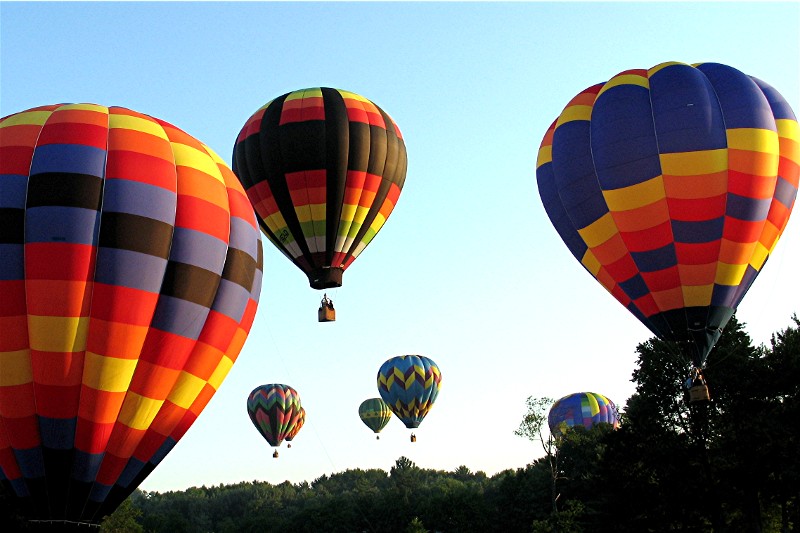
Image: “Pittsfield Hot Air Balloon Rally – 2006” by Heartlover1717; Licensed under CC BY-NC-ND 2.0.

Thankful for the Unexpected

You walk through life. Everything is going according to plan. Every day like the one before – the grating yet comforting grind of monotony. Then BAM. You’re caught by a curveball. A piece of bad news or a freak event. Something you could never have possibly foreseen. Your plans implode, and you’re left with your head spinning.

On the other hand …

Something joyous happens, something spectacular that you never dared hope for. It’s the greatest news ever, the most wonderful unplanned thing to happen to you. Your plans are upended in the best way possible.

What do you do when life hands you the unexpected? I like plans. I like organization. I like to go through life knowing what’s going to happen next. When something pops up that isn’t part of the plan, I bristle. Even good things, sometimes. My control freak tendencies take a hit from things in life beyond my control. The older I get, the more thankful I am for that.

I could go on about how life is a test and molds us and so forth, but let’s dispense with the cliches. What I’m most thankful for is that the unexpected in life – good and bad – show us who we really are. We dig deep when confronted with a crisis to prove our real mettle. A disaster buffets us, and cracks in our supposed good character can appear. We get to know ourselves a little better. No need to fret, though. Knowing that they are there gives us a chance to address them.

I don’t believe that anyone can truly know themselves fully. Our “real” selves are a bit of a mystery to our own minds. We humans are simply simply too complex and too multilayered to be able to completely comprehend ourselves, much less others. But we do get glimpses of insight every now and then. Life isn’t the only thing full of the unexpected. We can defy our own expectations. We accomplish things we didn’t know we could, we possess virtues we never, ever suspected we had, and we also display vices we never thought we possessed.

Okay, life is a test at times. But testing isn’t meant to break. I’m very glad that life has thrown curve balls at me. I’d be stagnating in my own self-satisfaction if I didn’t know where and how I could improve. Always room for growth and all that jazz.

This naturally extends to writing. No great writer ever rested on his or her laurels. They keep improving, working, pushing themselves to become better. And writing is a career where you put yourself into the public’s eye. Readers can detect if you’re improving or not. Scary, no? And no writer can ever 100% predict how readers will react. What form will the criticism take? What will be the readers’ reactions? Are we ready? Can we ever be ready? But we roll with the punches as best we can and figure out what went right and what went wrong. And we write a better story next time.

Expect the unexpected. Welcome it. You’re going to be thrown for a loop someday anyway. Might as well as learn to embrace the good that comes from it.

Enjoying my blog? Don’t want to miss a single post? Subscribe for updates on when I post and follow my writing career, musings on fiction and storytelling, and reflections about life in general!

Image: “River meander, outside of Kobuk Valley National Park” by AlaskaNPS; Licensed under Public Domain Mark 1.0.

Why Do You Write?

To all the writers out there.

Why do you write?

Is it a compulsion, a need? Do you wake up each day and not know peace until you write a sentence, a paragraph, a chapter? Do you fear that if you don’t then you will burst?

Do you write for fame and fortune? Do you envision filing whole shelves in the bookstore? Do you see websites devoted to you, adoring fans, #1 on the New York Times bestseller list?

Why do you write?

Is it a profession like any other? A way to pay the bills and keep a roof over your head? A means to put food on the table?

Maybe you’re a dilletante. Writing is self-entertainment, a way to vent your creative impulses in your spare time. Nothing worth publishing, just for fun.

Or maybe you write for friends and family. It’s a way to amuse them with your talents, a bonding experience.

Do you write for strangers? Potential followers? Or maybe for no one in particular?

Why do you write?

Do you have a message to send? A vision to share? A statement to make?

Is it about entertainment and laughter? Or maybe you seek to instill fear, or joy, or curiosity, or dread, or thoughtfulness, or …

Or no reason other than because you can.

Why do you write?

Enjoying my blog? Don’t want to miss a single post? Subscribe for updates on when I post and follow my writing career, musings on fiction and storytelling, and reflections about life in general!

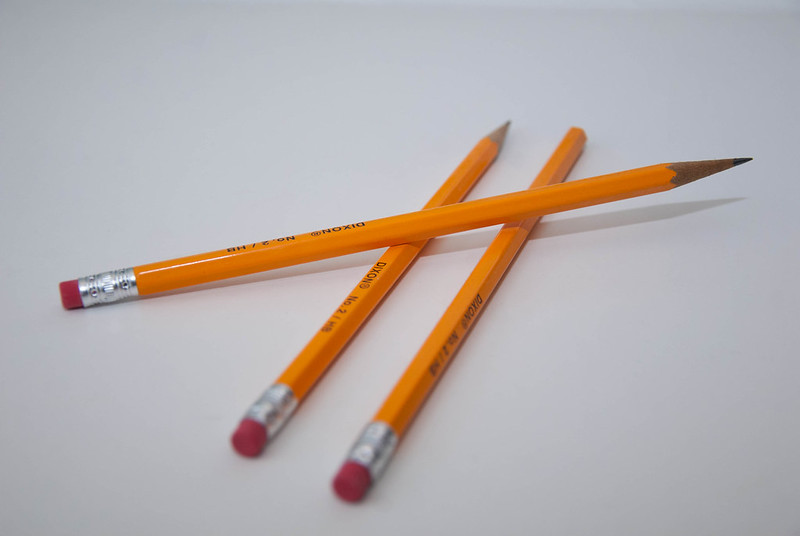
Image: “Pencil” by taylor.a; Licensed under CC BY 2.0.

Climbing Out of Your Burrow: Read New Things!

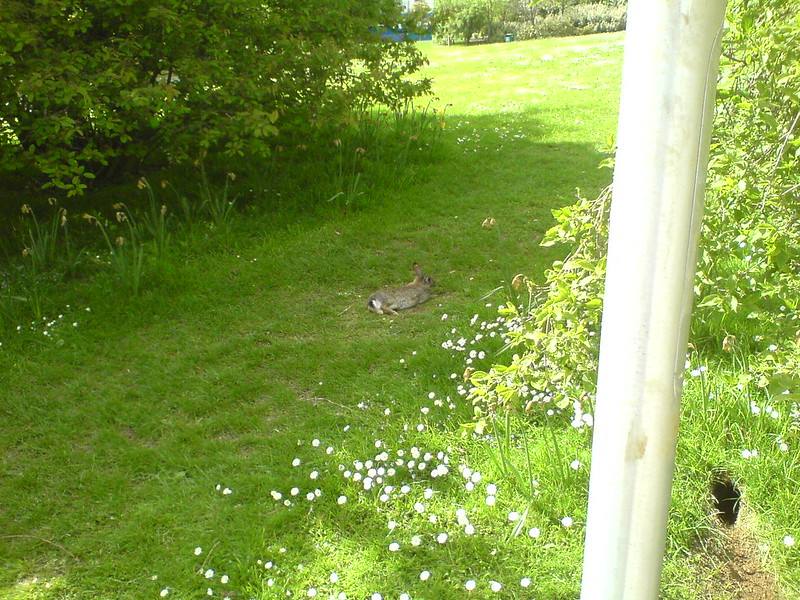
Image: “Rabbit and Burrow” by Stephen.G; Licensed under CC BY-NC 2.0.

“Cuddling up with a good book” is a phrase that invites images of coziness and comfort. It’s like being a rabbit holed up in your burrow, safe and secure. And we do like being comfortable. The same predictable genre or series over and over is a safe choice for when we get the itch to read something. But we are not rabbits. We humans benefit greatly from trying new things. Sometimes, we need to climb out of our burrows and take a close look at the landscape. A new book, a new genre, a new experience.

It’s not easy to do something we’ve never tried before, even with something as seemingly trivial as trying a new book. But it’s not trivial, is it? For some of us (myself included), it can be very daunting indeed. Reading is a time investment. Sinking time into something we might not even enjoy is time forever lost to us. Dare we take the risk?

I say we should. Life is short enough without limiting ourselves to a narrow view of it. Stories grow us and expand our perspective on the world. And who knows? You just might discover something new to love in literature. Trying new things is its own reward, and challenging ourselves to grow is always beneficial.

Rabbits are nervous, wary creatures. But rabbits can’t read and know the joy of encountering a new tale, of being lost in a new world of words. There are so many worlds out there, contained in the pages of a book or imprinted in the code of an eBook, and they’re all there for us to visit whenever we want. Why shouldn’t we try to explore as much as we can?

Alright, I’ll be honest. I’ve read books I didn’t enjoy. I’ve tried things recommended to me that I didn’t get much of a thrill doing. But, as they say, you never know until you try. On the other hand, I discovered some of my favorite franchises thanks to a friend or family member. And sometimes just from idle curiosity.

Whether you’re a writer or not, if you love literature, than never stop exploring its many corners. Leave your burrow and go out and see what there is to see!

Enjoying my blog? Don’t want to miss a single post? Subscribe for updates on when I post and follow my writing career, musings on fiction and storytelling, and reflections about life in general!

You Think This is Funny? Reflecting on Film Writing and Humor

Image: “Comedy and Tragedy Masks” by Booyabazooka; Licensed under CC 3.0

Today I’m going to talk about something specifically related to film writing, and a trend that I’ve seen in movies for a while now.

See the picture above? You’ve seen them around. The twin masks of Comedy and Tragedy. The two always go together. Where there’s laughter, there’s sorrow. Where there’s mourning, there’s merriment. They need each other. Every great work has both working hand-in-hand in the jolly spirit of cooperation.

We need to laugh. But, and this is a big but, we also need to cry. And if you have too much of one and none of the other…

What happens if a story is all jokes and funny business? Well, you might call it a comedy, sure, but do you know what a lot of really good comedies have? Moments of seriousness interspersed with the hilarity. And do you know what the best dramas have? Sprinklings of humor to lift the audience’s spirits.

But writing comedy is tricky. Heck, writing in general is tricky, but writing appealing humor is really tricky because you’re trying to appeal to a broad audience. Why do you think broad humor is synonymous with toilet humor? It’s easy to get a quick laugh out of something dirty. It’s the easy way out and requires little skill. Sorry to all of you out there who enjoy such, but it really is the junk food of comedy. And like junk food, you like it at first, but it leaves you sick in the end.

As a wise man once said: “Dying is easy. Comedy is hard.”

Humor is more than just jokes. Humor humanizes. People crack jokes under pressure. Their sense of humor makes the audience able to empathize with them. And yet, humor can also de-humanize, funnily enough. What do I mean by that?

Okay, let’s talk about the current state of Hollywood. Yes, I’m going there.

Blockbusters nowadays – not all of them, but a whole lot – rely on quips and wisecracks to carry their characters through the action. A dramatic scene is undercut by a sudden swerve into corny jokes. Everyone is a kidder. Too much humor spoils the plot. If nobody is taking this seriously, why should I? What are the stakes? When you joke about everything, everything becomes a joke. The characters are just walking punchlines, waltzing from gag to gag. They’re defined by how much funny they can deliver per minute. And they cease to be characters: They’re walking satires, exaggerated stereotypes of human behavior.

Well, Arnold Schwarzenegger could pull it off. True, but 1980’s action movies rarely pretended to be anything more than fluff. Watch bad guys get beat up by a hero delivering one-liners after each kill. What happens when modern blockbusters try to pose as something much more meaningful – and then undercut that meaning with a one-liner perfectly timed to be delivered at the most poignant and emotional moment?

Humor is a very powerful tool. It tells us what to take seriously and what to devalue. We laugh at things we don’t treat as important or respectable. Which can backfire if you set up a story where a situation or character is meant to be treated with dignity, respect, confidence, and even fear, and then undermine that intent with a barrage of cheap quips. Humor is like a gun: You don’t wave it around carelessly.

What’s worse, the audience very quickly becomes desensitized to it. A couple of movies with this type of writing, the audience is whooping and hollering. But by the tenth film, it becomes old-hat. Yeah, yeah, this is about the right place for – yup, he did it. He made a corny joke right when I expected him to. Hey, here’s a quiet drama scene. I bet they’re gonna – yup, another cheap joke to ruin the mood.

Predictable, formulaic, and worst of all, boring. Same old, same old.

So, what to do about it?

Well, learn from it, for one. Why doesn’t it work anymore? Analysis of others’ writing, both good and bad, can be useful for improving one’s own skills. Learning from the mistakes and missteps of others is invaluable. Comedy is a rich and complex genre in and of itself, with so many branches. It serves many purposes, and can truly bring light into hopeless situations, and alleviate tension right when the audience needs it. Just don’t overdo it. No need to beat someone over the head to make sure they “get the joke.”

And the joke itself isn’t the point. Everything, even a witty quip, should be in service of the story. The story should never serve the joke.

Enjoying my blog? Don’t want to miss a single post? Subscribe for updates on when I post and follow my writing career, musings on fiction and storytelling, and reflections about life in general!

Stories for All Time: Universal Themes in Writing

Image: “Lonely Galaxy Lost in Space” by NASA Goddard Photo and Video, Licensed under CC BY 2.0.

Really, this topic is so vast that I could devote an entire week to it. When you consider that stories have been told for as long as humanity has existed, it’s small wonder that certain themes and morals endure the rise and fall of civilizations, and that common threads wind through the evolution of communication technologies.

Quite simply, certain themes in storytelling are universal. I’m sure you’ve thought of some just now. Good versus evil. The hero’s journey. Coming of age. Revenge. Forgiveness. Hope. War and peace. Etc., etc. Why? Because they’re broad. They appeal to everyone, because everyone has, at some point or another, dealt with these issues. They resonate with us, to use a common turn of phrase. Another way of putting it is that they are inherently familiar topics. And it doesn’t matter who you are or where you’re from, everybody has a concept of the hero or wants a story about hope. Everyone is familiar with war, and also with villainy. You don’t need cultural translation to understand that there are good things in the world and also very bad things.

So, some stories have that universal appeal. How do we know which ones? Well, it takes a bit of patience to find out, doesn’t it? When Charles Dickens wrote A Christmas Carol, he didn’t know his novella would be a staple of literature over 150 years later. Neither did the Greek poet Homer know that The Odyssey and The Iliad would still be studied to this very day.

Wait fifty years. Is the story still popular? More importantly, is it still relevant? Do people still care?

For every masterpiece, there must be ten thousand forgotten works. So many stories fade away with time. Sometimes, it’s due to bad luck or happenstance, and some never get a chance to be recognized. And some were a flash in the pan: Their plots were ripped from the headlines, centered around current events. What was hot and fresh that year gave them a brief celebrity. Then the world moved on, and these stories became anachronisms. Their identities were fixed in current events, and without that context they remain curiosities at best.

I won’t give any examples. Maybe you can think of a few yourself.

Universality and timelessness go hand-in-hand. The greatest stories don’t need to be shackled to any one era. They can be retold, again and again, in any age, at any time, because the core of their identity and popularity isn’t the bells and whistles of the current year. It is their basic, broad, foundational themes that reverberate throughout the ages. Sherlock Holmes is Sherlock Holmes, whether he’s in the 19th century or the 21st. Journey to the West has been retold as a post-apocalyptic video game. You can’t count the number of adaptations of Little Red Riding Hood on your hands and feet – you’ll run out of digits.

The very best stories can be told over and over again, and they have something to say to us every time.

Enjoying my blog? Don’t want to miss a single post? Subscribe for updates on when I post and follow my writing career, musings on fiction and storytelling, and reflections about life in general!

Why Writers Must Learn to Kill Their Babies (Less Morbid than It Sounds)

Okay, let me explain…

When I was taking film classes in college, my professor explained a key lesson that every writer must learn. They must learn when it is necessary to kill their babies.

You have an idea. It’s a brilliant, shining idea that came to you in an incandescent flash of inspiration. A magnificent idea that is the beating heart of your story. It is your motivation and driving force. The story would not exist except for this one concept.

It could be anything. A single scene. A character. A set piece. Even a single line of dialogue. Whatever it is, it was amazing enough to make you sit down and write.

It is your precious baby.

You finish the first draft of your story. You’re very pleased with it, especially how you incorporated your idea into the overall work. You send it out to readers for feedback. And the unexpected happens. They’re dubious about your baby. They don’t like it. They say that it doesn’t mesh with the rest of the story. In fact, it’s holding your story back from its full potential. It’s a liability.

Without realizing it, as you wrote and developed your setting, characters, and plot, they outgrew the original idea. That concept you love so much is no longer the plot’s beating heart. It is a tumor that threatens the quality of your narrative. The scene is out of place and unneeded. The character is completely detached from the rest of the cast. The set piece is just a waste of words. The line of dialogue is silly.

For the sake of the story, you must kill your baby.

If that sounds grotesque, it’s only to communicate how strongly writers can feel about their stories, and how painful it can be to remove something that can feel so personal to you. It’s a necessary culling that must be performed for the good of your writing. It is a sacrifice, one that almost every author must make at some point or another. And for those who aren’t willing to make the sacrifice, well, their story suffers for it. The readers might, too.

The lesson here is that something that seems like its working at the beginning of your project can become an utterly awful proposition by the end. A chef likes garlic, so he adds a ton of garlic to his casserole. Then he tastes the final product and gags. It was a good idea at the time, but …

Enjoying my blog? Don’t want to miss a single post? Subscribe for updates on when I post and follow my writing career, musings on fiction and storytelling, and reflections about life in general!

Paperback Version of My Book is Available on Amazon!

Do you like eBooks? I like eBooks. Convenient and affordable. But sometimes I want that tactile sensation of a paperback in my hands and to hear the soft flutter of turning pages. If you like that, too, then I have great news.

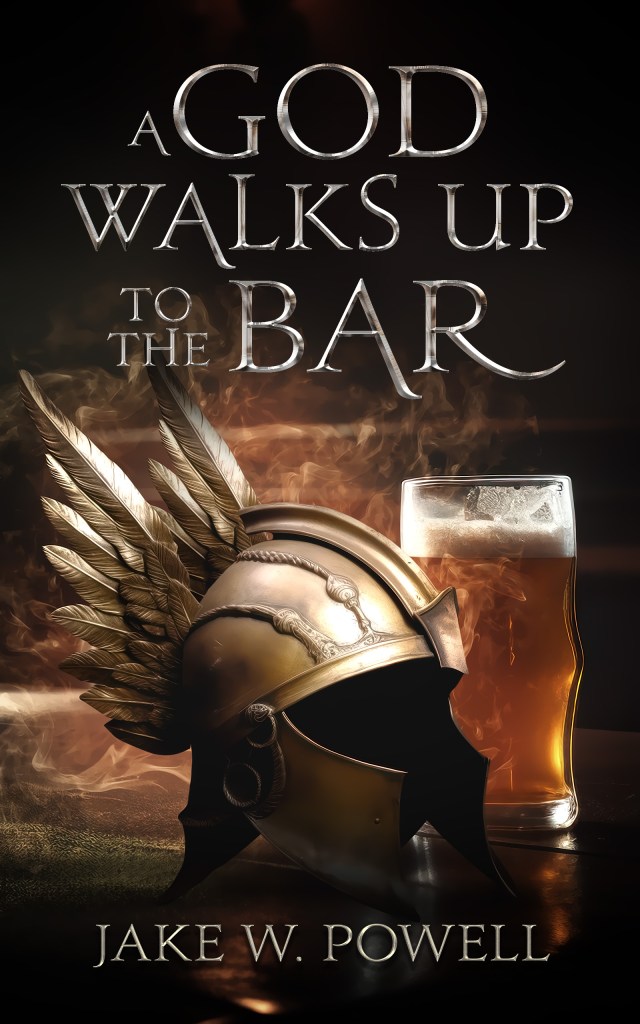
A God Walks Up to the Bar is available in paperback form on Amazon.com! Do you want to add a fun novella to your collection? Do you enjoy fantasy and classical mythology? Thrills? Chills? Humor? Gods beating up monsters? Then hop online and order yourself a copy! Or at the very least, do yourself the favor of admiring the lovely cover art.

And while you’re at it, don’t forget to like and subscribe to this blog. I’m just getting started!

When You Feel Like You Don’t Have Enough Time…

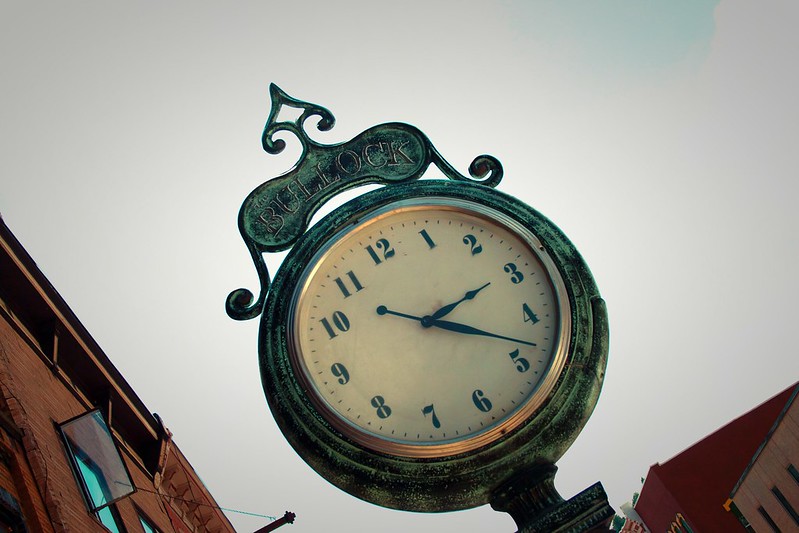
Old Clock” by Davmi Pics is licensed under CC BY 2.0.

Do you ever feel the crunch of time? Like your to-do list is too long to fit into the hours in the day? You feel those minutes sliding by and try to cram in as much as you can. But it just isn’t enough, and you concede defeat to the march of time.

So much to do, and so little time. If only we could do it all in one go. If only we could freeze the clock in place and do everything we ever wanted to do for as long as we wanted. What a dream, huh? But what does that say about the things we do manage to accomplish when time is short?

Maybe it’s not comfortable to think about the fact that we accomplish, first and foremost, the things that matter most to us. Maybe we don’t want to think about what that says about us if we go first to the couch to watch TV, put together a jigsaw puzzle, play video games, or eat junk food. What do we prioritize? What matters most to us? Do we want to peer into that corner of ourselves?

Most of the items on our checklists are personal indulgences. A lot of the things we feel we must do are really just trifles that we enjoy more than taking out the trash or cleaning the house. Hey, entertainment is more fun than chores. That’s why it’s called entertainment. We like to have fun, and in a world where most of our time is consumed by business and work, we try to sneak it into the 16 or 18 hours we spend awake.

I find that there is a difference between what we want to do and what we actually do. The first is our conscious preference. The second is what we subconsciously place real value on. I suspect we don’t even realize it unless we’re paying close attention. We don’t recognize what we hold dear until forced to choose between this or that to wrap up in the last hour. Time crunch can lead to interesting revelations.

But how much do we really have to do in 16 hours? We tell ourselves that “this and that” must be finished, and “this and that” turns into “anything and everything.” A bit of a self-imposed burden, isn’t it? I’m not preaching procrastination, but rather that most of the troubles we face in task management is self-imposed. Cramming means we don’t want to compromise. It’s all or nothing! I want to do everything I want to do and I’m not going to cross anything off today’s to-do list! And we wear ourselves out, not from hard work, but from the exhaustion of trying to satisfy the expectations we’ve built up in our heads.

There’s more time in the day than we may think, because so many of the things we convince ourselves are absolutely vital are really just busy work and trifles. If we were to strip away everything except what is truly important in our lives, we’d end up with a much shorter list. Because those are the things we will dedicate time to. Those are the things we truly value and will not sacrifice.

Take a step back and look not at what you plan to do, but at what you actually do during the day. You may be surprised at what you see.

The gods and beings of ancient myth never went away. They just moved on with the times.

My book, A God Walks up to the Bar, is currently available on Amazon.com. Venture into the world of the Greek god Hermes, a world filled with demigods, vampires, nymphs, ogres, magic, and trickery. It’s a tough job, being a god!

Enjoying my blog? Don’t want to miss a single post? Subscribe for updates on when I post and follow my writing career, musings on fiction and storytelling, and reflections about life in general!

Measure Your Writing: Fewer Words are More than Enough

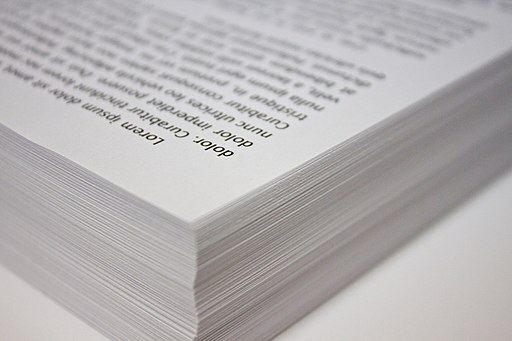
Image: “Stack of Copy Paper” by Jonathan Joseph Bondhus; licensed under CC BY-SA 3.0.

So, you’re writing your book. You feel pretty good about it. You got your first draft done, you send it to your beta readers, and the feedback starts trickling in. You take in the criticism and start your second draft. And you notice something odd. Many of your changes entail removing words, cutting out extra sentences, and shortening descriptions. Your word count is growing smaller. What gives?

Writing involves a lot of things. One thing I’ve discovered it needs is measurement. I don’t mean whipping out the tape measure to guess how thick your paperback will be. I mean making sure that every word matters. If your sentences go on and on and on then you’re going to bore your audience to tears, if you don’t just outright confuse them. On the other hand, using too few words can lead to your readers scratching their heads if you leave out important information. A writer is like a sculptor. He carves out the unnecessary material and leaves behind exactly what is needed to make the piece complete.

My first draft is the phase that I like to call “vomiting words.” Because that’s what I do. I get all my words out, regardless of whether they are good or not. First drafts are always garbage. There’s no helping that. But too many is better than not enough. There’s always plenty of time to parse things down later.

So, how do you make the most of fewer words? Here is what I’ve learned.

  1. Be simple. Don’t try to write fancy. Purple prose is like nitroglycerin. It blows up in your face at the slightest mistake. Don’t write “his face stretched into a wide, dour grimace.” Just write, “he grimaced.”
  2. Synonyms are your friend. There are single words out there that mean the same as three put together. Why waste space? Rather than “ran very fast,” you can use “sprinted” instead.
  3. Details matter to the plot. Readers expect the descriptions and conversations you include to have significance. So make sure everything you include in your final draft has a point! Don’t waste time on things that are irrelevant.
  4. Last, and certainly not least, don’t underestimate your readers’ intelligence. Unless you’re writing for three-year-old’s (and even then…), don’t treat your readers like idiots. They can fill in blanks for themselves, especially regarding mundane things. You don’t need to explain how someone puts on a shirt, or go into gross detail over the interior of an office building. Chances are, people already know. Let them exercise their imagination a little!

Of course, there are exceptions to these. There are always exceptions. And some stories are going to be longer than others, regardless. The point is not to trim everything out until only barebones, dry description remains. The point is to make your writing readable and coherent. Sometimes, you will have a very long and colorful description of a character or scene. If it’s appropriate for the story’s tone, or describes something that isn’t common knowledge, or the details will become important later on, have at it. But don’t overdo it. The point isn’t writing a lot of words. It’s writing just enough words.

The gods and beings of ancient myth never went away. They just moved on with the times.

My book, A God Walks up to the Bar, is currently available on Amazon.com. Venture into the world of the Greek god Hermes, a world filled with demigods, vampires, nymphs, ogres, magic, and trickery. It’s a tough job, being a god!

Enjoying my blog? Don’t want to miss a single post? Subscribe for updates on when I post and follow my writing career, musings on fiction and storytelling, and reflections about life in general!