Lessons I Learned Writing My First Book, Part 2: Discipline

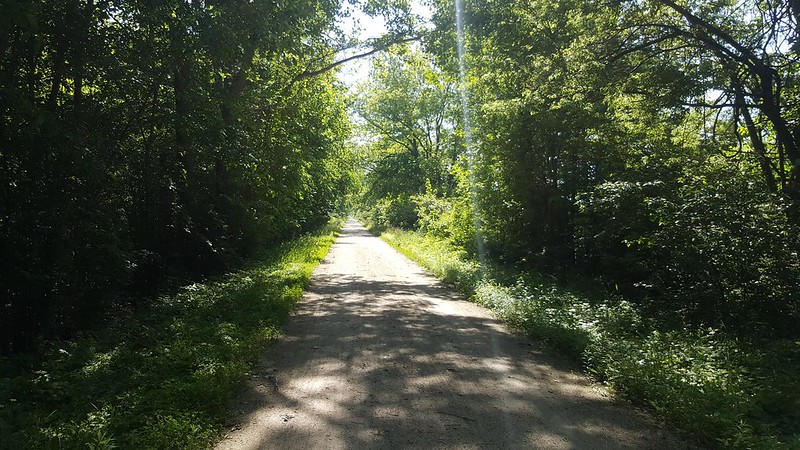
You’re running at a steady pace. You’ve been running for the past thirty minutes. Sweat streams down your back and drips from your brow onto your nose and neck. The marathon is halfway done. Only halfway. Your thoughts stray. You think of a cold glass of water. You think of resting – just for a moment – and catching your breath. Or maybe longer than a moment. You ran half a marathon. That’s good enough.

But you don’t stop. You keep running. You stumble and nearly trip. You regain your balance. You find your rhythm again and keep running. You feel out of breath. Now, the temptation to stop feels more like a necessity. Can’t finish the marathon if you can’t breathe. You feel like you’ll faint from exhaustion.

You remember your breathing exercises. You’ve trained for this. And you find your second wind. A burst of new energy propels you forward. You keep running. At last, you reach the end.

Marathons are a discipline. They take training, practice, and the determination to finish what you started. Writing is the same way. Crafting a book isn’t a quick sprint. It’s not a pole vault or long jump where you throw all of your strength into a few seconds of exertion. Writers must pace themselves and must be willing to get up every day, sit down at their computer, avoid the temptation to get hooked on Youtube or Facebook, and write their word count for the day.

For all that we exalt discipline and admire it in people, it’s not exactly the most well-practiced quality. We like people who accomplish great things: maybe build a skyscraper, or paint a masterpiece, or simply make a million bucks. We look at those people and we think how much patience and hard work must have gone into their achievements. We see the results of discipline, and think we should give it a go, but so many of us just can’t push ourselves. Why? Because discipline sucks.

It’s a slow-burning candle. It isn’t fancy and it isn’t glamorous. The results of discipline are glamorous. That fancy skyscraper, that painting, those million dollars. Wowee! I want that! But putting in the work is a pain.

Writing isn’t exactly a glamorous, exciting process either. Silently typing away at a computer doesn’t make for a great show. It’s not something you show off to others. “Look, Bob, watch me write my story! Isn’t it so cool?” Yeah, nobody’s going to care about the process. They want to see the end product.

Do you want to write? I mean really write, as a lifelong hobby or career? Do you envision yourself as a published author? That vision is the end result of discipline. You must train yourself to write on a schedule that works for you. Every day, every couple days, whatever you find works best. And then you must train yourself to be consistent about it. It’s not always pleasant, especially starting out, but it does get easier over time.

I have a day job. I had to find the time to write. Frequently, coming home from work, I didn’t want to. But I did it anyway. And the end result is, I wrote a book! I published it! I accomplished what I set out to do!

I don’t meant to scare away any of you potential writers out there. But writing can feel like a chore at times. Even so, when we set our minds to doing the things we love, we’ll make the time and effort to do them. But it does take dedication. Dreams are all well and good, but they’re nothing without action, and discipline demands action. Even a dream job has its drudgery, right?

And it’s sweeter in the end, to run toward your goal and finally reach it after a long, tiring run.

The gods and beings of ancient myth never went away. They just moved on with the times.

My book, A God Walks up to the Bar, is currently available on Amazon.com. Venture into the world of the Greek god Hermes, a world filled with demigods, vampires, nymphs, ogres, magic, and trickery. It’s a tough job, being a god!

Enjoying my blog? Don’t want to miss a single post? Subscribe for updates on when I post and follow my writing career, musings on fiction and storytelling, and reflections about life in general!

Lessons I Learned Writing My First Book, Part 1

My first book was quite the educational experience. There’s nothing quite like diving into a new challenge and learning as you go. It’s sink or swim, sometimes, and not knowing quite what you’re doing is as exhilarating as it is terrifying!

So, I’ve made it through, and looking back on the years-long trek, I realize that I actually may have learned a thing or two. Not just the technical aspects of writing, but general takeaways, as well. So, for all you fellow authors out there, and those of you who are thinking of entering the wonderful world of writing, here are my lessons learned from writing my first book.

First and foremost: Discipline. Writing takes effort. More than that, it takes the willingness to sit down and just do the work. It takes a willingness to push yourself beyond your boundaries, to organize a time that’s best for writing, and just do it. Dedication is a big part of being an author, because writing takes time, and time is precious, right? You got to be willing to make that sacrifice.

Writing also taught me perseverance. I felt like I was running a marathon when I was writing my book. It’s not a quick and easy thing when writing a book of any length. This isn’t a blog article or a social media post. I was in it for the long haul, and sometimes I just felt apathetic about what I was doing. I wondered if there was even a point to writing, if it would mean anything in the end. That’s when I had to roll up my sleeves and keep going. You got to be willing to motor on.

Thirdly, I learned patience. Writing takes lots and lots of patience. Whether words come easily to you when you write or not, the process is not necessarily a quick one. Maybe that first draft takes no time at all, but then you got to go back and revise. And revise again. And again. And then you get it read by beta readers. And by editors. And then you go back and write a new draft. You got to be willing to be patient to make your story the best it can be.

And finally, the hardest lesson of all: Humility. To be a published writer means putting your work – and yourself – out there for all to see. That makes you feel quite vulnerable at times. Putting out your book invites criticism and commentary, some positive, some not. When I first gave out drafts of my book to be read by others, I got a heaping helping of flaws and bad habits set down before me. It’s not pleasant, but it’s needed. You got to be willing to admit you’re not perfect and develop a tough skin to take necessary criticism.

That’s the quick summary. Over the next week or so, I’d like to dive deeper into each lesson and go into more detail about how I grew over the course of this book. I hope you all enjoy it!

The gods and beings of ancient myth never went away. They just moved on with the times.

My book, A God Walks up to the Bar, is currently available on Amazon.com. Venture into the world of the Greek god Hermes, a world filled with demigods, vampires, nymphs, ogres, magic, and trickery. It’s a tough job, being a god!

Enjoying my blog? Don’t want to miss a single post? Subscribe for updates on when I post and follow my writing career, musings on fiction and storytelling, and reflections about life in general!

My Book is Now Available!

Hello, all! My first book, A God Walks Up to the Bar, is now available for purchase on Amazon.com! This has been a long time in the making, and I am proud to share it with you all.

Thank you for your continued support of this blog and my writing, and for joining me on my writer’s journey. I hope that this book is but the first of many!

Update on Book Publication Date

Hello, all,

As some of you may have already noticed, my book, A God Walks Up to the Bar, is not up for sale on Amazon.com yet. I deeply, deeply apologize that it is not yet available, especially after the hype I built up.

I’m encountering some technical issues with posting my book that I hope will be resolved ASAP. By the latest, I estimate that it will up by August 14th. Of course, when it IS available for purchase, I’ll be sure to let you all know.

Thanks for your patience, and please look forward to it!

It’s Almost Here!

The gods and beings of ancient myth never went away. They just moved on with the times.

Hermes is a busy god. Messenger of Olympus, trusted agent of Lord Zeus, and irredeemable scamp and trickster. Through wit and cunning, he puts out the fires and conflicts that threaten the fragile stability of the supernatural world. And he does so with style.

Half-giant thugs, vampire crimelords, hot-headed werewolves, freakish chimeras: so many beings slip through the cracks of a world that long stopped believing in legends. And when you look like a pretty-faced youth who stands five foot eight inches tall, not many take you seriously. Sometimes, even a god’s only defense is a sharp tongue and even sharper mind.

If you’re lucky, when the day is over and everyone gathers for a cold drink at the bar, you might run into Hermes and hear tales of his adventures as a myth living in the modern world.

A God Walks Up to the Bar, my first-ever published book, will be available for Kindle on Amazon.com starting Saturday, August 12th!

Book Release Date is Set!

Save the date! My first-ever book, A God Walks Up to the Bar, is due to be published one week from now, on Saturday, August 12th. It will be available as a Kindle eBook on Amazon.com.

This book has been a long time in the making, and I couldn’t have done it without the support of my friends and family and the excellent work of my editor and cover artist.

If you enjoy modern fantasy, Greek mythology, trickster heroes, and general supernatural shenanigans, please check it out!

Mind of a Child: Confidence and Growing Up

As a child, I looked at adults with a mixture of awe and envy. Oh, if only I could be like an adult, always knowing the right thing to say and the right thing to do! My parents could do no wrong, my teachers knew everything. Adults made everything better because they knew exactly what to do in every situation.

Then I became an adult.

We don’t know any better as children, do we? Lacking any breadth of experience, we don’t understand that nobody has any real idea what they’re doing. We’re all sort of stumbling through life, learning as we go, getting tossed into the deep end of the pool and working out how to tread water just enough to keep from sinking. It’s equal parts fun and terrifying. We’re all figuring it out together.

And we adults get philosophical about everything. What’s it all about? Why are we here? How can we do right? All the big questions.

Kids are cool. They don’t let deep thoughts and existential angst get in the way of living. They accept what they’re told, but are just innocent enough to ask those piercing questions that puncture our adult pretensions. It is grown-ups who tie themselves into knots trying to justify and rationalize every action they take at every moment of every day. Or maybe that’s just me. Ah, the tortured mind of the intellectual.

In all seriousness, confidence is a good thing. In many ways, kids are more confident than adults. They trust adult authorities because the thought of them being wrong doesn’t enter their minds. They trust things to work out without hesitation. They enjoy life wholeheartedly and unironically.

Confidence is an attitude. It’s not the magic formula to a perfect life, but it sure can help us endure hard times. Why? Because we become willing to work to succeed. If we expect to fail, we’re probably going to. And while failure isn’t something we should be afraid of, is it really healthy to sabotage ourselves? Where would the world be if we didn’t put our best foot forward and give it our all?

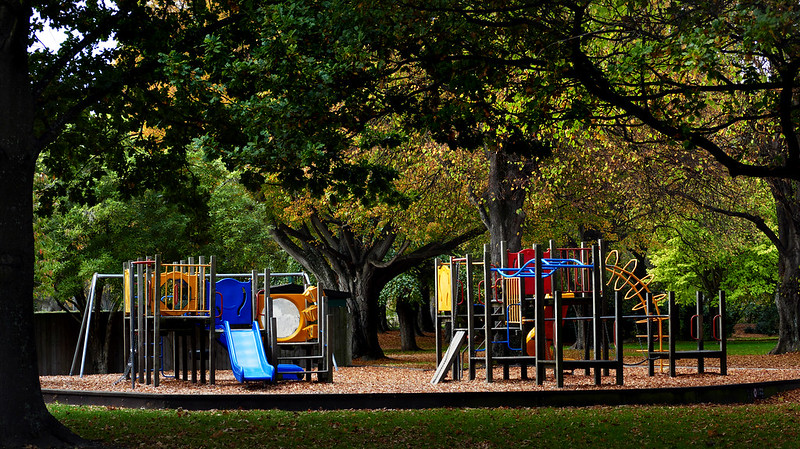
Kids give it their all. Childlike enthusiasm is a force of nature. When you see children playing on the playground, don’t you see the sheer grit and determination and lack of hesitation to throw themselves into their play? Kids never stop and have no fear, as many weary parents can attest to.

It’s funny. As children, we want to be adults. As adults, we envy the life of a child. I respect kids. They see the world differently and a little more simply than we clever grown-ups do. Maybe a confident and peaceful attitude comes from simplicity. Simple living, simple comforts, simple enjoyments. Or maybe I’m overthinking things … again.

Enjoy what you’re reading? Subscribe by email for updates on new posts and follow my writing career, musings on fiction and storytelling, and reflections about life in general.

Learning to Take It: Writing and Criticism

Criticism is a bit of a dirty word, isn’t it? Nobody wants it thrown in their direction. We fear it and worry that we might be its next target. More’s the pity, because criticism is a necessary part of the creative process. Heck, it’s a necessary part of being creative, period.

You learn to grow a thick skin when you’re a writer or artist or filmmaker. Putting your work out there … well, you’re going to get reactions. Some good, some bad, some just plain weird. When I gathered beta readers to read my work in progress, I asked for criticism. Demanded it really, because I need it. Where would we be without second opinions?

But the word has gone through an evolution that’s warped its original meaning. The way I see it, criticism isn’t a bad thing in and of itself. But look at how we use it in everyday conversation: “He criticized my tastes.” “She was critical of the restaurant he picked.” “They learned to ignore criticism of their actions.” It’s always in a bad context, isn’t it?

What criticism actually is is pretty simple: Evaluation of the quality of something. That’s it. Art critics evaluate the quality and merits of an art piece. Literary critics evaluate books. They are judges of whether something is good, based on more or less consistent criteria.

Oh, now there’s a dirty word. Judge. Who wants to be judged?

Well, if you’re writing a book, you’re going to be. People have opinions, and boy howdy are they happy to share them! Which can be a good thing, because otherwise how the blazes am I going to know if my work is any good or not? Or at the very least, if it’s having the effect on readers that I want it to have? And besides, plenty of people have stuff to say that is actually helpful and informative.

But criticism also invites the opportunity to show off one’s own creative side by inventing an endless tirade of elaborate insults that read well on websites and give people something to giggle at. Critics seem to have a knack for channeling their eloquence into spectacular putdowns. Doesn’t really portray the concept of criticism itself as something desirable.

Like I said, you have to grow a thick skin. And you have your own responsibility: Winnow out the kernels of useful feedback from the dross.

There’s positive criticism and there’s negative criticism. There’s evaluation of the failures and triumphs of your work. Listen, consider, and take the steps you need to improve. Criticism isn’t bad. We all need it to get better. Otherwise, we’re just working in isolation, never knowing if what we produce is truly worthwhile. And no writer can afford to be that solitary.  

Enjoy what you’re reading? Subscribe by email for updates on new posts and follow my writing career, musings on fiction and storytelling, and reflections about life in general.

The Greatest Teacher: What’s the Role of Failure in Life?

Do you know the magic word that society loves to hear? The Pied Piper’s song, leading us along without us giving it serious thought.

SUCCESS.

It’s the ultimate carrot on a stick.

SUCCESS.

It’s a wonderful word, so supreme and comfy in its vagueness that we rarely worry that we don’t really know what we mean by it.

SUCCESS. It’s the defining feature of happy people. If you’re not successful, then you must be … a loser!

Kids learn from an early age: Success is good. Failure is bad. Don’t fail. You must succeed at everything you do.

I submit for your consideration an alternative perspective: Failure is good. Failure is necessary. In fact, we should allow ourselves to fail. Failure is a good thing. Well, sort of. Let me explain.

Failure is the greatest teacher, as a very wise person once said. Think back on your life. Do you remember a great triumph? Maybe you finished a project that you were really satisfied with? Or gave an excellent presentation at work, or made a great speech to an audience? How do we get to these triumphs? Well, a couple ways. There’s sheer dumb luck, of course, but Lady Luck is a little fickle and I don’t trust her. She smiles too much.

Then there’s hard work, practice, and trial and error.

Wait a minute … Trial and error? Does that mean … mistakes are a part of succeeding? Well, yes. We learn from our mistakes. When everything is business as usual – let’s be honest – do we really notice? When I’m writing my book draft and all the words come out smoothly, I’m happy. But then the time for the next draft comes around and HOLY SMOKES WHERE DID ALL THESE TYPOS COME FROM? How did I misspell that word? I know the difference between “their” and “there!” And how could I use so many cliches? Shameful.

But I don’t forget the mistakes I made.

When you flunk a test in school, you’ll probably never remember the answers you got right. But you certainly remember the ones you got wrong. Failure educates us. And if we’re smart, we’ll remember our lessons for the next time.

It’s healthy to fail. In fact, it’s inevitable that we will, at some point and in some way, experience setbacks. Might as well learn that lesson ASAP.

Success is nice. We should try to achieve our goals in life. But success is kind of dimwitted. Success can’t really tell you anything you don’t already know. Failure is much more interesting. Failure has plenty to say. It will gladly talk your ear off if you pay attention. Failure is always willing to point out our shortcomings. And I’m very thankful for that, because otherwise I’d go through the rest of my life blissfully ignorant of flaws that could be remedied if I just put myself in a situation where they become obvious. Awkward? Yes. Useful? Very.

We shouldn’t seek to fail. But we should be more open to it. We should allow ourselves to fail. Don’t reject it. Don’t shun it. Learn from it, dust yourself off, and move on.

Think about it. If you want to succeed at something, how many times are you willing to deal with failure before you achieve it?

Enjoy what you’re reading? Subscribe by email for updates on new posts and follow my writing career, musings on fiction and storytelling, and reflections about life in general.

Revision Vs. Obliteration: When to STOP Revising Your Book

Editing is an addictive process for me. I love editing. I love digging into the guts of my story and tinkering with things, fixing typos and grammar, revising dialogue, picking better words to describe action and thought. It’s a huge amount of fun for me. Alas, like most things in life, too much of a good thing can be very bad indeed.

I go through many drafts, and in each draft I find something new that can be improved. And improved again. And again! As soon as I finish, I see something else that needs fixing. Eventually, the quotation marks of irony rear their ugly heads and improve becomes “improve.” Yes, I’m making my story “better” by constantly carving it and nitpicking it until there’s nothing left. I need to remind myself: You must set yourself a stopping point.

But the perfectionist in me screams out: What if you missed something? What if there’s a misspelled word somewhere in there? What if you misplaced a comma? What if there’s an extra space between words? What if, what if, what if!

I’ve gone through my drafts, I’ve had my book edited, and I’m going through my final proofreading. It’s almost done. And I must remind myself that it’s almost done. No last-minute check-ups that turn into another round of revisions. Done is done. Finis. Ready for publication. But am I ready to publish? Is anyone ever truly ready?

What if I missed something? Ah! There it is again! The dreaded “what if!”

In theory, authors could revise their books forever. The process can go on and on until, quite literally, nothing is left. You don’t have a book anymore. You’ve “revised” the living daylights out of it, cutting and cutting, until what made the book great has been destroyed by picky perfectionism.

Maybe that’s part of growing as an author, accepting that you, at any given point in your career, are NOT perfect. That your work is flawed, try as you might, and you must recognize those flaws, learn from them, and apply your lessons to the next project.

But I can’t perfect my craft by obsessing over one work forever. I must set myself a deadline and mark it as DONE, like it or not. Maybe that’s just my quirk. Maybe my fellow authors have struggles that are quite the opposite, or maybe you can relate. Feel free to share in the comments.