Submitting your book to beta readers can be a daunting prospect. What if they don’t like it? What if their suggestions mean you have to overhaul your entire book? What if the book is no good at all? Writing for the public is always underpinned by a certain amount of nervousness. But we can prosper from reader feedback, both positive and negative. Responding to how other readers view your work, as opposed to what you see through your own eyes, requires a willingness to adapt, but it also offers a broad range of new opportunities.
Every reader is a different person with different experiences. That means that everyone has different ideas about the same thing. The point of hiring beta readers is to gain an understanding of how your book is perceived by others. We as writers tend to get too close to our own work. It’s our baby, and we coddle it. It’s not that we overlook flaws or plot holes, but rather that we don’t even realize they’re there. Having them pointed out to us can be painful, sometimes.
But once we take a day or two to mull over the feedback and start our next draft, a whole new world of possibilities opens up. Weaknesses in the story can be turned into new strengths. Filling in plot holes unlocks new avenues for the story and new directions for character development. Glorious opportunities to make your story even better, to develop themes and plot points that never even occurred to you.
None of us are perfect writers. We’ll never be perfect writers, and we won’t see every shortcoming in our work or the chances to capitalize on half-formed ideas. We need an extra set of eyes to see what we ourselves cannot, both the good and the bad. A little encouragement and a kick in the pants to sharpen those details that don’t sit right with readers.
Every book we publish will be better than the one before. Your first book might be hot garbage. Your second book is a slight improvement. You third is a breakthrough in quality. And so forth and so on. Can’t do it without listening to constructive opinions, though. No writer is an island. If you plan on publishing your work, you’re going to need to listen to your readers. And often, they have a lot of worthwhile things to say.
Many thanks for visiting my blog. I post updates on my writing career, I muse over storytelling and fiction, and I reflect on the curious and wonderful things in life.
Masterpiece. It’s a word you hear often. So often, I feel that its meaning has been drained out of it. Like “genius” and “magnum opus,” it’s a label we often apply to something that we enjoy on a personal level, regardless of whether it deserves the title.
A little harsh? Probably. There’s nothing wrong with liking something. In fact, I encourage you to like lots of things. Enjoy life. But I like to overthink things and write them down, so why not dig a little deeper?
Masterpiece. It’s actually two words. Master. Piece. A master piece. In ye olden days, guilds and academies required their apprentices and journeymen to submit a masterpiece as part of their application to the status of master. Hence, they presented a piece that marked mastery of their craft, be it carpentry, smithing, jewelry, baking, or what have you. Proof and demonstration that they were worthy of attaining the highest rank, as judged by their superiors.
So, it was something that was measured against quantifiable standards. A masterpiece was actually a lot like today’s college senior capstones: a final paper or project that demonstrates the graduate’s understanding of their degree subject. Or perhaps more appropriately, it is like a doctorate or master’s thesis (and there’s the word “master” again!). That’s not really surprising, considering that guilds, like schools, train people for careers.
But the word’s meaning changed over time, as words are wont to do. Now, a masterpiece has come to hold an even more elevated meaning. It is not simply proof of an individual’s skill, but it is the apex of their skill. Mona Lisa is Leonardo da Vinci’s masterpiece. Not his first work, but widely considered his best. 1984 is George Orwell’s masterpiece, and Star Wars is George Lucas’s.
So what does the word mean nowadays? It means something superlative, something that represents the epitome of the creator’s talent and understanding of the art. It is applied to anything that can be considered great or notable. And in so doing, we have, oddly enough, brought the word down. A masterpiece is declared as such by critics who are not necessarily practitioners of the art. Anyone who favors a particular artist or author and is eager to share that love can declare their favorite work to be a masterpiece, regardless of what merit it actually represents. That happens with all words – their meanings change and are shaped by usage into something quite different, and will again in a hundred years or so – but looking back at a word’s origin can make you look at it a little differently. A little more carefully.
A masterpiece was originally something that proved the apprentice was worthy of the master’s rank as judged by his teachers. It was a stepping stone from a lower tier to a higher one. It was a gateway and a turning point in one’s life. It was something singular and unique. It was the masterpiece of your career. It was something special.
Call me grumpy, but I think we can be more mindful when using words like masterpiece. They are powerful words, and applying them more prudently can in turn make us consider the media we consume more carefully. A bit of critical thinking put into evaluating whether something is truly a master’s piece. And that’s good practice for any artist.
Many thanks for visiting my blog. I post updates on my writing career, I muse over storytelling and fiction, and I reflect on the curious and wonderful things in life.
There’s a fine line between being likeable and being charismatic. A likeable character – affable, friendly, trustworthy – is someone you want to be around for a chat and a drink. A charismatic character – inspiring, motivating, commanding – is someone you want to watch from a distance . There can be overlap, of course, but when writing a charismatic character, keep in mind that they don’t have to be nice. And a likeable character can be as dull as dirt, oddly enough. It depends on the reaction you’re trying to get out of your readers.
Understanding the type of character you’re writing and the feelings you’re trying to draw out of your readers is important. Likeability and charisma are just two of the facets found in any character, but they are important ones. Consider your protagonist. Does he draw others to himself? Does he make friends (and allies) easily? Why? Do you intend for him to be just plain affable and good-natured? Or maybe he is forceful and commanding, the type of person who gets what he wants through panache and strength of personality?
Knowing which you want determines which of the two traits you’re shooting for.
Likeable characters are, well, easy to like. And we like people who are like us. Most importantly, such characters possess empathy. They have hearts, and they not only understand how their actions affect others, they care about the consequences of those actions. And we generally like that in the people we’re in close contact with on a regular basis.
Charisma is awe. We don’t necessarily want to be around them constantly. We are amazed by them, but they are best enjoyed from a distance. They’re natural showmen, they get others pumped up and ready to see something spectacular. They represent what we want to be. A charismatic character can become a symbol or ideal to aspire towards.
Is there overlap? Absolutely. Many, many characters in fiction possess both traits. But even then, there tends to be a weight toward one or the other. Whether hero or villain – yes, villains can be easy to like, too – the two traits must be separated from one another to recognize them for what they are, and ultimately, to understand the impact you want the character to have on your reader.
Many thanks for visiting my blog. I post updates on my writing career, I muse over storytelling and fiction, and I reflect on the curious and wonderful things in life.
Rainy weather is the best for reading, I think. The cold and the wet outside isn’t inviting. There’s no work to be done beyond the front door, not if we can help it. Better to curl up on the couch with a good book and listen to the drumming of raindrops overhead as you sink into a comfortable half-doze. The sound of rain soothes and calms our minds for the act of reading. Relaxation. Rest. Quiet.
But sunny weather is good for writing. The sun invigorates us. A sunny day is a day to do things. Open the window and let the light shine cheerfully into your office. This is a time to accomplish goals. Reach your day’s word count, complete your chapter, finish your poem-in-progress. The sun beckons us to move and do. A bright mood to go with bright light. Energy. Vigor. Action.
Is this true for you, as well? Does the rain calm you into stillness? Does the sun motivate you into action? Or, perhaps, the other way around?
Many thanks for visiting my blog. I post updates on my writing career, I muse over storytelling and fiction, and I reflect on the curious and wonderful things in life.
Many thanks for visiting my blog. I post updates on my writing career, I muse over storytelling and fiction, and I reflect on the curious and wonderful things in life.
It’s the worst insult you can toss at a writer. It’s the deepest cut, the ultimate condemnation.
This reads like bad fan fiction.
Amateurish, incompetent, dubious, self-indulgent, outright moronic – these are the connotations those six words carry. Fan fiction is the respite of those who cannot write, but insist on doing so. Taking what others have already made and twisting it into their personal playground of poorly conceived plots. The refuge of the untalented.
Except it’s not true. Well, mostly.
Stories written by fans about their favorite movies or books or other franchises have garnered a collectively dismal reputation. They’re just a means for disgruntled people to “fix” stories they felt were ruined by the original creators or a way to make up romances between two characters that they happen to like. Now, these types of stories aren’t necessarily poor quality, but they tend to be made purely for the author’s own self-gratification. Consequently, quality isn’t an issue, only that the author gets what they want out of the story without regard for whether others will enjoy it (which beggars the question why it is posted online).
On the other hand, there is fan fiction that is comparable to published works, displaying not only raw talent but an understanding of plot structure, characterization, and reader engagement. Some of them are indeed so-called “fix fics” and romances, but just as many are original ideas, what-if scenarios, unofficial sequels, and other creative content. There’s the bad, the good, and the exceptional.
I wonder how many fan fiction writers could become successful mainstream authors if they so chose.
But what does this matter to you or me? What can aspiring writers who seek to publish, whether independently or through traditional publishers, find of worth in the world of fan fiction?
To put it plainly, writing fan fiction is really good practice for a writer.
I’ve written fan fiction. I wrote fan fiction before I published A God Walks Up to the Bar specifically to cut my teeth on writing for an audience. Fan fiction sites don’t require author names. You can make up any username or web appellation that you want. Anonymity can motivate shy writers, among whom I can be counted. The boldness inspired by a sobriquet can finally push you to take the plunge into getting your work out to the world. Plus, you get your first taste of criticism, good and bad, and develop the thick skin you’ll need and the ability to discern between worthwhile critiques and meaningless heckling.
If you’re a serious writer, fan fiction isn’t an exercise in self-indulgence. You want to tell a good story, and sometimes, building off a preexisting idea can be just the spark you need to flex your storytelling muscles. You can explore freely, experiment with writing styles to see what works for you and what doesn’t, and most importantly, you get to write. Practice, practice, practice. That’s how you improve as a writer.
And just as important, it’s completely free. The barrier of entry is even lower than for an indie publisher. No need for a budget to pay editors, beta readers, and cover artists. No need to maintain an author’s website. No need even for a business license! And the marketing is free, too. Fan fiction, by its nature, is about something already popular and well-known, so your writing can possibly attract more readers than your other, original works. Which is, well, not really fair, I suppose, but let’s try to stay optimistic here. More readers means more criticism means more improvement. Writing fan fiction is a fantastically low-risk method of developing your writing. It’s a great way to discover your own identity as an author without worrying about finances and other aspects of publishing.
All of which is to say, if you’re interested in getting into professional writing and feel you want to practice your skills and test the waters of public reception, fan fiction is a great starting point. And as someone who loves things to come full circle, I’ll just end by saying that someday, you may look back on these early experiments and chuckle … because now people are writing fan fiction about your work.
Did you like what you just read? Are you a writer, or just looking for fun content? Do you want more, but are worried about missing new posts? Please subscribe! I post updates on my writing career, I muse over storytelling and fiction, and I reflect on the curious and wonderful things in life.
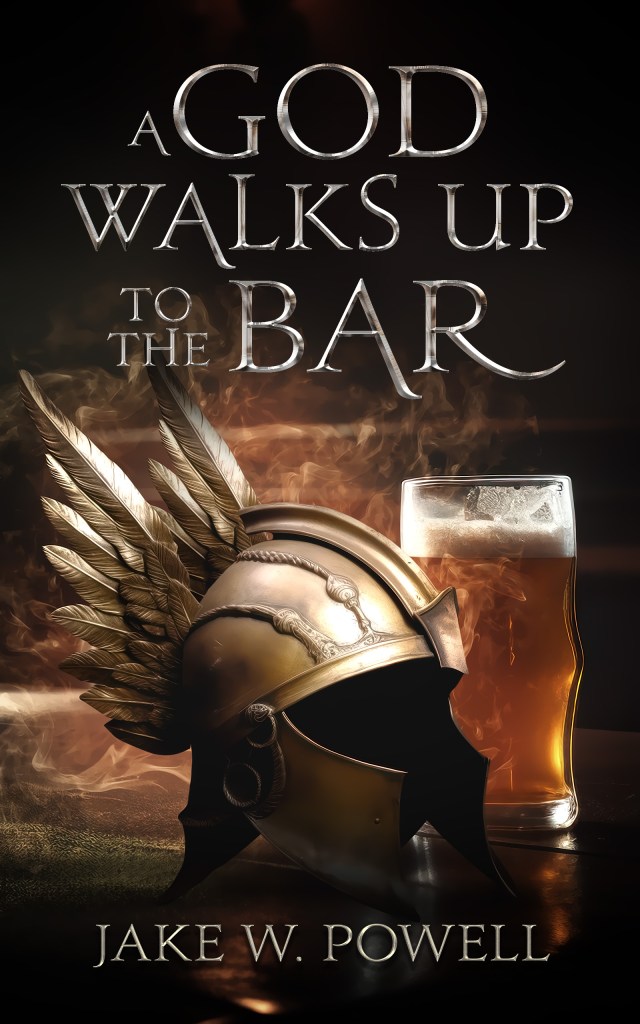
It hasn’t gone anywhere, and it won’t anytime soon! My first book, A God Walks Up to the Bar, is available on Amazon.com. Witness the modern day adventures of the Greek god Hermes in a world much like our own – plus with demigods, vampires, nymphs, ogres, and magic. The myths of old never went away, they just moved on with the times. It’s a tough job, being a god!
The story of the redeemed villain is a common and provocative trope in storytelling. It’s always fascinating to witness how a thoroughly evil and vile figure can turn around and repent of their ways. We like to see these tales play out and watch what happens next. It appeals to us.
Maybe the villain is likeable enough that we don’t want to see them die, or maybe we even see a little bit of ourselves in there, and hope that their redemption means there’s hope for us, too. Whatever the reason, a villain’s redemption is a major story beat, and should be treated as such. Which, in turn, means that writers should seriously consider it before going through with it. Is it the right move for the story? Is the villain truly redeemable, that is to say, is it a logical and fitting step in their growth as a character? Are they willing to seek redemption? Most importantly, can they be redeemed in a way that the audience finds natural and believable?
It’s easy to fall in love with a good villain and not want them to die. So, some writers just … give them an out. The villain evades consequences, sobs a few tears, gives a dramatic monologue, and skips on over to the side of good. And are welcomed with open arms. But is that how it would actually play out in the context of the world you’ve written? How bad is your bad guy? Did they blow up a planet, or just steal a few pies? If it’s the former, do you really expect them to be immediately welcomed and trusted by the heroes?
Don’t get me wrong, I’m not talking about a villain-hero team-up. Sometimes, good guy and bad guy have to work together, usually against a worse bad guy, but the villain remains clearly villainous, just currently motivated by shared interest. To be redeemed, a villain must be penitent. And to be penitent, a villain must truly feel remorse. And in feeling remorse, a villain must show a change in action and motivation.
A redemption arc is character development. The character will not be the same person at the end of it. Indeed, we writers should seriously consider this fact. If the villain was likeable because of their villainy, then redeeming them may in fact hurt them as a character. They’re no longer a villain. Will that take away what made them interesting and engaging?
On the other hand, you could have the villain redeemed through the classic act of self-sacrifice. It worked for Darth Vader, didn’t it? But, and hear me out, I think this is a bit of a cheat. Imagine how different things would have been for this classic movie villain if he had survived and had to stand trial before the people whose friends and family he had slaughtered. He would have to face his daughter Leia over the destruction of Alderaan. He would deliver himself into the hands of the Rebel Alliance he had hunted down for the whole trilogy. He’d have to live with the memories of his crimes. He’d have to do more than gasp a few words to his son as he lay dying to convince us he was truly changed. He would have to make his redemption stick. An interesting thought, no?
Redemption arcs are fascinating. They offer an incredible opportunity to explore facets of a character that usually aren’t. How and why does the villain do what they do? What would make them stop doing it? Can they stop? Do they have doubts? Do they value something greater than their current goals that they would give up their desires for? These are the sorts of questions that can help you figure out if your villain is a candidate for a moral turnaround.
The most important question to ask is: Does it serve the story? We are talking about fictional characters, after all. They’re not real people, they’re figures in a narrative that we as writers have the responsibility and privilege to manage and direct. Redemption and repentance in real life is quite another thing entirely, even if they do inspire our work. Real life is fuzzy. We can’t truly know other people’s motivations. But we can know exactly what motivates the characters we write, and so we can answer this question with confidence: Can my villain stop being bad?
If you just so happen to be enjoying my blog, feel free to subscribe. I post updates on my writing career, I muse over storytelling and fiction, and I reflect on the curious and wonderful things in life.
My first book, A God Walks up to the Bar, is available on Amazon.com. Witness the modern day adventures of the Greek god Hermes in a world much like our own – and with demigods, vampires, nymphs, ogres, and magic. The myths never went away, they just learned to move on with the times. It’s a tough job, being a god!
We all have big dreams, and big dreams involve big projects, lots of planning, blood, sweat and tears. Writers want to be known, and they want to put out their best possible work into the world. That takes time. And as we are all acutely aware, we don’t have all the time in the world.
So, is it possible to embark on a writing project that is too ambitious? Can we overreach ourselves and fall short?
In the end, it depends on each one of us.
Ambition is not in and of itself a bad thing, mind you. The desire to improve and grow is a natural and good thing for a writer. But writing and publishing also require a fair dose of humility. We are not all going to become the next Hugh Howie or Brandon Sanderson. And they only reached the heights they did because they worked really hard for a really long time to get there. So, how hard are you willing to work? Just as important, how hard are you able to work? Time isn’t infinite, and you might genuinely be limited by work schedule, family, and other things that pop up in life. If you try to expend time and focus you don’t actually have to spare, yes, you are being overambitious.
What about experience? How many books have you written before? Planning to write an epic trilogy that will sell a thousand copies when it’s your very first published work? Maybe you want to back off on that plan for a while. Write some smaller books first, find your voice, build up your skill. The story of the one-off novel that becomes a literary masterpiece is very alluring, but let’s not assume it’s going to happen to us.
Yes, you have talent. I have talent. We all have talent, and we can sharpen that talent into something great and memorable. But desire is no substitute for talent. What we want and what we have to work with are very different things. If you don’t have the experience, get it. Then write your magnum opus.
Overambition is overreach. It is to push yourself beyond your capabilities. Writing is like exercise. You flex your storytelling muscles every time you do it. That helps you build bigger muscles that can handle a bigger workload and more complex stories. It’s discipline. Weightlifters don’t start off with 400 pound weights when they begin their training. They work their way up to it.
Is it possible to be too ambitious? Yes. But the measure of that ambition changes over time. What is too ambitious now may be achievable ten years later, because in ten years you’ll be a better author. Keep writing. Keep stretching your limits. Shoot for the moon, but don’t assume you’ll get there on your first shot.
If you just so happen to be enjoying my blog, feel free to subscribe. I post updates on my writing career, I muse over storytelling and fiction, and I reflect on the curious and wonderful things in life.
My first book, A God Walks up to the Bar, is available on Amazon.com. Witness the modern day adventures of the Greek god Hermes in a world much like our own – and with demigods, vampires, nymphs, ogres, and magic. The myths never went away, they just learned to move on with the times. It’s a tough job, being a god!
Feeling down in the dumps? Feeling like nothing you do is right or ever will be? If not, don’t worry, you will.
I’ve detected a pattern to discouragement in my life. It likes to come at certain times. I wonder if that’s true for everyone.
I find that nighttime is the worst for me. A couple of hours before bedtime, when I start to tire and my mind starts shutting down, fear and worry slither into my brain.
I need to start thinking about this. I haven’t done that yet. Do I have enough time to complete my book? Do I have enough money to pay for editing and publishing and marketing? Is it even any good?
It’s inevitable. For the writer, it can be debilitating. We work hard to finish our projects. We march on with stubborn determination to see our dreams through to the end. And we dread … not failure exactly. Inadequacy. Anyone can write, but can we write well? Or is it all just crap that would be better off hidden away in our computer’s hard drive, or better yet, in our own minds?
Even worse, what if it’s a good story, but nobody knows it exists? The unnoticed, inconsequential curiosity of the online store.
The night is a quiet and still time. My brain has time to process all these fears. When the excitement of the actual writing process stops, these nagging thoughts are heard most clearly.
But we don’t have to listen to such fears. They come, they stay a while, and then they leave. Yes, they do leave, if we press on regardless. Discouragement isn’t something we always have control over, but we can control how we act in response to it. Feelings of worry are not eternal. They only have real power to influence our life and work if we give them permission. Emotions run up and down. I look at my work today and feel it’s my best yet, and look at it tomorrow and cringe in disgust.
To continue writing in spite of that hollow feeling, to trudge along, to persevere through grim thoughts, this is is what we must do. Night isn’t forever.
Fear debilitates. Depression paralyzes. Writing is a joy for me, but I don’t feel excited about it all the time. Not 24/7. I have rough spots. I have times where I wonder if I should just leave it all behind. And I wait. I don’t act on those impulses of giving up, because I realize that they don’t last.
Writing is a marathon. Like athletes, we tire. We can feel inadequate and unable to rise up to the challenge. Write anyway. If you feel like crap, write. If you feel like nothing is coming to you, write something. A paragraph, a single sentence, anything so that you can say that you wrote for the day. Persevere. Be stubborn.
After night comes morning.
If you just so happen to be enjoying my blog, feel free to subscribe. I post updates on my writing career, I muse over storytelling and fiction, and I reflect on the curious and wonderful things in life.
My first book, A God Walks up to the Bar, is available on Amazon.com. Witness the modern day adventures of the Greek god Hermes in a world much like our own – and with demigods, vampires, nymphs, ogres, and magic. The myths never went away, they just learned to move on with the times. It’s a tough job, being a god!
We engage in dialogue every day. We talk with people face-to-face. We type emails, send letters, conduct Zoom meetings, send messages via social media. We even talk with ourselves. Any conversation we hold is a dialogue, and wherever there are two or more people (or you and the voice in your head) there is conversation.
Since dialogue is such a vital part of real life, it is reasonable to assume that it is also important to writing. And this is true. Characters talk to each other, and the manner in which they speak and communicate is important. Everyone has their own voice, their own mannerisms, accents, affectations, slang, tone, rhythm, and personality. Most stories are going to have dialogue of some sort. They tell the reader who the characters are, how the world works, provide information about the plot, and so forth.
But unlike the real world, where two people can keep a conversation about absolutely nothing going for four hours, writers need to be choosier about what their characters say. Every piece of dialogue carries weight. And it can serve several purposes that can improve and flesh out your story.
So, what does dialogue do for a story? What point does it have? Well, I respectfully submit three here for your consideration.
Characterization
We know what people are like through the way they speak. The things they talk about, how they talk about them, and what they don’t talk about all tell us who they are. People reveal their personalities and values through their words. Actions may speak louder than words, but words still count for something.
Is a character brooding and moody? Witty and optimistic? Intelligent and thoughtful? Brash and shortsighted? The narrative can describe a character as such, but their dialogue should carry through on that description. Different people talk differently. Just consider all the people you know. Do they all talk the same? Do they all respond identically to any given situation or topic? How do their background and experiences influence their words?
Furthermore, characters change over the course of a story. Consequently, their dialogue changes. Perhaps a rude character becomes kinder, and his words are sprinkled with more empathy and compassion. Someone may become obsessed, and her dialogue slowly becomes fixated on a single focus.
Or a character surprises. The stoic deadpan warrior cracks a joke at a key moment, demonstrating he’s not as humorless as he appears. The comic relief offers heartfelt insight that inspires others to action.
Worldbuilding
“You’ve never heard of the Millennium Falcon?” “Should I have?” “It made the Kessel Run in less than twelve parsecs.” – Star Wars: Episode IV
“The Dauntless is the power in these waters, true enough, but there’s no ship as can match the Interceptor for speed.” “I’ve heard of one. Supposed to be very fast, nigh uncatchable. The Black Pearl.” “There’s no real ship as can match the Interceptor.” Pirates of the Caribbean: The Curse of the Black Pearl
What is the Kessel Run, anyway? If you’ve only seen the movie, you’ll never know. But it’s a challenge for space pilots to navigate, apparently. And there’s the subtle implication that the speaker is a no-name making empty boasts.
The Black Pearl apparently is a fairy tale among sailors, setting up the supernatural overtones of the Pirates of the Caribbean film franchise. Also, the British Navy has some really nice ships and isn’t to be taken lightly in this setting.
Do people explain everything when they talk to each other? Do they launch into a five-minute expositional speech whenever they mention something the reader or viewer doesn’t know about? No, they generally don’t, unless it’s in an appropriate context. People in real life make offhand references to stuff all the time with the assumption that their conversation partner understands. Sometimes they do, sometimes not. But that kind of dialogue in a fictional world makes the setting feel more real. There are things that characters take for granted, for instance, and there are legends and folklore that have seeped into the culture.
Explanations aren’t always necessary. Characters talking about this or that thing that’s never followed up on is more like a real conversation than prefacing every explanatory statement with, “As you know…”
We may not know, but the characters do. And as long as it isn’t vital for us to understand, it makes for a fun bit of worldbuilding.
Story Progression
Amazingly enough, characters tend to take action when someone tells them something. Shocking, isn’t it? The king commanding his loyal knight, the messenger arriving with bad news, the lovers making plans to escape to a new life, the villain announcing his diabolical scheme to his archnemesis … Dialogue moves the story along.
Character motivations shift and change as people learn more about each other. Alliances are made and broken. Riddles are solved and treasure maps deciphered. The plan to take down the evil empire is concocted. Plot revelations are, well, revealed.
A story can’t move along without communication. Dialogue is a bit like a meandering river. Each interaction is a journey downstream from one point to another. It can take a while, and there are plenty of sharp turns, and the destination can be radically different from the start.
Sometimes, all a story needs to get going is a quick and innocuous chat. Things have a tendency to snowball from there.
And these are just three ways in which dialogue is vital to telling a good story. There’s plenty more out there. Feel free to share any that come to mind in the comments. After all, what is the comments section, if not another way to have a conversation?
If you just so happen to be enjoying my blog, feel free to subscribe. I post updates on my writing career, I muse over storytelling and fiction, and I reflect on the curious and wonderful things in life.
My first book, A God Walks up to the Bar, is available on Amazon.com. Witness the modern day adventures of the Greek god Hermes in a world much like our own – and with demigods, vampires, nymphs, ogres, and magic. The myths never went away, they just learned to move on with the times. It’s a tough job, being a god!





 Jake W. Powell