No Jetpacks, No Teleporters, No Space Colonies … Keep Pushing Back the Date, Writers!

You ever notice how writers underestimate the rate of technology’s advance? They never quite get it right.

In the 1950s, writers predicted that families would be getting lost in space in the year 1997 A.D. They didn’t. In the 1960s, some small-time director thought that 2001 would a true odyssey in space. It wasn’t. Manned spaceflight hasn’t even gotten past the moon.

In the 1980s, a certain movie about time travel had the audacity to suggest we’d have hoverboards by 2015. That one still hurts. I want a hoverboard!

But no, we don’t have any. We have electric unmanned cars that come to a dead halt in the middle of intersections if the power grid goes out, but no hoverboards.

But we writers have a simple solution for irritants like reality and historical fact. We ignore them.

Just keep pushing back the date. By 2040 we’ll have colonies on Mars, I’m sure. No? By 2070. No? By 2100. Repeat as needed.

Oh, but don’t go thinking writers are completely lacking in self-awareness. There was an overt change in tactics around the 2000s when space colonies were proving to not be coming any time soon.

Writers started cheating.

In the year -insert random year around two decades from now- mankind discovers alien technology on the moon or Mars or what have you and reverse engineers it. Or a benevolent alien race arrives and welcomes us into the greater galactic community. Huzzah!

The year doesn’t even matter anymore! Marvelous literary freedom unbound by the constraints of science and logic! Be it 2027 or 2227, humanity will eventually discover those long-lost alien ruins that will unlock the secrets of faster-than-light travel, teleportation, artificial gravity and hoverboards.

What? Impossible, you say? Excuse me, but how do you know there isn’t an alien vault on the moon? You have proof?

Besides, writers don’t need proof. We type it down, and it is so. Just like this: In 2036 we will have flying cars. See? That was easy.

Science fiction is easy. All you have to do is keep moving the goalposts. And pretend that you never believed we’d all have hoverboards in the 2010s.

***

Many thanks for visiting my blog. I post updates on my writing career, I muse over storytelling and fiction, and I reflect on the curious and wonderful things in life.
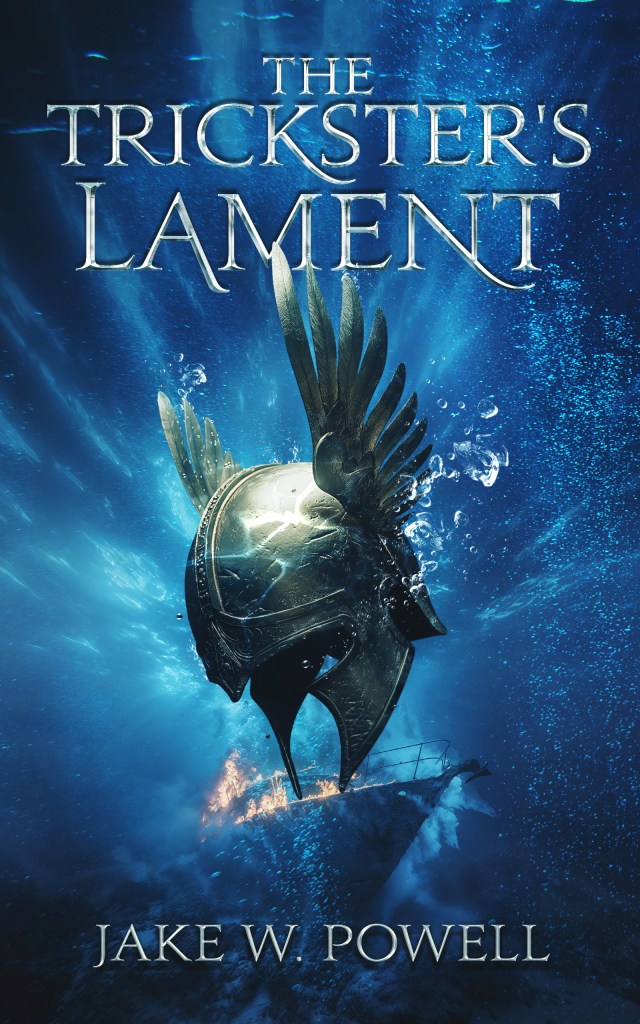
“Hermes is not having the best time. He walks a fine line, and his duty as messenger of Olympus weighs heavily on him. Being a god in the modern age means living in a world that no longer believes in gods. How much can one deity accomplish when no one respects him anymore? And why do his instincts tell him that he, the son of Zeus, is losing favor with his own family?

Tensions abound. The upstart Young Gods play dangerous games using entire cities as their boards. Formless monsters strike from the nighttime shadows, terrorizing hapless mortals. Agents of rival pantheons scheme to thwart Olympus’ designs. In the thick of it all, Hermes does what he does best: trick, lie, and cheat his way to victory.

Dinner with History’s Nameless

If you could host a dinner and anyone you invite was sure to come, who would you invite?

If I could invite anyone … I wouldn’t let a thing like time get in the way.

I would invite people long dead to learn their stories and the shape of history. Not famous people or those mentioned in the history books. The nameless, the common people, those whose names never made it into a textbook.

  1. A laborer who worked on the Great Pyramid of Giza. I would ask him how the pyramids were built, and what it was like to build one of them. I would ask what life was like for the common man in the ancient times of Egypt.
  2. A Viking from the 10th century. What were the raids like? What was your culture like? How do you see yourself, and how do you want others to see you?
  3. A peasant from 15th century Japan. What was it like to live during the Warring States period? I would ask him about daily life in Japan and how peasants related to samurai and other higher-ranking castes.
  4. Nez Perce, Comanche, Pueblo, Inuit, and Mohawk tribal members from before the first Europeans arrived in North America. I would ask them what their cultures were like, how they got on with their neighbors, and what North America was like before written history.
  5. One of Thomas Edison’s employees. Not the man himself, but someone who worked under him. What was it like? What was he like? And how did you contribute to his company?
  6. One of the first theater-goers to see Walt Disney’s Snow White and the Seven Dwarfs in 1937. I would want to know what the first audience’s impressions of the film was. And I would want to know what they thought Disney would do next.
  7. One of Microsoft’s first ever employees. I would love to know what his or her vision for the company was, what working under Bill Gates was like, and what it was like to build the first home computers.

And that would just be my first dinner party …

***

Many thanks for visiting my blog. I post updates on my writing career, I muse over storytelling and fiction, and I reflect on the curious and wonderful things in life.

“Hermes is not having the best time. He walks a fine line, and his duty as messenger of Olympus weighs heavily on him. Being a god in the modern age means living in a world that no longer believes in gods. How much can one deity accomplish when no one respects him anymore? And why do his instincts tell him that he, the son of Zeus, is losing favor with his own family?

Tensions abound. The upstart Young Gods play dangerous games using entire cities as their boards. Formless monsters strike from the nighttime shadows, terrorizing hapless mortals. Agents of rival pantheons scheme to thwart Olympus’ designs. In the thick of it all, Hermes does what he does best: trick, lie, and cheat his way to victory.

A Reflection on Eclectic Interests

What are you an authority on?

Truth be told, I’ve never considered myself an authority on anything. Oh, sure, I write a blog and share my thoughts and insights on life, writing, and sundry subjects, but I don’t consider myself an expert on any of them. I certainly wouldn’t call myself an authority on writing, and I probably never will. I’m just sharing my experiences, for better or for worse.

To achieve mastery in an artistic pursuit is something I pursue, but it is not a goal I expect to ever achieve. I don’t think it is obtainable. The journey and the gradual improvement of skill over time is what makes such a thing worthwhile.

I’m just a guy with things to say who started a blog. Thanks for reading it, by the way!

That being said, there are things I know about more than others. You know, the kinds of intellectual scree that are useful for a game of Trivial Pursuit, to rekindle the embers of a dying conversation, or perhaps to insert into a livestream chat. I have an unhealthy knowledge of pop culture, for example, particularly video games and tabletop gaming.

I also have an interest in animation history. I have a keen interest in modern Japanese history – enough that I took a master’s degree in Japanese Studies. Actually, reading what I just wrote, I can conclude that I like history in general. The hard sciences scare me, but I’m always up for a discussion about the liberal arts. Go figure.

Jack of all trades, master of none? Yes, yes, I am.

What about you? Are there any subjects you consider yourself an authority on or have a wide range of knowledge about?

***

Many thanks for visiting my blog. I post updates on my writing career, I muse over storytelling and fiction, and I reflect on the curious and wonderful things in life.

“Hermes is not having the best time. He walks a fine line, and his duty as messenger of Olympus weighs heavily on him. Being a god in the modern age means living in a world that no longer believes in gods. How much can one deity accomplish when no one respects him anymore? And why do his instincts tell him that he, the son of Zeus, is losing favor with his own family?

Tensions abound. The upstart Young Gods play dangerous games using entire cities as their boards. Formless monsters strike from the nighttime shadows, terrorizing hapless mortals. Agents of rival pantheons scheme to thwart Olympus’ designs. In the thick of it all, Hermes does what he does best: trick, lie, and cheat his way to victory.

A Letter to 100-Year-Old Me

Write a letter to your hundred-year-old self.

Well, Jake, I have a few things to say. First of all, since you’re such a worrywort, I just want to let you know that if you’re whining and cringing over how much worse society has gotten, let me remind you that it always had problems and they’re probably still the same ones. Get over it and carry on.

I am curious, though, if someone finally invented functional jetpacks or rocket cars. Are they affordable? Do they make traffic better or worse? I kind of doubt they’re around though, are they? Back to the Future thought we’d have hoverboards and weather control by 2015, after all. And that Jaws would still be getting sequels.

Speaking of entertainment, is virtual reality still a thing? If it is, are they making VR movies yet? I don’t mean demos, I mean full, 120-minute films. I’d love to know how those turned out.

You’ve lived a long life and seen a lot of things happen. More than most people in the last millennium could expect to see in their lifetime. A lot of it is amazing and wonderful. A lot of it is probably scary and disappointing. But that’s life in general – good and bad, sweet and sour. Some people bemoan modern times as the downfall of civilization. I imagine they said the same thing when the Roman Empire fell, and when the Normans invaded England, and in between the fall of every Chinese dynasty, and when Disney bought Marvel Comics.

You’ve lived a long life, and I know you’ve learned to make the best of it. Maybe you managed to do everything you wanted to do. Maybe you didn’t, but knowing how life goes, you’ve probably been surprised by good things you never saw coming. Either way, just remember this tidbit: Life is too short to spend in regret and frustration. Relax, take what comes, and do your best. Enjoy it.

Best regards from 2025 A.D.

***

My latest book, The Trickster’s Lament, is currently available on Amazon in both Kindle and paperback format.

“Hermes is not having the best time. He walks a fine line, and his duty as messenger of Olympus weighs heavily on him. Being a god in the modern age means living in a world that no longer believes in gods. How much can one deity accomplish when no one respects him anymore? And why do his instincts tell him that he, the son of Zeus, is losing favor with his own family?

Tensions abound. The upstart Young Gods play dangerous games using entire cities as their boards. Formless monsters strike from the nighttime shadows, terrorizing hapless mortals. Agents of rival pantheons scheme to thwart Olympus’ designs. In the thick of it all, Hermes does what he does best: trick, lie, and cheat his way to victory.

Many thanks for visiting my blog. I post updates on my writing career, I muse over storytelling and fiction, and I reflect on the curious and wonderful things in life.

The Ancient Age of Computers

Write about your first computer.

It was a big deal in my life owning a computer for the first time. Oh, I grew up using my parent’s, but having my own was almost a rite of passage into adulthood.

As many of you already know, I’m a writer, and I’ve been writing for most of my life. My first typed ramblings were done on a word processor, the grandaddy of modern computers where the only thing you could do was type and print. No fonts, no editing, no formatting. The missing link between the typewriter and the computer.

My first proper computer, though, was a birthday gift. It was a big deal, as you might imagine, especially since I was in, what? Fifth or sixth grade? A long time ago, in the days of yore when computers were big solid blocks, the mouse and keyboard were wired, the monitor was tiny, and it was the really big towers tucked away behind the desk that held all the processing power. These were the days of floppy discs that could hold maybe a single magazine issue’s worth of information before filling up and needing you to buy another one. No memory sticks here.

Before touch screens. Before iPhones. Before Bluetooth. Yes, the time when there was only – shudder – dial-up.

Some of you reading this remember dial-up. Using a landline phone connection to hook up to the Internet. When I wanted to go online, I had to tell my parents, because we couldn’t use the phone and be online at the same time. And then there was the sound. All I can really say is, if you know, you know. The sinister symphony of beeps, honks and screaming static. The sound of an age before instant convenience. Back in my day, we waited minutes to get online.

I liked that computer. Well, it was my only one, so I had better like it, but it was fun. Surfing the old version of the web, playing computer games that required actual discs (sometimes more than one for a single game!) and using the old Microsoft Word that came in an actual package rather than be an online service.

But that computer is gone now. It died, as computers tend to do. A moment of silence for the Ancient Age of Computers. But not for dial-up. Dial-up will not be missed.

***

My new book, The Trickster’s Lament, is currently available on Amazon in both Kindle and paperback format.

“Hermes is not having the best time. He walks a fine line, and his duty as messenger of Olympus weighs heavily on him. Being a god in the modern age means living in a world that no longer believes in gods. How much can one deity accomplish when no one respects him anymore? And why do his instincts tell him that he, the son of Zeus, is losing favor with his own family?

Tensions abound. The upstart Young Gods play dangerous games using entire cities as their boards. Formless monsters strike from the nighttime shadows, terrorizing hapless mortals. Agents of rival pantheons scheme to thwart Olympus’ designs. In the thick of it all, Hermes does what he does best: trick, lie, and cheat his way to victory.

He may be disrespected. He may be kicked about. He may even be falling out with his pantheon. But Hermes is a trickster. He knows how to play dirty in a world that doesn’t play fair. But though he can best man, beast, and god, he isn’t prepared for his wiliest opponent yet: his own conscience.”

Many thanks for visiting my blog. I post updates on my writing career, I muse over storytelling and fiction, and I reflect on the curious and wonderful things in life.

When I Was Born …

… the world changed forever.

The Berlin Wall came down. I’m fairly certain this was a direct consequence of my birth.

The original Michael Keaton Batman movie opened in theaters. Also a direct consequence of my existence, no doubt.

Disney’s The Little Mermaid also opened in theaters. I claim direct responsibility for the Disney Renaissance, thank you.

The first commercial internet service providers became available. Because of me, of course.

Can you guess what year I was born?

Many thanks for visiting my blog. I post updates on my writing career, I muse over storytelling and fiction, and I reflect on the curious and wonderful things in life. With a dash of dry humor.

Over the Next Hill: Tribute to Mankind’s Curiosity

The history of humanity is the history of crossing over the next hill.

Where are we without curiosity? Caves and mud huts. One day, someone steps outside with a mind filled with questions. What is over that next hill? What is in that valley? What is beyond that forest? Anther follows, and another. Further afield we walk, driven not by necessity but because we want to know.

Questions follow questions. Can I eat that? Can I grow it? Why does this reed make a sound when I blow through it? Food and music are discovered. Someone finds a sturdy stick. A walking stick, and soon a weapon. Lines are draw on sandy ground, then painted onto rock and hides. Maps are made to chart the wanderer’s path.

We cross the last hill and find a sea. But now is not the time to stop. Wood floats, this is known. A little later, and mankind sails out on boats across the water to find out what lies on the other side. They learn how to make the stars their guide. Navigation becomes more than simple wandering.

Where people grow tired and rest, they find new fruits and vegetables and animals. The nomad becomes the gardener and herdsman. Someone notices those mangy wolves following the camp for scraps. Someone tames them.

People build huts of straw and wood, of stone and brick. Cities appear. Curiosity turns inwards. How to make life better? Clever hands produce answers: the wheel, the hammer, the nail, the net, the plough, the saddle.

Not all stay in cities. Others keep wandering, looking for the next hill and sea and valley. They wander far afield, planting new cultures wherever they stop awhile. Downriver and up mountain and across desert. Because they can. Because they must know what is there.

The whole earth is charted. Mankind does not rest. The ocean deeps call out. The stars wink at humanity, inviting it to pay them a visit. Steam and electricity are harnessed. Fire no longer warms the camp, but lifts man and woman on ships of steel into the airless void to visit the moon. Other ships carry them beneath the ocean into the lightless abyss to glimpse its moody depths.

It is the never-ending journey. Why? Reasons are given, some long and eloquent, others little more than a careless shrug. Because we must know. Because we are curious creatures. Because we can scarce imagine what new mystery awaits us over the next hill.

If you just so happen to be enjoying my blog, feel free to subscribe. I post updates on my writing career, I muse over storytelling and fiction, and I reflect on the curious and wonderful things in life.

Image: “A view of hills and sky” by World Bank Photo Collection; Licensed under CC BY-NC-ND 2.0.

History: The Greatest Source of Inspiration for Any Writer

Fact is stranger than fiction, they say. And it’s true. But have you ever considered the inverse: Fiction is never stranger than fact.

No matter a writer’s imagination, no matter his ability to craft new worlds out of his own mind and populate it with characters who seem as real and unique as anyone you meet on the street, and no matter how engaging, grandiose, bizarre, or heartfelt the events portrayed in his work, he will never be able to surpass the parade of the unexpected that is world history.

History IS story. It’s right there in the word, isn’t it? And it’s real. Just think about that for a moment. Think about all the things you’ve read in the history books. Adventure. Romance. Mystery. Tragedy. War. Friendship. Triumph. Defeat. Despair. Hope. All of it is there, all of it waiting to be discovered by that one author seeking a mote of inspiration.

Where am I going with this? Just to say this: We writers have so much to draw from just by browsing the history section at our local library or bookstore. Heck, just go online. We live in the age of information. The World Wide Web contains everything. Try a quick surf of your hometown’s newspaper archives. Stories aplenty. Ideas in abundance.

And now I’m starting to think that there are so many tales in history that haven’t been given their due. Forgotten stories that need a time to shine. Eras and events that have been lost in the bustle of modern progress. Martin Scorsese’s Killers of the Flower Moon highlighted a time in Native American history that deserves more recognition. A terrible time, but one that should be known.

What else have we misplaced? What battles and victories waiting for their recognition? Unsung heroes waiting for their song to be written? Tragedies yet to be acknowledged? Villains who thought they got away with it?

Apologies, I’m just waxing poetical now. You get the idea. Writers don’t just write stories. We live at the tail end of the longest story ever written. All we have to do is look back a little ways for new tales from that saga to tell. Isn’t that a teensy bit amazing?

If you just so happen to be enjoying my blog, feel free to subscribe. I post updates on my writing career, I muse over storytelling and fiction, and I reflect on the curious and wonderful things in life.

Image: “Early printed vellum leaf” by Provenance Online Project; Licensed under CC0 1.0.