My Top Ten Favorite Movies

WordPress’s daily prompt made me think long and hard today …

These are my top ten favorite movies (in no particular order):

Porco Rosso – One of Studio Ghibli’s lesser known creations, a lowkey, introspective movie set in 1930s Italy. The protagonist is an ace pilot cursed to have the face of a pig. Why? Well, symbolism abounds, as do themes of survivor’s guilt, redemption and freedom. Also beautiful flying scenes, as per Studio Ghibli’s usual standard.

The Count of Monte Cristo (2002) – A great adaptation of Alexandre Dumas’s classic tale of revenge and its consequences. Less character study and more swashbuckling action, but it’s very well-choreographed swashbuckling, and the movie has an overall more optimistic tone than the novel.

Disney’s Beauty and the Beast – I grew up with Disney and will always have a soft spot for its animated films from the 1990s, but this one is my favorite. If you had to tie me to a chair to watch a romance, make it this movie.

Coraline – And if you had to tie me to a chair to watch a spooky animated movie, make it this one. A children’s film that manages to avoid cheap jokes and talking down to its audience, and most importantly, can also be enjoyed by adults. Very bizarre and surreal in a way that still makes a lick of sense.

The Rocketeer – Good old-fashioned pulp fiction adventure, based on a comic book character that surprisingly was less than a decade old at the time. Man with jetpack fights mafia thugs and Nazis. Straightforward, upbeat, and refreshingly earnest compared to the sardonic self-commentary of many of today’s superhero films.

Stargate – Ancient aliens done right – as science fiction. Very good flick that doesn’t try to reinvent the wheel, it just fills itself with likeable characters fighting an eeeeevil villain amidst great special effects. Sparked off an even better television show that ranks among my favorite TV series.

John Wick – A bit of a cheat, since I like the entire series, but I’ll stick with the first one for the purpose of this list. After a decade of jitter cam action antics, filmmakers realized that they could make stylish, creative action sequences and keep the camera steady. The action (and violence) generally takes precedence over the story, but the story that we see is actually quite poignant and painful in its humanity, as many of the best action films tend to be.

Tombstone – A manly Western starring manly men with manly mustaches. Joking aside, it’s a great film for everyone. Based on real-life events surrounding 19th-century lawman Wyatt Earp’s time in the town of Tombstone, Arizona, this film is made and memorialized by its cast. Really, really great acting all around, dialogue that sticks in your brain, and memorably tense confrontations between heroes and villains. Only in this film could the words, “Well, bye,” be made a stupendously amazing line.

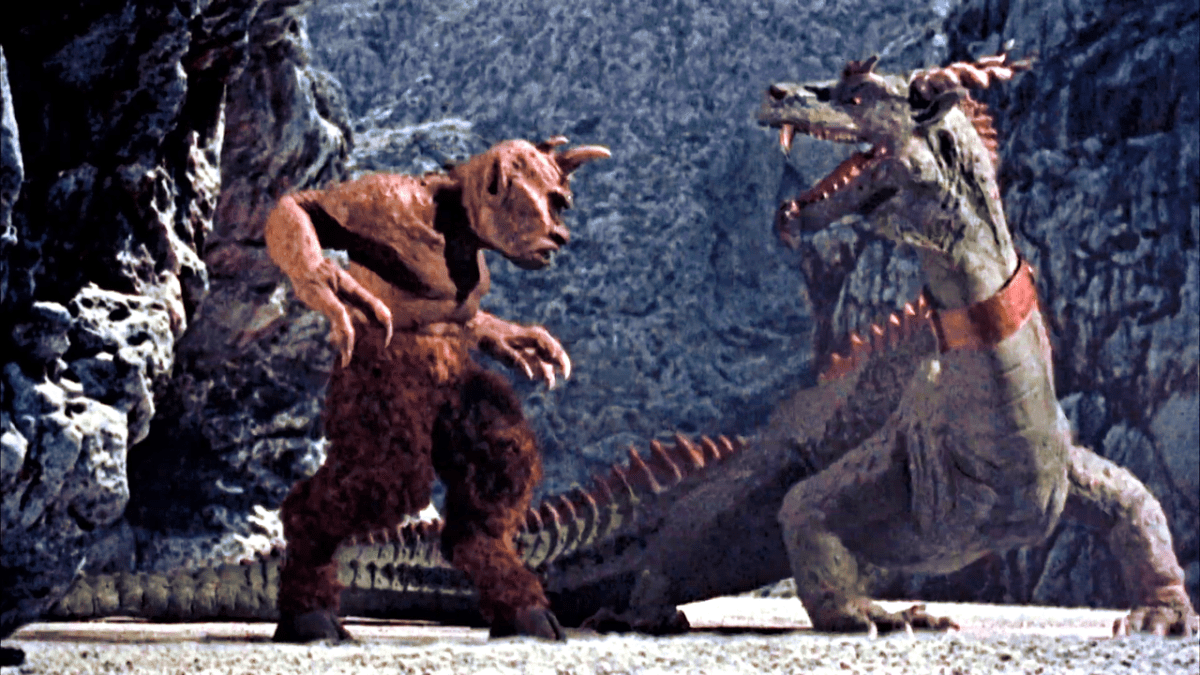
The 7th Voyage of Sinbad – We’re going old school now. A 1950s fantasy flick with special effects by Ray Harryhausen, the man, the myth, the legend. Modern visual effects wouldn’t exist without him, nor half the monster designs you and I take for granted these days. The visuals are the real star here; the story is typical “Arabian Nights” fare: Sinbad the sailor fights evil sorcerer to save princess. Features a fire-breathing dragon, perpetually angry cyclops, and most famously, a swordfight with a living skeleton. This is the foundation of modern fantasy visuals as we know it, you young whippersnappers!

Hook – This movie’s premise is very bold: Tell a story about Peter Pan growing up. Sounds like a disaster on paper (and to be fair, this movie is a bit divisive, I understand), but I always enjoyed it. Robin Williams makes the film work with his acting chops, and the film is more grounded in James Barrie’s original story than you might suspect, and indeed more so than many later Peter Pan adaptations. Dustin Hoffman’s Captain Hook is a treat – even if he’s not my favorite version of Hook, he serves as a great foil to Williams. Also probably my favorite realization of Neverland on film – colorful, fantastical and like something out of a storybook.

***

Many thanks for visiting my blog. I post updates on my writing career, I muse over storytelling and fiction, and I reflect on the curious and wonderful things in life.
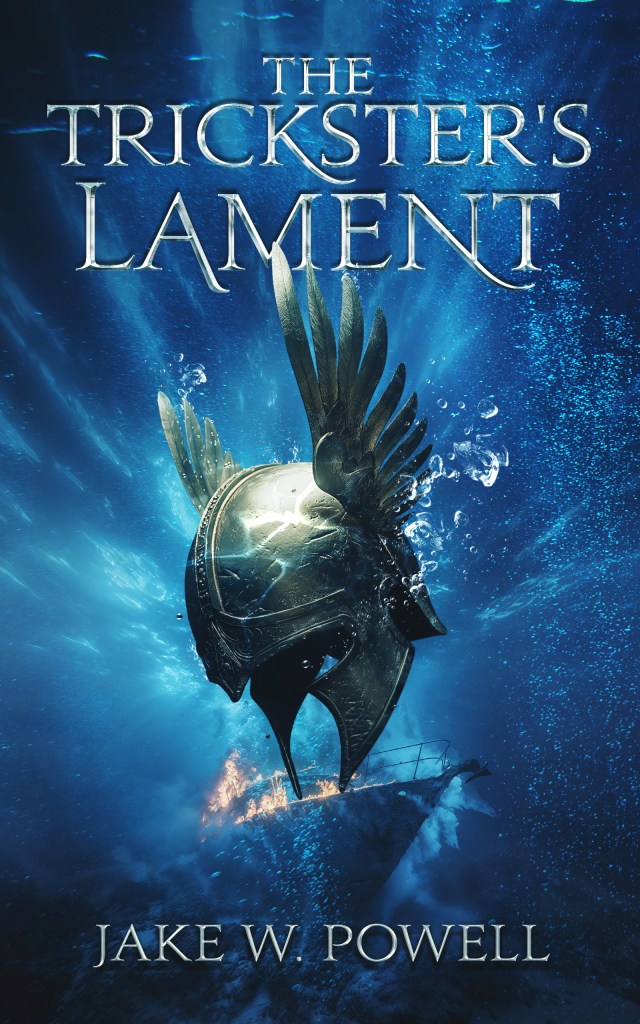
“Hermes is not having the best time. He walks a fine line, and his duty as messenger of Olympus weighs heavily on him. Being a god in the modern age means living in a world that no longer believes in gods. How much can one deity accomplish when no one respects him anymore? And why do his instincts tell him that he, the son of Zeus, is losing favor with his own family?

Tensions abound. The upstart Young Gods play dangerous games using entire cities as their boards. Formless monsters strike from the nighttime shadows, terrorizing hapless mortals. Agents of rival pantheons scheme to thwart Olympus’ designs. In the thick of it all, Hermes does what he does best: trick, lie, and cheat his way to victory.

Ye Olden Internet Days

Do you remember life before the Internet?

I certainly remember life with less Internet, though I’m not quite old enough to remember a time predating it. I grew up in the days of dial-up when going online meant not being able to use landline phones (I remember those, too) and television had no online connection. In fact, quite a few things weren’t online. Phones weren’t, cars weren’t, watches weren’t, heck, even there wasn’t even Wifi.

Streaming certainly a thing. Once upon a time, watching Netflix meant having a physical copy mailed to you to rent and return. Speaking of TV and movies, you watched them on a channel, stuck a cassette into a VCR, or went to a movie theater. This was the days before YouTube, Instagram, Facebook, and Twitter. There was MySpace, but I never used that so I can’t say much about it.

I do remember early Internet sites fondly, for some reason. Wikis didn’t exist, so people made websites more or less from scratch. Fewer templates, though there was AngelFire and similar tools. No Wix or WordPress yet. Fan sites looked unique. Silly, too, at times, especially compared to today’s sleek designs. Graphics weren’t a big thing, so a web page was mostly a bunch of text and a few pictures. And we were happy with what we got, you young whippersnappers!

Anyway, I’m not that old, but technology has a habit of making you think you are. It moves very fast, and in another thirty years, we’ll probably look at today’s Internet as something akin to the abacus. Or maybe we’ll go back to using the abacus because our calculators keep spitting out ads after every sum.

Yeah, we didn’t get many ads back then, either. Heh.

***

Many thanks for visiting my blog. I post updates on my writing career, I muse over storytelling and fiction, and I reflect on the curious and wonderful things in life.

“Hermes is not having the best time. He walks a fine line, and his duty as messenger of Olympus weighs heavily on him. Being a god in the modern age means living in a world that no longer believes in gods. How much can one deity accomplish when no one respects him anymore? And why do his instincts tell him that he, the son of Zeus, is losing favor with his own family?

Tensions abound. The upstart Young Gods play dangerous games using entire cities as their boards. Formless monsters strike from the nighttime shadows, terrorizing hapless mortals. Agents of rival pantheons scheme to thwart Olympus’ designs. In the thick of it all, Hermes does what he does best: trick, lie, and cheat his way to victory.

It’s Only an Event if It Doesn’t Happen Every Day: My Thoughts on Crossovers

Crossover, crossovers. People from different worlds smashing into each other. Different genres, different styles, different stories. Throw them in a mixer and see what happens.

What’s the appeal? I’d say it comes down to simple curiosity. What would happen if Superman met Captain America? How would Greek myths get on with Chinese myths? Can a pirate really defeat a ninja?

It’s a popular trend these days. Maybe not so much in novel writing, but movies love them, video games really love them, and comics are practically built on them. And they’re fun. But there’s something about these companies’ strategy that is missing the point of a crossover. Every time one occurs (multiple times a year), it’s built up as the MOST INCREDIBLE THING EVER. And people get excited sure. But not like they used to.

Way back in 2008, when Nick Fury stepped out of the shadows at the end of the first Iron Man film to talk about “the Avenger Initiative,” fans squealed with joy and anticipation. Nowadays, the next big Marvel crossover film elicits a non-committal “Eh,” at best.

As a writer, my professional opinion is that crossovers are not easy to pull off anymore, largely because they’ve been done to death.

And that, I think, is the strength and weakness of the concept. Crossovers are big events. They’re something special, something noteworthy. Two completely different worlds colliding is interesting, and fans are curious to see if it can be pulled off. Batman and Elmer Fudd? Yeah, it’s been done, and it won’t be done again because you can’t capture that kind of lightning in a bottle twice. Crossovers are like a fine wine, best in small sips. Overuse just makes you feel overwhelmed. Try imagining a world where the Super Bowl happens every month.

Another example: Back in the 1980s, Mario and Sonic the Hedgehog were the pinnacle of dueling video game mascots. Who was better? Who was cooler? Then, one fateful day, they appeared together in the same game. Awesome! But they’ve done so again and again, and what was something that nobody ever saw coming is now ho-hum, another day in the neighborhood. Video game characters appear in each other’s franchises all the time, now. It’s practically an industry standard.

As it turns out, such “events” are best when served rare. Very rare. Otherwise, they aren’t events. They’re business as usual.

Many thanks for visiting my blog. I post updates on my writing career, I muse over storytelling and fiction, and I reflect on the curious and wonderful things in life.

Quirks and Tics: Characterization through Minor Details

You ever think about how traits and habits can shape a character? Everyone has their own flavor of mannerisms: body posture, repeating gestures, facial expressions, verbal expressions, nervous habits. For the sake of simplicity, let’s call them “quirks.” They’re the little details that don’t play a part in the unfolding plot, but simply help flesh out the world you’re creating. Being visual cues, for the most part, they also aren’t always the easiest thing to describe in writing. Movies love them, though, and they can definitely help liven up a scene and make characters more relatable.

It’s all about humanizing your characters. Real people have habits and tics. They do or say things on a regular basis that are uniquely a part of them. You – yes, you – have habits and gestures of your own that make you, well, you. The devil is in the details, but so is good writing. Experienced authors can make even a bit character memorable by throwing in a couple of notable traits and letting those emblazon themselves in readers’ minds. Movies have it even easier. Being visual by nature, a film or TV show can display those quirks without pausing to describe them, letting such details blend more seamlessly into the narrative.

Mostly, quirks are all about worldbuilding, aren’t they? Not necessary to the plot, not vital to understanding the hero and supporting cast. They’re like sprinkles on ice cream. They’re a little something extra.

Or are they?

Quirks can be used as plot devices and can even deliver good payoffs. Someone recognizes her long-lost lover because of the specific way in which he twirls his hair. A secret agent’s habit of spinning his knife causes him to drop it and nearly trigger a motion-sensor alarm. A villain always unconsciously taps her fingers at the prospect of playing a game. A protagonist with OCD compulsively touches and counts poles on the sidewalk. He misses one and goes back for it – just in time to miss being run down by an oncoming car.

These are all examples taken from real movies and TV shows. Can you figure out where they come from?

Do you want your story to feel real? Do you want your characters to feel like people you might actually meet on the street? Or maybe you just want to challenge yourself with producing something a little more creative than past works? Consider using quirks to ad spice to your story. How? Well, take a look at the people you already know. Watch them carefully (but don’t be weird about it). Look at how they act and talk and move. Real life is good inspiration. Everyone has quirks.

Are there ways in which you have used quirks in your writing? Please feel free to share!

If you just so happen to be enjoying my blog, feel free to subscribe. I post updates on my writing career, I muse over storytelling and fiction, and I reflect on the curious and wonderful things in life.

Happy Birthday, Ray Harryhausen!

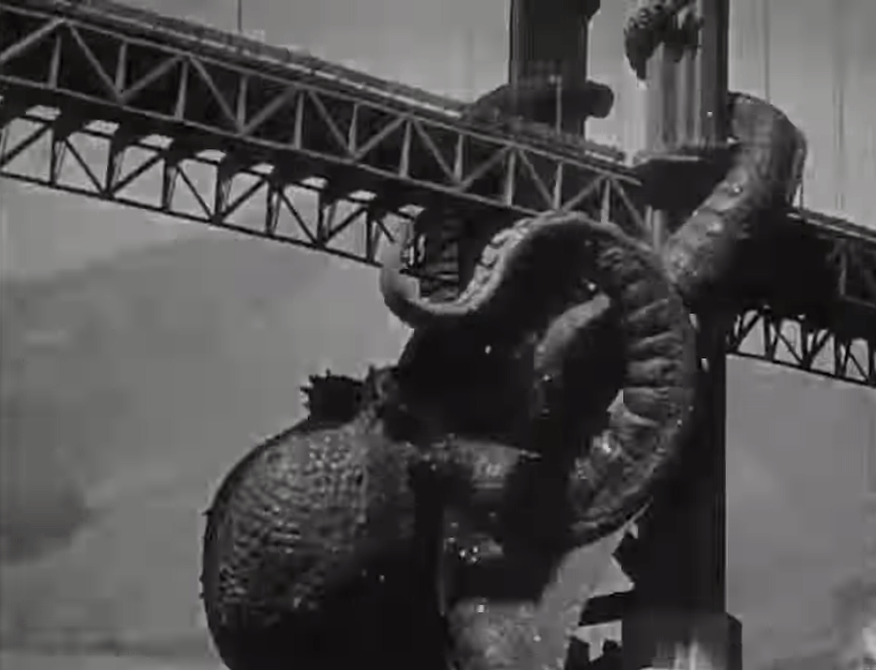
Today marks the 103rd birthday of cinema legend Ray Harryhausen. Whether you grew up with his films or have never heard of him, chances are that you’re familiar with his work, especially if you’re a fan of movie monsters like I am.

The Rhedosaurus // The Beast from 20,000 Fathoms // Warner Bros., 1953 // Public Domain

Never seen The 7th Voyage of Sinbad or Jason and the Argonauts? Don’t know what a Rhedosaurus or an Ymir is? Go check them out. They’re all great! Not to mention that Harryhausen’s special effects work has inspired thousands of storytellers, filmmakers, and video game designers all over the world. Ten years after his passing, his legacy is still going strong. Monster rule!

The Ymir // 20 Million Miles to Earth // Columbia Pictures, 1957 // Public Domain
Jason vs. the Hydra // Jason and the Argonauts // Columbia Pictures, 1963 // Public Domain
It Came from Beneath the Sea // Columbia Pictures, 1955 // Public Domain

Happy Birthday, Ray Harryhausen. May you never be forgotten.