No Jetpacks, No Teleporters, No Space Colonies … Keep Pushing Back the Date, Writers!

You ever notice how writers underestimate the rate of technology’s advance? They never quite get it right.

In the 1950s, writers predicted that families would be getting lost in space in the year 1997 A.D. They didn’t. In the 1960s, some small-time director thought that 2001 would a true odyssey in space. It wasn’t. Manned spaceflight hasn’t even gotten past the moon.

In the 1980s, a certain movie about time travel had the audacity to suggest we’d have hoverboards by 2015. That one still hurts. I want a hoverboard!

But no, we don’t have any. We have electric unmanned cars that come to a dead halt in the middle of intersections if the power grid goes out, but no hoverboards.

But we writers have a simple solution for irritants like reality and historical fact. We ignore them.

Just keep pushing back the date. By 2040 we’ll have colonies on Mars, I’m sure. No? By 2070. No? By 2100. Repeat as needed.

Oh, but don’t go thinking writers are completely lacking in self-awareness. There was an overt change in tactics around the 2000s when space colonies were proving to not be coming any time soon.

Writers started cheating.

In the year -insert random year around two decades from now- mankind discovers alien technology on the moon or Mars or what have you and reverse engineers it. Or a benevolent alien race arrives and welcomes us into the greater galactic community. Huzzah!

The year doesn’t even matter anymore! Marvelous literary freedom unbound by the constraints of science and logic! Be it 2027 or 2227, humanity will eventually discover those long-lost alien ruins that will unlock the secrets of faster-than-light travel, teleportation, artificial gravity and hoverboards.

What? Impossible, you say? Excuse me, but how do you know there isn’t an alien vault on the moon? You have proof?

Besides, writers don’t need proof. We type it down, and it is so. Just like this: In 2036 we will have flying cars. See? That was easy.

Science fiction is easy. All you have to do is keep moving the goalposts. And pretend that you never believed we’d all have hoverboards in the 2010s.

***

Many thanks for visiting my blog. I post updates on my writing career, I muse over storytelling and fiction, and I reflect on the curious and wonderful things in life.
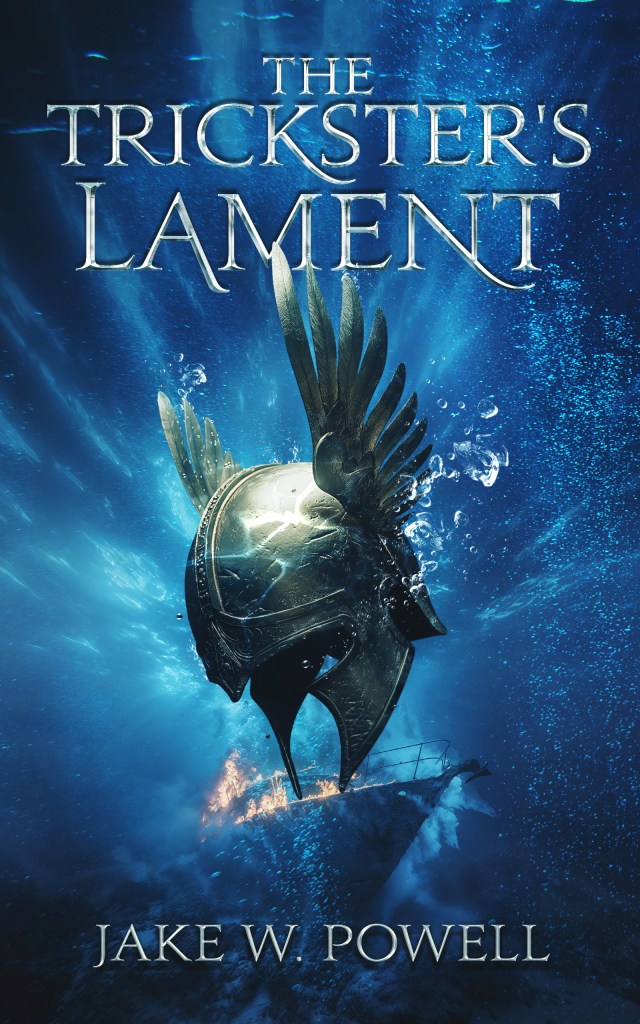
“Hermes is not having the best time. He walks a fine line, and his duty as messenger of Olympus weighs heavily on him. Being a god in the modern age means living in a world that no longer believes in gods. How much can one deity accomplish when no one respects him anymore? And why do his instincts tell him that he, the son of Zeus, is losing favor with his own family?

Tensions abound. The upstart Young Gods play dangerous games using entire cities as their boards. Formless monsters strike from the nighttime shadows, terrorizing hapless mortals. Agents of rival pantheons scheme to thwart Olympus’ designs. In the thick of it all, Hermes does what he does best: trick, lie, and cheat his way to victory.

Working on Book #3: Drafts and Long Slogs

Almost done with the second draft of my latest book. I promised myself that I would finish this draft before the end of the year, and if all goes well and I’m still standing, that looks to be the case.

What a journey it’s been already. This book has been much harder to write than my previous work. For one, it’s my first proper novel. It’s not an anthology of short stories united by a common thread like my first two publications. This is one continuous narrative. Exciting! And challenging. Technically, this isn’t my first novel, but that’s only if I count the one I wrote in college that will never see the light of day. Which I’m not.

The first draft was pretty rough. I thought I knew what I was on about when I started, but quickly – very quickly – I realized that I had little direction or clarity for what I wanted the story to be. I had an outline, and I knew the general gist of the tale I wanted to tell, but I hadn’t reflected enough on the details. I wasn’t prepared. And, oh, boy, did that make draft #1 a slog.

But the great thing about drafting is that rewrites can really clear the air. I have more focus now that I’ve had the chance to go over my mistakes and fix them, not to mention coming up with new and better ideas and trimming the fat that doesn’t need to be there. The ideal is that every draft makes the story a little better. I feel that that’s the case with this one.

That being said, I still have a long way to go. Two drafts isn’t enough for a novel, not for me, anyway. So, I’ll need to keep my sleeves rolled up and motor on.

***

Many thanks for visiting my blog. I post updates on my writing career, I muse over storytelling and fiction, and I reflect on the curious and wonderful things in life.

“Hermes is not having the best time. He walks a fine line, and his duty as messenger of Olympus weighs heavily on him. Being a god in the modern age means living in a world that no longer believes in gods. How much can one deity accomplish when no one respects him anymore? And why do his instincts tell him that he, the son of Zeus, is losing favor with his own family?

Tensions abound. The upstart Young Gods play dangerous games using entire cities as their boards. Formless monsters strike from the nighttime shadows, terrorizing hapless mortals. Agents of rival pantheons scheme to thwart Olympus’ designs. In the thick of it all, Hermes does what he does best: trick, lie, and cheat his way to victory.

What Matters Most: Establishing A Story’s Stakes

In every story, there are stakes. Something may be lost, something may be gained. The story’s conflict means something. Without stakes, without the risk of failure, a story isn’t very interesting. Who cares if the One Ring is destroyed in the fires of Mount Doom if Sauron isn’t a threat? Who cares about the Galactic Empire if they’re a paper tiger who can’t even threaten one planet?

You need to establish the stakes early on. That is to say, you need to establish what will happen if the heroes lose: Sauron conquers Middle Earth and reduces everyone to slavery. The Galactic Empire uses the Death Star to destroy any planet that opposes it. The heroes’ actions must matter.

Of course, not all stories have such a grand scope. To Kill a Mockingbird doesn’t deal with world-rattling threats, but Atticus Finch is struggling to prove an innocent man didn’t commit the crime he is accused of. The Grapes of Wrath centers around a family trying to establish a new life in California and not fall apart in the process. These are more personal stakes, but no less important.

That’s another thing about establishing stakes. They must be appropriate to the story. Personally, I think that, first and foremost, the stakes must be appropriate to the protagonist. We are reading about a character, and what matters to them must matter to us. If the stake is nothing more than Jim trying to get his kite into the air, then, by golly, that’s what the reader should care about, too.

Sometimes the stakes in a story increase. Maybe Jim gets drafted into World War II. Well, that’s a major shift. What’s at stake now? Survival? Capturing the enemy base? Maybe. But what is most appropriate is what directly affects Jim’s personal journey. It’s not just about fighting the enemy, any more than it was about flying the kite. It’s about Jim’s character growth.

It was never about getting the kite into the air. It’s not about fighting the war, not really. Those are the circumstances, but the story is about Jim learning to persevere and attain self-confidence. He never really felt that he was capable of getting that kite in the air. He feels that he can’t contribute to the war. The kite and the war represent the same thing: obstacles to Jim’s goal of becoming a confident, mature adult.

Okay, I’ll leave it up to one of you out there to write that story.

Writers don’t play hopscotch with the stakes. Even when they are raised to something more serious, they still form a core that drives the narrative. Every new stake is connected to the protagonist’s central conflict, each one a facet of his or her inner struggle.

It’s not about building up the biggest, most dire conflict imaginable: “The world will end! The evil empire will rule! The plague will kill us all!” It’s about character. It’s about what matters most to the protagonist.

***

Many thanks for visiting my blog. I post updates on my writing career, I muse over storytelling and fiction, and I reflect on the curious and wonderful things in life.

“Hermes is not having the best time. He walks a fine line, and his duty as messenger of Olympus weighs heavily on him. Being a god in the modern age means living in a world that no longer believes in gods. How much can one deity accomplish when no one respects him anymore? And why do his instincts tell him that he, the son of Zeus, is losing favor with his own family?

Tensions abound. The upstart Young Gods play dangerous games using entire cities as their boards. Formless monsters strike from the nighttime shadows, terrorizing hapless mortals. Agents of rival pantheons scheme to thwart Olympus’ designs. In the thick of it all, Hermes does what he does best: trick, lie, and cheat his way to victory.

Stephen King on Writing

I came across this quote today by Stephen King. It struck a chord with me.

“Description begins in the writer’s imagination, but should finish in the reader’s.”

This is a trap I am still learning how to avoid. The temptation to describe absolutely everything in meticulous and inane detail is something that, while appealing to the writer, can do extensive damage to the story. We as writers should not be tyrants over our reader’s minds. Describe enough to convey the point, but leave some left over for the readers to fill in the blanks.

After all, we all had our fill of obsession with details in high school literature class.

***

Many thanks for visiting my blog. I post updates on my writing career, I muse over storytelling and fiction, and I reflect on the curious and wonderful things in life.

“Hermes is not having the best time. He walks a fine line, and his duty as messenger of Olympus weighs heavily on him. Being a god in the modern age means living in a world that no longer believes in gods. How much can one deity accomplish when no one respects him anymore? And why do his instincts tell him that he, the son of Zeus, is losing favor with his own family?

Tensions abound. The upstart Young Gods play dangerous games using entire cities as their boards. Formless monsters strike from the nighttime shadows, terrorizing hapless mortals. Agents of rival pantheons scheme to thwart Olympus’ designs. In the thick of it all, Hermes does what he does best: trick, lie, and cheat his way to victory.

Writing is a Whitewater Rapid, Writing is a Block of Marble

What do you enjoy most about writing?

Writing is an act of creation. It is the free exercise of imagination and the production of things unseen, undreamt, uncertain until that very moment. It is as dynamic as a mountain river and just as unpredictable. It ebbs and flows. Currents crisscross one another and pull me in this direction, and now in the other. I love it. I plunge into the unknown when I sit down to write. For all the preparations and outlines and forethought, which are important, I still don’t truly know what will happen.

I love the surprise. I love the way that my imagination detaches from my logical mind and soars on its own. And then, after I return to Earth and the giddiness fades, comes the really fun part: editing.

Editing is taking the uncouth block of marble that is my first draft and refining it into something I can show in public. I am an editor at heart. The initial draft, that whitewater rafting down the river of raw imagination, must be balanced against the delicate chiseling of the editing process. Careful carving, doing away with what isn’t needed, making my work into something better. I love the careful precision and attention to detail.

Truth be told, I just love making up stories. Good stories, bad stories, stories that teach, stories that entertain. Like rivers and stone, riding the rapids and nicking away at the marble, are stories made.

***

Many thanks for visiting my blog. I post updates on my writing career, I muse over storytelling and fiction, and I reflect on the curious and wonderful things in life.

“Hermes is not having the best time. He walks a fine line, and his duty as messenger of Olympus weighs heavily on him. Being a god in the modern age means living in a world that no longer believes in gods. How much can one deity accomplish when no one respects him anymore? And why do his instincts tell him that he, the son of Zeus, is losing favor with his own family?

Tensions abound. The upstart Young Gods play dangerous games using entire cities as their boards. Formless monsters strike from the nighttime shadows, terrorizing hapless mortals. Agents of rival pantheons scheme to thwart Olympus’ designs. In the thick of it all, Hermes does what he does best: trick, lie, and cheat his way to victory.

The Memories of Childhood

I remember the smell of freshly baked peanut butter cookies in the kitchen wafting like a warm summer breeze. I remember how they crumbled in my hand as I ate them, little bits of delicious debris, and how there were always enough to last a week or more. I plucked them out of the Tupperware container one by one, day by day, a child’s guilty pleasure.

I remember the sound of my father mowing the lawn, a sawing roar yet somehow comforting. I remember the pungent odor of freshly cut grass coming through my open window, and I remember him manhandling the lawnmower up the steep hill in our backyard.

I remember walking through the forest park, the pine needles blanketing the ground like slivers of gold. I remember the tall trees that shaded me, and the baseball diamond at the park’s edge, where my parents and I used to buy hot dogs before returning home.

I remember the day after I had my wisdom teeth removed. My mind was a drowsy blur from anesthetics. I remember how my numb jaw felt like a lump of dead meat that didn’t hurt even when I pinched hard. I held a bag of frozen peas against it when the feeling and the pain started coming back.

I remember when I first became a writer. My parents owned a word processor, and I used it to write stories about my action figures. I printed them out and hung them on my wall, so proud of my work. I started my first novel, and never got past the fifth page. I remember getting my first computer, a great, gray blocky thing, and using it to write new stories. A child’s fancies that watered a ripe imagination.

I remember much, much more. More than could ever be committed to blog or paper. My childhood is over. The memories endure.

***

“Hermes is not having the best time. He walks a fine line, and his duty as messenger of Olympus weighs heavily on him. Being a god in the modern age means living in a world that no longer believes in gods. How much can one deity accomplish when no one respects him anymore? And why do his instincts tell him that he, the son of Zeus, is losing favor with his own family?

Tensions abound. The upstart Young Gods play dangerous games using entire cities as their boards. Formless monsters strike from the nighttime shadows, terrorizing hapless mortals. Agents of rival pantheons scheme to thwart Olympus’ designs. In the thick of it all, Hermes does what he does best: trick, lie, and cheat his way to victory.

Dealing with Writer’s Burnout

Writing is exciting. It is also exhausting. Crafting a story is an intense and intellectual endeavor that requires concentration, creativity, time, energy and the ability to make hard decisions. Small wonder that artists are called tortured souls. Creating anything means removing pieces of yourself and putting them into your work.

It is enjoyable, though. I don’t write because I have to, but because I want to. I also sometimes want to tear it all down and forget any of it ever happened.

No, this isn’t holding two contradictory thoughts at once. It isn’t doublethink. It’s the reality of dealing with burnout. Working hard on something, anything, that you enjoy will still lead to periods of tiredness, discouragement and an unwillingness to continue. It’s natural, I think. At least, that’s the impression I get.

I am working on my third book, and I was initially surprised that it is much harder to write than the first two. But there’s a reason for this. I’ve been writing about the same characters and setting for a while. Variety helps. After book #3 about the adventures of Hermes, I’ll get away from this series for a while, work on something fresh and different, give my brain a chance to stretch.

Feeling like you can’t put a word to a page isn’t something to dread. Whether it’s burnout, writer’s block, or just exhaustion after a busy day, it happens to all writers. Be kind to yourself. Don’t push yourself to finish if it’s going to result in a sloppy product. And certainly don’t push yourself at the expense of your own health.

Sometimes, we just need to get away from the story for a bit and let the ideas churn in our subconscious. It will still be there when we come back.

***

Many thanks for visiting my blog. I post updates on my writing career, I muse over storytelling and fiction, and I reflect on the curious and wonderful things in life.

“Hermes is not having the best time. He walks a fine line, and his duty as messenger of Olympus weighs heavily on him. Being a god in the modern age means living in a world that no longer believes in gods. How much can one deity accomplish when no one respects him anymore? And why do his instincts tell him that he, the son of Zeus, is losing favor with his own family?

Tensions abound. The upstart Young Gods play dangerous games using entire cities as their boards. Formless monsters strike from the nighttime shadows, terrorizing hapless mortals. Agents of rival pantheons scheme to thwart Olympus’ designs. In the thick of it all, Hermes does what he does best: trick, lie, and cheat his way to victory.

Literature Adds to Reality …

Literature adds to reality, it does not simply describe it. It enriches the necessary competencies that daily life requires and provides; and in this respect, it irrigates the deserts that our lives have already become.

C . S. Lewis

***

Many thanks for visiting my blog. I post updates on my writing career, I muse over storytelling and fiction, and I sometimes post cool quotes by writers.

Charles Dickens on Writing

Charles Dickens knew what it is like to be a writer …

Prowling about the rooms, sitting down, getting up, stirring the fire, looking out the window, teasing my hair, sitting down to write, writing nothing, writing something and tearing it up…

***

Many thanks for visiting my blog. I post updates on my writing career, I muse over storytelling and fiction, and I reflect on the curious and wonderful things in life.

“Hermes is not having the best time. He walks a fine line, and his duty as messenger of Olympus weighs heavily on him. Being a god in the modern age means living in a world that no longer believes in gods. How much can one deity accomplish when no one respects him anymore? And why do his instincts tell him that he, the son of Zeus, is losing favor with his own family?

Tensions abound. The upstart Young Gods play dangerous games using entire cities as their boards. Formless monsters strike from the nighttime shadows, terrorizing hapless mortals. Agents of rival pantheons scheme to thwart Olympus’ designs. In the thick of it all, Hermes does what he does best: trick, lie, and cheat his way to victory.

A Thought on the Horror Genre

I don’t have any long discussion on life, writing and the universe planned today. Just a brief thought on the topic of story genres:

The difference between the horror genre and the action genre is whether or not the protagonist has a shotgun.

Cheers.

***

My latest book, The Trickster’s Lament, is currently available on Amazon in both Kindle and paperback format.

“Hermes is not having the best time. He walks a fine line, and his duty as messenger of Olympus weighs heavily on him. Being a god in the modern age means living in a world that no longer believes in gods. How much can one deity accomplish when no one respects him anymore? And why do his instincts tell him that he, the son of Zeus, is losing favor with his own family?

Tensions abound. The upstart Young Gods play dangerous games using entire cities as their boards. Formless monsters strike from the nighttime shadows, terrorizing hapless mortals. Agents of rival pantheons scheme to thwart Olympus’ designs. In the thick of it all, Hermes does what he does best: trick, lie, and cheat his way to victory.

Many thanks for visiting my blog. I post updates on my writing career, I muse over storytelling and fiction, and I reflect on the curious and wonderful things in life.