No Jetpacks, No Teleporters, No Space Colonies … Keep Pushing Back the Date, Writers!

You ever notice how writers underestimate the rate of technology’s advance? They never quite get it right.

In the 1950s, writers predicted that families would be getting lost in space in the year 1997 A.D. They didn’t. In the 1960s, some small-time director thought that 2001 would a true odyssey in space. It wasn’t. Manned spaceflight hasn’t even gotten past the moon.

In the 1980s, a certain movie about time travel had the audacity to suggest we’d have hoverboards by 2015. That one still hurts. I want a hoverboard!

But no, we don’t have any. We have electric unmanned cars that come to a dead halt in the middle of intersections if the power grid goes out, but no hoverboards.

But we writers have a simple solution for irritants like reality and historical fact. We ignore them.

Just keep pushing back the date. By 2040 we’ll have colonies on Mars, I’m sure. No? By 2070. No? By 2100. Repeat as needed.

Oh, but don’t go thinking writers are completely lacking in self-awareness. There was an overt change in tactics around the 2000s when space colonies were proving to not be coming any time soon.

Writers started cheating.

In the year -insert random year around two decades from now- mankind discovers alien technology on the moon or Mars or what have you and reverse engineers it. Or a benevolent alien race arrives and welcomes us into the greater galactic community. Huzzah!

The year doesn’t even matter anymore! Marvelous literary freedom unbound by the constraints of science and logic! Be it 2027 or 2227, humanity will eventually discover those long-lost alien ruins that will unlock the secrets of faster-than-light travel, teleportation, artificial gravity and hoverboards.

What? Impossible, you say? Excuse me, but how do you know there isn’t an alien vault on the moon? You have proof?

Besides, writers don’t need proof. We type it down, and it is so. Just like this: In 2036 we will have flying cars. See? That was easy.

Science fiction is easy. All you have to do is keep moving the goalposts. And pretend that you never believed we’d all have hoverboards in the 2010s.

***

Many thanks for visiting my blog. I post updates on my writing career, I muse over storytelling and fiction, and I reflect on the curious and wonderful things in life.
“Hermes is not having the best time. He walks a fine line, and his duty as messenger of Olympus weighs heavily on him. Being a god in the modern age means living in a world that no longer believes in gods. How much can one deity accomplish when no one respects him anymore? And why do his instincts tell him that he, the son of Zeus, is losing favor with his own family?

Tensions abound. The upstart Young Gods play dangerous games using entire cities as their boards. Formless monsters strike from the nighttime shadows, terrorizing hapless mortals. Agents of rival pantheons scheme to thwart Olympus’ designs. In the thick of it all, Hermes does what he does best: trick, lie, and cheat his way to victory.

Dinner with History’s Nameless

If you could host a dinner and anyone you invite was sure to come, who would you invite?

If I could invite anyone … I wouldn’t let a thing like time get in the way.

I would invite people long dead to learn their stories and the shape of history. Not famous people or those mentioned in the history books. The nameless, the common people, those whose names never made it into a textbook.

  1. A laborer who worked on the Great Pyramid of Giza. I would ask him how the pyramids were built, and what it was like to build one of them. I would ask what life was like for the common man in the ancient times of Egypt.
  2. A Viking from the 10th century. What were the raids like? What was your culture like? How do you see yourself, and how do you want others to see you?
  3. A peasant from 15th century Japan. What was it like to live during the Warring States period? I would ask him about daily life in Japan and how peasants related to samurai and other higher-ranking castes.
  4. Nez Perce, Comanche, Pueblo, Inuit, and Mohawk tribal members from before the first Europeans arrived in North America. I would ask them what their cultures were like, how they got on with their neighbors, and what North America was like before written history.
  5. One of Thomas Edison’s employees. Not the man himself, but someone who worked under him. What was it like? What was he like? And how did you contribute to his company?
  6. One of the first theater-goers to see Walt Disney’s Snow White and the Seven Dwarfs in 1937. I would want to know what the first audience’s impressions of the film was. And I would want to know what they thought Disney would do next.
  7. One of Microsoft’s first ever employees. I would love to know what his or her vision for the company was, what working under Bill Gates was like, and what it was like to build the first home computers.

And that would just be my first dinner party …

***

Many thanks for visiting my blog. I post updates on my writing career, I muse over storytelling and fiction, and I reflect on the curious and wonderful things in life.

“Hermes is not having the best time. He walks a fine line, and his duty as messenger of Olympus weighs heavily on him. Being a god in the modern age means living in a world that no longer believes in gods. How much can one deity accomplish when no one respects him anymore? And why do his instincts tell him that he, the son of Zeus, is losing favor with his own family?

Tensions abound. The upstart Young Gods play dangerous games using entire cities as their boards. Formless monsters strike from the nighttime shadows, terrorizing hapless mortals. Agents of rival pantheons scheme to thwart Olympus’ designs. In the thick of it all, Hermes does what he does best: trick, lie, and cheat his way to victory.

Ye Olden Internet Days

Do you remember life before the Internet?

I certainly remember life with less Internet, though I’m not quite old enough to remember a time predating it. I grew up in the days of dial-up when going online meant not being able to use landline phones (I remember those, too) and television had no online connection. In fact, quite a few things weren’t online. Phones weren’t, cars weren’t, watches weren’t, heck, even there wasn’t even Wifi.

Streaming certainly a thing. Once upon a time, watching Netflix meant having a physical copy mailed to you to rent and return. Speaking of TV and movies, you watched them on a channel, stuck a cassette into a VCR, or went to a movie theater. This was the days before YouTube, Instagram, Facebook, and Twitter. There was MySpace, but I never used that so I can’t say much about it.

I do remember early Internet sites fondly, for some reason. Wikis didn’t exist, so people made websites more or less from scratch. Fewer templates, though there was AngelFire and similar tools. No Wix or WordPress yet. Fan sites looked unique. Silly, too, at times, especially compared to today’s sleek designs. Graphics weren’t a big thing, so a web page was mostly a bunch of text and a few pictures. And we were happy with what we got, you young whippersnappers!

Anyway, I’m not that old, but technology has a habit of making you think you are. It moves very fast, and in another thirty years, we’ll probably look at today’s Internet as something akin to the abacus. Or maybe we’ll go back to using the abacus because our calculators keep spitting out ads after every sum.

Yeah, we didn’t get many ads back then, either. Heh.

***

Many thanks for visiting my blog. I post updates on my writing career, I muse over storytelling and fiction, and I reflect on the curious and wonderful things in life.

“Hermes is not having the best time. He walks a fine line, and his duty as messenger of Olympus weighs heavily on him. Being a god in the modern age means living in a world that no longer believes in gods. How much can one deity accomplish when no one respects him anymore? And why do his instincts tell him that he, the son of Zeus, is losing favor with his own family?

Tensions abound. The upstart Young Gods play dangerous games using entire cities as their boards. Formless monsters strike from the nighttime shadows, terrorizing hapless mortals. Agents of rival pantheons scheme to thwart Olympus’ designs. In the thick of it all, Hermes does what he does best: trick, lie, and cheat his way to victory.

The Ancient Age of Computers

Write about your first computer.

It was a big deal in my life owning a computer for the first time. Oh, I grew up using my parent’s, but having my own was almost a rite of passage into adulthood.

As many of you already know, I’m a writer, and I’ve been writing for most of my life. My first typed ramblings were done on a word processor, the grandaddy of modern computers where the only thing you could do was type and print. No fonts, no editing, no formatting. The missing link between the typewriter and the computer.

My first proper computer, though, was a birthday gift. It was a big deal, as you might imagine, especially since I was in, what? Fifth or sixth grade? A long time ago, in the days of yore when computers were big solid blocks, the mouse and keyboard were wired, the monitor was tiny, and it was the really big towers tucked away behind the desk that held all the processing power. These were the days of floppy discs that could hold maybe a single magazine issue’s worth of information before filling up and needing you to buy another one. No memory sticks here.

Before touch screens. Before iPhones. Before Bluetooth. Yes, the time when there was only – shudder – dial-up.

Some of you reading this remember dial-up. Using a landline phone connection to hook up to the Internet. When I wanted to go online, I had to tell my parents, because we couldn’t use the phone and be online at the same time. And then there was the sound. All I can really say is, if you know, you know. The sinister symphony of beeps, honks and screaming static. The sound of an age before instant convenience. Back in my day, we waited minutes to get online.

I liked that computer. Well, it was my only one, so I had better like it, but it was fun. Surfing the old version of the web, playing computer games that required actual discs (sometimes more than one for a single game!) and using the old Microsoft Word that came in an actual package rather than be an online service.

But that computer is gone now. It died, as computers tend to do. A moment of silence for the Ancient Age of Computers. But not for dial-up. Dial-up will not be missed.

***

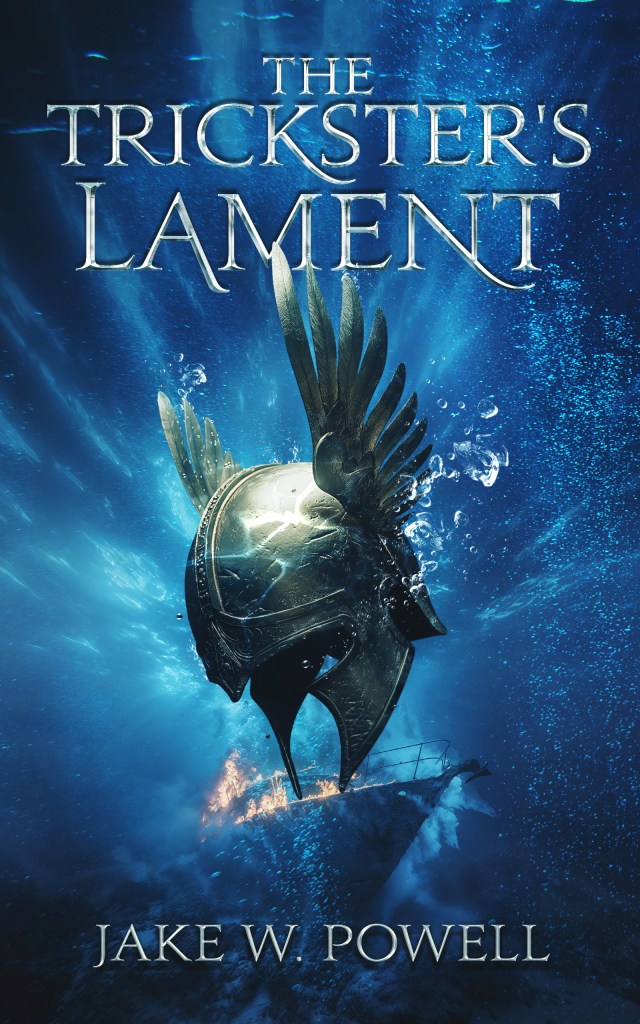
My new book, The Trickster’s Lament, is currently available on Amazon in both Kindle and paperback format.

“Hermes is not having the best time. He walks a fine line, and his duty as messenger of Olympus weighs heavily on him. Being a god in the modern age means living in a world that no longer believes in gods. How much can one deity accomplish when no one respects him anymore? And why do his instincts tell him that he, the son of Zeus, is losing favor with his own family?

Tensions abound. The upstart Young Gods play dangerous games using entire cities as their boards. Formless monsters strike from the nighttime shadows, terrorizing hapless mortals. Agents of rival pantheons scheme to thwart Olympus’ designs. In the thick of it all, Hermes does what he does best: trick, lie, and cheat his way to victory.

He may be disrespected. He may be kicked about. He may even be falling out with his pantheon. But Hermes is a trickster. He knows how to play dirty in a world that doesn’t play fair. But though he can best man, beast, and god, he isn’t prepared for his wiliest opponent yet: his own conscience.”

Many thanks for visiting my blog. I post updates on my writing career, I muse over storytelling and fiction, and I reflect on the curious and wonderful things in life.

My City of the FUTURE

How would you design the city of the future?

Well, for starters, I’d figure out what the heck is meant by “city of the future.”

I mean, hypothetical, futuristic cities designed in the 1950s look a lot different from what we 2020ers think they should look like . A lot less art-deco and a lot more Apple aesthetic. Lots of white and curved corners. In fifty more years, the city of the future will probably be imagined as made of recyclable plastic or something.

But this is my city, right? I can do what I want. So, futuristic means pretty, practical, and maybe even a little sustainable.

First thing’s first, its streets are based on a grid system. I want a city that’s easy to navigate with no silly, loopy streets going every which way. If we live in the future, we should be able to make our own cities easy to drive in, a least. Also, wide streets. My city will acknowledge the existence of heavy traffic and anticipate it. Wide streets that can accommodate, oh, let’s say six lanes.

But I’m also going to offer incentives to not drive cars everywhere. Because we’re in the future, right? And cars are a thing of the past. Well, they might be. It’s the future, who knows what’s going to happen?

So, I’ll have elevated rail lines for the train and also lots and lots of rental stations with electric bikes. Just put in a quarter and ride your rental for an hour or so. Also, I’m bringing back trolleys. Trolleys are a great idea, and I’ll fight the gas companies to make my city’s public transportation system the best in the world.

Since my city is on a grid, I’m thinking it’ll be shaped like a big square or rectangle. In the center is where all the skyscrapers will be located; the major businesses and corporate headquarters will have their places in the center, and they aren’t going to be big blocks of glass. I want some curvature to these buildings, something a little softer on the eyes. No hard corners. Also, solar panels. I’ll coat the upper floors of these skyscrapers in solar panels. Fancy, futuristic solar panels that are transparent or something, so you can still see out the windows. Not possible? Well, guess what? It’s the future!

Ah, speaking of power, I’m also going to install revolutionary new generators under the city center sidewalks that convert the kinetic force of footsteps into electrical energy. That’s right, I’m going to design a city that generates power from people walking down the sidewalk. Impossible, you say? Need I remind you? Future!

The most vital part of my city design is trees. Lots and lots of trees. The streets will be lined with trees, and there will be dozens of parks. Big parks, little parks, flower gardens, all scattered throughout the city. The very center of the city, smack dab in the middle, will be the biggest park, with a lake, a sports field, a walking loop through the woods, and more. Trees are important. They provide fresh oxygen and help calm people who otherwise are trapped in an artificial world. My city of the future will have nature in it.

That’s about all I can think of. A nice, pretty city that’s livable. And preferably cheap to live in. It needs lots of incentives for businesses to come in and employ people, but I’m just the designer, not the economist, so I can’t answer that here. But I’m sure my revolutionary sidewalk power generators will cut down on costs somehow.

I took the time to describe my basic idea to AI and got this image spat out in response.

Not bad, actually. I was expecting worse from AI. The buildings aren’t quite what I wanted, but I like the distinct lack of traffic and lots of bicyclists. Also, trees. Yes, that many trees.

There you have it. My city of the future.

Many thanks for visiting my blog. I post updates on my writing career, I muse over storytelling and fiction, and I reflect on the curious and wonderful things in life.

Face-to-Face in an Age of Long-Distance Technology

I’m an introvert by nature. I like being alone. Being isolated holds no real terror for me. Sure, it can be a bit monotonous at times, but I have a knack for finding ways to amuse myself. All in all, I enjoy being by myself. And in today’s word of Zoom meetings and work-from-home job schedules, I have more time to myself then ever. Most of us do. Heck, the Internet has made in-person interaction almost a secondary social trait.

That being said, I will never decry the importance – the essentiality – of physically being with friends.

I recently celebrated New Year’s with a group of close friends. We spent the night playing board games and laughing at each other’s corny jokes. Not being a social butterfly, such events are relatively rare for me, which makes them all the sweeter. Being with people is fun. And if I say that as if it’s some grand discovery, maybe that’s just the millennial in me talking.

We need people. Not just people’s words on social media, or their faces on the web camera. We need to be with people. Humans are social animals.

“Relationship” is a word that’s easy to bandy about. What other words are there to use to illustrate its complexity? Friendship. Camaraderie. Partnership. Sharing. Connecting. Time investment. Yup, relationships demand our time. Maybe a friendship in person is more precious because you sacrifice the time to be there in the flesh, rather than sit on your butt in front of your computer typing from a distance.

That New Year’s party was time well-spent. The spontaneity, the laughter, the jokes, the simple act of being there. It stirred memories of when that was commonplace for me. Maybe for all of us? Before the advent of social distancing. High school and college days where I hung out with friends during lunch and chatted with them throughout the week. Things that I took for granted. Ah, but hindsight is always bittersweet.

So, this New Year has gotten me thinking about the importance of in-person relationships. Writing is a solitary activity, and that means socializing is something I must seek elsewhere. I do have a social life, mind you, but perhaps I was starting to treat it a little too casually and valuing it a little less than I should have. We all need to see a living face every once in a while.

If you just so happen to be enjoying my blog, feel free to subscribe. I post updates on my writing career, I muse over storytelling and fiction, and I reflect on the curious and wonderful things in life.

Image: “Forest” by tim_gorman; Licensed under CC BY-ND 2.0.