The Moment I Knew I Had Grown Up Whether I Wanted to or Not

When was the first time you really felt like a grown-up?

Growing up is a tough thing. We don’t leave childhood behind. It simply skips away, leaving us behind. And we find ourselves in the world of grown-ups. We certainly do gain quite a few things as adults, though: Responsibilities, duties, jobs, bills …

But at what point does it hit home that we’ve grown up? Is it a slow, dawning realization, or a thunderbolt to the head?

I first felt the pangs of adulthood when I moved to college. I had never lived apart from my parents before. Well, there was that one week in summer school, but that didn’t really count. Now, I was in the car with my parents going to a campus miles away from home and with the full knowledge that I wouldn’t be coming back with them.

The moment I made that realization was the moment that I knew things were Different™. There was no going back to childhood ways. I was an adult. I would be living as an adult. That made me a little excited, a lot nervous, and very, very giddy.

You ever have that dream where you’re in freefall? And your whole body tingles with such severe giddiness that you feel like it will overwhelm you? That’s how I felt when I arrived at my college. I was falling, falling, falling, all the way down. The only thing keeping me from curling up into a ball of panic was the certainty that the fall would end with me hitting the ground standing upright. Everything was in order, my room was rented, my classes were scheduled, and my parents were still just a phone call away. I wasn’t going to fall forever.

And so I grew up. No more childhood games, just the memories of them. Big adult games, like Studying for the Test, Learning to Budget and Managing My Own Bedtime. Adulthood was upon me.

Of course, once I graduated and entered the Real World, I realized that college wasn’t a very grown-up place after all, but that’s a story for another time.

***

Many thanks for visiting my blog. I post updates on my writing career, I muse over storytelling and fiction, and I reflect on the curious and wonderful things in life.

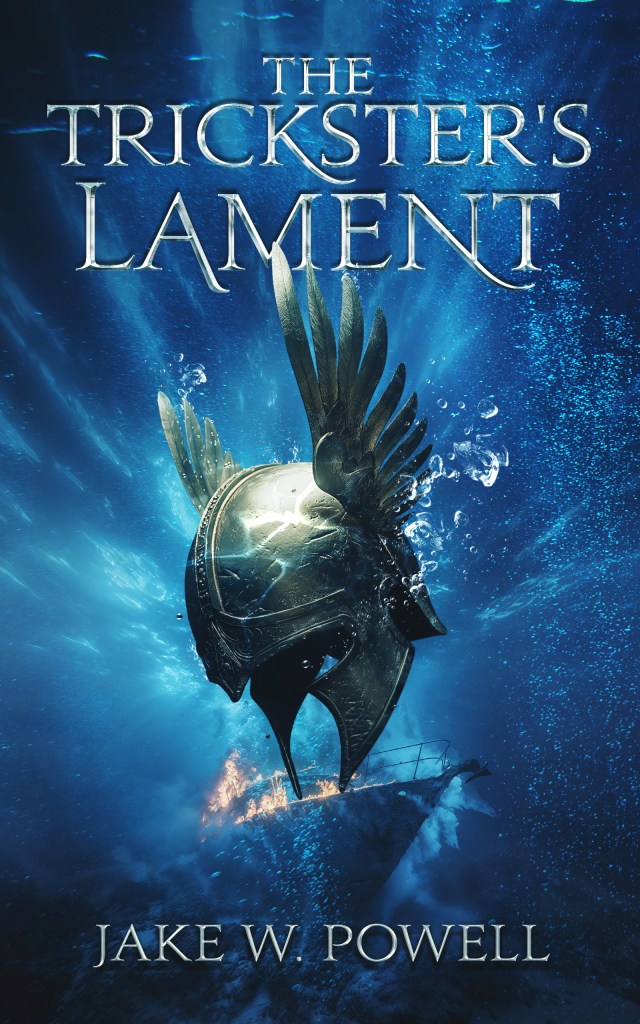
“Hermes is not having the best time. He walks a fine line, and his duty as messenger of Olympus weighs heavily on him. Being a god in the modern age means living in a world that no longer believes in gods. How much can one deity accomplish when no one respects him anymore? And why do his instincts tell him that he, the son of Zeus, is losing favor with his own family?

Tensions abound. The upstart Young Gods play dangerous games using entire cities as their boards. Formless monsters strike from the nighttime shadows, terrorizing hapless mortals. Agents of rival pantheons scheme to thwart Olympus’ designs. In the thick of it all, Hermes does what he does best: trick, lie, and cheat his way to victory.

What Matters Most: Establishing A Story’s Stakes

In every story, there are stakes. Something may be lost, something may be gained. The story’s conflict means something. Without stakes, without the risk of failure, a story isn’t very interesting. Who cares if the One Ring is destroyed in the fires of Mount Doom if Sauron isn’t a threat? Who cares about the Galactic Empire if they’re a paper tiger who can’t even threaten one planet?

You need to establish the stakes early on. That is to say, you need to establish what will happen if the heroes lose: Sauron conquers Middle Earth and reduces everyone to slavery. The Galactic Empire uses the Death Star to destroy any planet that opposes it. The heroes’ actions must matter.

Of course, not all stories have such a grand scope. To Kill a Mockingbird doesn’t deal with world-rattling threats, but Atticus Finch is struggling to prove an innocent man didn’t commit the crime he is accused of. The Grapes of Wrath centers around a family trying to establish a new life in California and not fall apart in the process. These are more personal stakes, but no less important.

That’s another thing about establishing stakes. They must be appropriate to the story. Personally, I think that, first and foremost, the stakes must be appropriate to the protagonist. We are reading about a character, and what matters to them must matter to us. If the stake is nothing more than Jim trying to get his kite into the air, then, by golly, that’s what the reader should care about, too.

Sometimes the stakes in a story increase. Maybe Jim gets drafted into World War II. Well, that’s a major shift. What’s at stake now? Survival? Capturing the enemy base? Maybe. But what is most appropriate is what directly affects Jim’s personal journey. It’s not just about fighting the enemy, any more than it was about flying the kite. It’s about Jim’s character growth.

It was never about getting the kite into the air. It’s not about fighting the war, not really. Those are the circumstances, but the story is about Jim learning to persevere and attain self-confidence. He never really felt that he was capable of getting that kite in the air. He feels that he can’t contribute to the war. The kite and the war represent the same thing: obstacles to Jim’s goal of becoming a confident, mature adult.

Okay, I’ll leave it up to one of you out there to write that story.

Writers don’t play hopscotch with the stakes. Even when they are raised to something more serious, they still form a core that drives the narrative. Every new stake is connected to the protagonist’s central conflict, each one a facet of his or her inner struggle.

It’s not about building up the biggest, most dire conflict imaginable: “The world will end! The evil empire will rule! The plague will kill us all!” It’s about character. It’s about what matters most to the protagonist.

***

Many thanks for visiting my blog. I post updates on my writing career, I muse over storytelling and fiction, and I reflect on the curious and wonderful things in life.

“Hermes is not having the best time. He walks a fine line, and his duty as messenger of Olympus weighs heavily on him. Being a god in the modern age means living in a world that no longer believes in gods. How much can one deity accomplish when no one respects him anymore? And why do his instincts tell him that he, the son of Zeus, is losing favor with his own family?

Tensions abound. The upstart Young Gods play dangerous games using entire cities as their boards. Formless monsters strike from the nighttime shadows, terrorizing hapless mortals. Agents of rival pantheons scheme to thwart Olympus’ designs. In the thick of it all, Hermes does what he does best: trick, lie, and cheat his way to victory.

Would I Dare Ride a Horse?

What’s something you would attempt if you were guaranteed not to fail.

Horse racing. If I was guaranteed not to fail spectacularly, I would try horse racing.

I’m not worried much about losing. I don’t care if I don’t come in first place. But I would love to try it with the absolute certainty that I wouldn’t fall off, get kicked in the face, have my fingers bitten off or otherwise end up twisting my horse in circles as I fumble with the reins.

I’ve ridden a horse exactly once, as a child, on a school field trip. “Riding” is a generous word, as the horse was simply following a predetermined route, and I had no control or input.

But to actually ride a horse, to race against other jockeys, to feel my mount kick into a full gallop, to jump fences and feel the horse’s legs pounding underneath – that would be a joy. But I don’t think I ever will try it. I think I lack the confidence that I would come away unscathed. But if there was actually some sort way to guarantee that I couldn’t fall off or get kicked or bit, if there was a way to make such wishes come true, then I might just try it.

***

Many thanks for visiting my blog. I post updates on my writing career, I muse over storytelling and fiction, and I reflect on the curious and wonderful things in life.

“Hermes is not having the best time. He walks a fine line, and his duty as messenger of Olympus weighs heavily on him. Being a god in the modern age means living in a world that no longer believes in gods. How much can one deity accomplish when no one respects him anymore? And why do his instincts tell him that he, the son of Zeus, is losing favor with his own family?

Tensions abound. The upstart Young Gods play dangerous games using entire cities as their boards. Formless monsters strike from the nighttime shadows, terrorizing hapless mortals. Agents of rival pantheons scheme to thwart Olympus’ designs. In the thick of it all, Hermes does what he does best: trick, lie, and cheat his way to victory.

Regarding the Writer and His Readers

A couple years ago, I wrote a blog post titled “No Author is an Island.” I stand by what I wrote in that article. Now, with more experience, I can also add to it.

An author is dependent on his beta readers, editors, and cover artists to make his book the best it can be. No one works in a vacuum. Most of all, though, the author shares a unique relationship with his readers. A writer creates a world and story for the readers to explore and inhabit. The readers, in turn, discover things in that world the author wasn’t even aware he put in.

Readers are the final test of my story. They see things that I do not, perceive story beats differently, take away points that I was unaware of. Everyone experiences a book differently. We writers so often write for ourselves, to fulfill that perpetual itch to create. And yet, like all artists, we are not all-knowing. We may very well not fully understand the implications of our own work, but we discover new facets of our creations through feedback from the audience.

This sometimes means loosening our grip on our stories. I know what I wrote. I know what my intentions are. But I must accept that the world is full of people with all manner of backgrounds and opinions. When I publish a book, it goes out into the world, and every reader will see it differently. Sure, there will (hopefully) be some common agreement, since I do strive to make my plots and characters consistent, but I don’t have complete control over interpretation. Such is the wonder and sorrow of applicability.

***

Many thanks for visiting my blog. I post updates on my writing career, I muse over storytelling and fiction, and I reflect on the curious and wonderful things in life.

“Hermes is not having the best time. He walks a fine line, and his duty as messenger of Olympus weighs heavily on him. Being a god in the modern age means living in a world that no longer believes in gods. How much can one deity accomplish when no one respects him anymore? And why do his instincts tell him that he, the son of Zeus, is losing favor with his own family?

Tensions abound. The upstart Young Gods play dangerous games using entire cities as their boards. Formless monsters strike from the nighttime shadows, terrorizing hapless mortals. Agents of rival pantheons scheme to thwart Olympus’ designs. In the thick of it all, Hermes does what he does best: trick, lie, and cheat his way to victory.

“Now” is Not “Forever”

What is the best piece of advice you’ve ever received?

“This too shall pass.”

Whenever you are feeling down, whenever you feel discouraged, whenever you’re stuck taking out the trash or behind a desk at work, or otherwise feel that time has shrunk to a single point that is infinite and eternal and will never, ever get better …

“This too shall pass.”

This is no call to passivity or apathy. This is a call to endure and push forward. Now is not forever. The current situation is not the whole of the future. Persevere. Get the dishes done. Finish your homework. Drive through after-work traffic. There is an endpoint. There is not merely a light at the end of the tunnel – the tunnel itself does indeed have an end.

“This too shall pass.”

There is hope in life. Even the most dire, the most awful, the most horrific and seemingly apocalyptic of times will eventually pass and become a distant memory. You need not fear that what you’re suffering through now will always be there. And most of all, this means that we do need to live in despair. Work through the hard times, build perseverance, and from that perseverance comes character, and from that character comes hope. Because this – yes, THIS, right now – will pass soon enough.

***

Many thanks for visiting my blog. I post updates on my writing career, I muse over storytelling and fiction, and I reflect on the curious and wonderful things in life.

“Hermes is not having the best time. He walks a fine line, and his duty as messenger of Olympus weighs heavily on him. Being a god in the modern age means living in a world that no longer believes in gods. How much can one deity accomplish when no one respects him anymore? And why do his instincts tell him that he, the son of Zeus, is losing favor with his own family?

Tensions abound. The upstart Young Gods play dangerous games using entire cities as their boards. Formless monsters strike from the nighttime shadows, terrorizing hapless mortals. Agents of rival pantheons scheme to thwart Olympus’ designs. In the thick of it all, Hermes does what he does best: trick, lie, and cheat his way to victory.

Is There Such a Thing as Life Without Music?

What would your life be like without music?

Life without music would be insufferably boring. And, I think, it would be impossible to live life without it.

Not because we would drop dead from lack of music or lose all motivation and will, but because humans must make music. We feel rhythm and melody in everything. Nature sings: birds, wind, waves, thunder and lightning. Small wonder that man found ways to make musical sounds of his own.

For me, personally, music is a means of relaxation and inspiration. Relaxation from stress and worries, and inspiration for my imagination and writing. I have no particular taste in music; all genres are fair game. I just enjoy music as a means of processing ideas and, perhaps, of hyping myself up for a project.

Music also helps keep me sane when I’m mired in boredom or doing repetitive chores. Music is very important in my life, and I would be lesser for its absence. I think most people would.

And it’s impossible to avoid it. Music runs through my head during the day with or without headphones. It’s always there, drawn from an archive of songs and melodies. We are musical beings. People need music. I certainly do.

***

Many thanks for visiting my blog. I post updates on my writing career, I muse over storytelling and fiction, and I reflect on the curious and wonderful things in life.

“Hermes is not having the best time. He walks a fine line, and his duty as messenger of Olympus weighs heavily on him. Being a god in the modern age means living in a world that no longer believes in gods. How much can one deity accomplish when no one respects him anymore? And why do his instincts tell him that he, the son of Zeus, is losing favor with his own family?

Tensions abound. The upstart Young Gods play dangerous games using entire cities as their boards. Formless monsters strike from the nighttime shadows, terrorizing hapless mortals. Agents of rival pantheons scheme to thwart Olympus’ designs. In the thick of it all, Hermes does what he does best: trick, lie, and cheat his way to victory.

What I Feel Isn’t Always What I Need

Share a lesson you wish you had learned earlier in life.

I wish I had learned much earlier in life that how I feel about something doesn’t change the need to do it. I wish that I had learned, a long time ago, that I shouldn’t only write when I feel inspired, that I only need to exercise when I feel good, and, in short, I should only do anything when I am “up to it.” Work still needs to be done regardless of my feelings on the matter, and even hobbies and joys can feel awfully dull sometimes.

I wish I better understood ten or twenty years ago that emotions shouldn’t dictate my actions, either to motivate me or restrain me. Emotion is separate from will. The will to do something is a conscious effort. Acting on passion is impulsive, and the burst of energy it gives is fleeting. The will to complete a task requires patience and quiet diligence.

Perhaps this seems obvious to you, and I’m just pointing out a fact that is clear as day. But I didn’t fully understand this when I was younger. I do now, and it has helped me better understand both myself and how life works.

***

Many thanks for visiting my blog. I post updates on my writing career, I muse over storytelling and fiction, and I reflect on the curious and wonderful things in life.

“Hermes is not having the best time. He walks a fine line, and his duty as messenger of Olympus weighs heavily on him. Being a god in the modern age means living in a world that no longer believes in gods. How much can one deity accomplish when no one respects him anymore? And why do his instincts tell him that he, the son of Zeus, is losing favor with his own family?

Tensions abound. The upstart Young Gods play dangerous games using entire cities as their boards. Formless monsters strike from the nighttime shadows, terrorizing hapless mortals. Agents of rival pantheons scheme to thwart Olympus’ designs. In the thick of it all, Hermes does what he does best: trick, lie, and cheat his way to victory.

Why Do I Blog?

Today’s daily prompt is fairly simple: Why do I blog?

That’s an important question for a blogger. It’s like asking any writer: Why do you write? Knowing why can help shape the future of your craft. A little introspection is good for professional and personal growth. And truth be told, the answer changes over time.

When I started my blog, it was primarily for two reasons: To promote my published work and to keep my writing skills sharp. Those two reasons haven’t changed. However, over time I find blogging in and of itself to be a fun hobby, not merely a side project to go along with writing books.

That being said, blogging is a different animal from short stories and novels. It is taking ideas and presenting them as bite sized chunks. It’s also a way for me to get a feel for what sorts of topics and writings appeal to my audience. It’s also a way to reach out to other writers, to learn from them, and to broaden my understanding of the craft.

Blogging also helps keep my mind occupied. I don’t know about the rest of you, but I go nuts if I don’t have something to occupy the creative half of my brain. My mind stagnates, and my thoughts wither and … Well, maybe it’s not quite that dramatic, but managing a blog is an excellent way to keep my time occupied with something constructive and fun. It’s a good hobby, and I’m glad I started.

***

Many thanks for visiting my blog. I post updates on my writing career, I muse over storytelling and fiction, and I reflect on the curious and wonderful things in life.

“Hermes is not having the best time. He walks a fine line, and his duty as messenger of Olympus weighs heavily on him. Being a god in the modern age means living in a world that no longer believes in gods. How much can one deity accomplish when no one respects him anymore? And why do his instincts tell him that he, the son of Zeus, is losing favor with his own family?

Tensions abound. The upstart Young Gods play dangerous games using entire cities as their boards. Formless monsters strike from the nighttime shadows, terrorizing hapless mortals. Agents of rival pantheons scheme to thwart Olympus’ designs. In the thick of it all, Hermes does what he does best: trick, lie, and cheat his way to victory.

Stephen King on Writing

I came across this quote today by Stephen King. It struck a chord with me.

“Description begins in the writer’s imagination, but should finish in the reader’s.”

This is a trap I am still learning how to avoid. The temptation to describe absolutely everything in meticulous and inane detail is something that, while appealing to the writer, can do extensive damage to the story. We as writers should not be tyrants over our reader’s minds. Describe enough to convey the point, but leave some left over for the readers to fill in the blanks.

After all, we all had our fill of obsession with details in high school literature class.

***

Many thanks for visiting my blog. I post updates on my writing career, I muse over storytelling and fiction, and I reflect on the curious and wonderful things in life.

“Hermes is not having the best time. He walks a fine line, and his duty as messenger of Olympus weighs heavily on him. Being a god in the modern age means living in a world that no longer believes in gods. How much can one deity accomplish when no one respects him anymore? And why do his instincts tell him that he, the son of Zeus, is losing favor with his own family?

Tensions abound. The upstart Young Gods play dangerous games using entire cities as their boards. Formless monsters strike from the nighttime shadows, terrorizing hapless mortals. Agents of rival pantheons scheme to thwart Olympus’ designs. In the thick of it all, Hermes does what he does best: trick, lie, and cheat his way to victory.

What We Feel

How are you feeling right now?

When I saw this daily prompt, it turned me thoughtful. How am I feeling at this very moment? I considered that I could write about how I feel excited for today, hopeful for the future, disappointed, discouraged, content, happy, restless.

But I have been all these things in the span of a single day, and it makes me wonder if the question isn’t a flawed one. How I am feeling right now can change in a moment’s time.

And now I wonder if perhaps we all put too much stock in feelings. Emotions are flittery things, like butterflies twirling in a windstorm. Sometimes up, sometimes down, diving and soaring in all directions, rarely in one place for too long.

Emotions are … changeable. Their impact on our lives cannot be ignored, but I try not to direct my life by how I am feeling at the moment. If I only wrote when I feel good, I would still be on my first book. Action is a yardstick we can measure our lives by, not feelings.

And this makes me realize something else: Our feelings do not have to dictate our lives. They are not the measure of our worth or our successes or even our failures. They are important, for words of encouragement from a friend can gladden our hearts, and the thrill of a good story can inspire us, but they are not the sum total of our lives. We are more complex creatures than how we feel at any given moment.

We feel what we feel. We can rarely help it. But we are not puppets strung along by emotion. Emotion is a part of me, but it is not meant to be my master and commander.

And no, that really isn’t what the daily prompt was asking, was it? But there you have it. My daily thoughts, for better or worse.

***

Many thanks for visiting my blog. I post updates on my writing career, I muse over storytelling and fiction, and I reflect on the curious and wonderful things in life.

“Hermes is not having the best time. He walks a fine line, and his duty as messenger of Olympus weighs heavily on him. Being a god in the modern age means living in a world that no longer believes in gods. How much can one deity accomplish when no one respects him anymore? And why do his instincts tell him that he, the son of Zeus, is losing favor with his own family?

Tensions abound. The upstart Young Gods play dangerous games using entire cities as their boards. Formless monsters strike from the nighttime shadows, terrorizing hapless mortals. Agents of rival pantheons scheme to thwart Olympus’ designs. In the thick of it all, Hermes does what he does best: trick, lie, and cheat his way to victory.