Stories for All Time: Universal Themes in Writing

Image: “Lonely Galaxy Lost in Space” by NASA Goddard Photo and Video, Licensed under CC BY 2.0.

Really, this topic is so vast that I could devote an entire week to it. When you consider that stories have been told for as long as humanity has existed, it’s small wonder that certain themes and morals endure the rise and fall of civilizations, and that common threads wind through the evolution of communication technologies.

Quite simply, certain themes in storytelling are universal. I’m sure you’ve thought of some just now. Good versus evil. The hero’s journey. Coming of age. Revenge. Forgiveness. Hope. War and peace. Etc., etc. Why? Because they’re broad. They appeal to everyone, because everyone has, at some point or another, dealt with these issues. They resonate with us, to use a common turn of phrase. Another way of putting it is that they are inherently familiar topics. And it doesn’t matter who you are or where you’re from, everybody has a concept of the hero or wants a story about hope. Everyone is familiar with war, and also with villainy. You don’t need cultural translation to understand that there are good things in the world and also very bad things.

So, some stories have that universal appeal. How do we know which ones? Well, it takes a bit of patience to find out, doesn’t it? When Charles Dickens wrote A Christmas Carol, he didn’t know his novella would be a staple of literature over 150 years later. Neither did the Greek poet Homer know that The Odyssey and The Iliad would still be studied to this very day.

Wait fifty years. Is the story still popular? More importantly, is it still relevant? Do people still care?

For every masterpiece, there must be ten thousand forgotten works. So many stories fade away with time. Sometimes, it’s due to bad luck or happenstance, and some never get a chance to be recognized. And some were a flash in the pan: Their plots were ripped from the headlines, centered around current events. What was hot and fresh that year gave them a brief celebrity. Then the world moved on, and these stories became anachronisms. Their identities were fixed in current events, and without that context they remain curiosities at best.

I won’t give any examples. Maybe you can think of a few yourself.

Universality and timelessness go hand-in-hand. The greatest stories don’t need to be shackled to any one era. They can be retold, again and again, in any age, at any time, because the core of their identity and popularity isn’t the bells and whistles of the current year. It is their basic, broad, foundational themes that reverberate throughout the ages. Sherlock Holmes is Sherlock Holmes, whether he’s in the 19th century or the 21st. Journey to the West has been retold as a post-apocalyptic video game. You can’t count the number of adaptations of Little Red Riding Hood on your hands and feet – you’ll run out of digits.

The very best stories can be told over and over again, and they have something to say to us every time.

Enjoying my blog? Don’t want to miss a single post? Subscribe for updates on when I post and follow my writing career, musings on fiction and storytelling, and reflections about life in general!

Why Writers Must Learn to Kill Their Babies (Less Morbid than It Sounds)

Okay, let me explain…

When I was taking film classes in college, my professor explained a key lesson that every writer must learn. They must learn when it is necessary to kill their babies.

You have an idea. It’s a brilliant, shining idea that came to you in an incandescent flash of inspiration. A magnificent idea that is the beating heart of your story. It is your motivation and driving force. The story would not exist except for this one concept.

It could be anything. A single scene. A character. A set piece. Even a single line of dialogue. Whatever it is, it was amazing enough to make you sit down and write.

It is your precious baby.

You finish the first draft of your story. You’re very pleased with it, especially how you incorporated your idea into the overall work. You send it out to readers for feedback. And the unexpected happens. They’re dubious about your baby. They don’t like it. They say that it doesn’t mesh with the rest of the story. In fact, it’s holding your story back from its full potential. It’s a liability.

Without realizing it, as you wrote and developed your setting, characters, and plot, they outgrew the original idea. That concept you love so much is no longer the plot’s beating heart. It is a tumor that threatens the quality of your narrative. The scene is out of place and unneeded. The character is completely detached from the rest of the cast. The set piece is just a waste of words. The line of dialogue is silly.

For the sake of the story, you must kill your baby.

If that sounds grotesque, it’s only to communicate how strongly writers can feel about their stories, and how painful it can be to remove something that can feel so personal to you. It’s a necessary culling that must be performed for the good of your writing. It is a sacrifice, one that almost every author must make at some point or another. And for those who aren’t willing to make the sacrifice, well, their story suffers for it. The readers might, too.

The lesson here is that something that seems like its working at the beginning of your project can become an utterly awful proposition by the end. A chef likes garlic, so he adds a ton of garlic to his casserole. Then he tastes the final product and gags. It was a good idea at the time, but …

Enjoying my blog? Don’t want to miss a single post? Subscribe for updates on when I post and follow my writing career, musings on fiction and storytelling, and reflections about life in general!

Measure Your Writing: Fewer Words are More than Enough

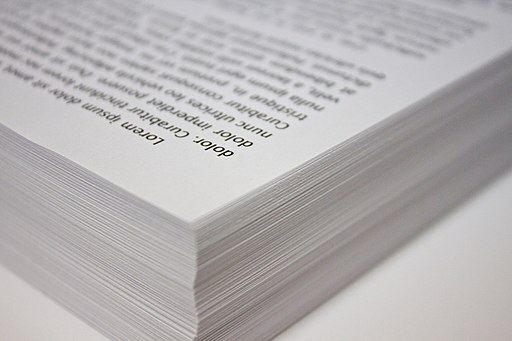
Image: “Stack of Copy Paper” by Jonathan Joseph Bondhus; licensed under CC BY-SA 3.0.

So, you’re writing your book. You feel pretty good about it. You got your first draft done, you send it to your beta readers, and the feedback starts trickling in. You take in the criticism and start your second draft. And you notice something odd. Many of your changes entail removing words, cutting out extra sentences, and shortening descriptions. Your word count is growing smaller. What gives?

Writing involves a lot of things. One thing I’ve discovered it needs is measurement. I don’t mean whipping out the tape measure to guess how thick your paperback will be. I mean making sure that every word matters. If your sentences go on and on and on then you’re going to bore your audience to tears, if you don’t just outright confuse them. On the other hand, using too few words can lead to your readers scratching their heads if you leave out important information. A writer is like a sculptor. He carves out the unnecessary material and leaves behind exactly what is needed to make the piece complete.

My first draft is the phase that I like to call “vomiting words.” Because that’s what I do. I get all my words out, regardless of whether they are good or not. First drafts are always garbage. There’s no helping that. But too many is better than not enough. There’s always plenty of time to parse things down later.

So, how do you make the most of fewer words? Here is what I’ve learned.

  1. Be simple. Don’t try to write fancy. Purple prose is like nitroglycerin. It blows up in your face at the slightest mistake. Don’t write “his face stretched into a wide, dour grimace.” Just write, “he grimaced.”
  2. Synonyms are your friend. There are single words out there that mean the same as three put together. Why waste space? Rather than “ran very fast,” you can use “sprinted” instead.
  3. Details matter to the plot. Readers expect the descriptions and conversations you include to have significance. So make sure everything you include in your final draft has a point! Don’t waste time on things that are irrelevant.
  4. Last, and certainly not least, don’t underestimate your readers’ intelligence. Unless you’re writing for three-year-old’s (and even then…), don’t treat your readers like idiots. They can fill in blanks for themselves, especially regarding mundane things. You don’t need to explain how someone puts on a shirt, or go into gross detail over the interior of an office building. Chances are, people already know. Let them exercise their imagination a little!

Of course, there are exceptions to these. There are always exceptions. And some stories are going to be longer than others, regardless. The point is not to trim everything out until only barebones, dry description remains. The point is to make your writing readable and coherent. Sometimes, you will have a very long and colorful description of a character or scene. If it’s appropriate for the story’s tone, or describes something that isn’t common knowledge, or the details will become important later on, have at it. But don’t overdo it. The point isn’t writing a lot of words. It’s writing just enough words.

The gods and beings of ancient myth never went away. They just moved on with the times.

My book, A God Walks up to the Bar, is currently available on Amazon.com. Venture into the world of the Greek god Hermes, a world filled with demigods, vampires, nymphs, ogres, magic, and trickery. It’s a tough job, being a god!

Enjoying my blog? Don’t want to miss a single post? Subscribe for updates on when I post and follow my writing career, musings on fiction and storytelling, and reflections about life in general!

Planning Ahead vs. Winging It: A Reflection on Writing Styles

Ever heard the phrase “writing by the seat of your pants?” Some writers have a knack for making up the whole story as they go. They start with no outline and no treatment. They just start writing and end up wherever they may. Improvisation is a special skill and can lead to some truly inspired work when the author goes with his gut and lets the story flow out of his mind. Like a spring bubbling out of the rock, making things up as you go can produce the most unexpected and wonderful stories.

It’s also a skill that not everyone has the good fortune to possess. I, for one, need to know where my story is going before I begin. The outline is the foundation of every story I write. Every scene, every step, every action must be planned out in advance. Like an architect designing a building, I have the blueprints spread out before me so I have an inkling of where my plot will ultimately end up.

Otherwise, I’m adrift at sea and tossed about by a series of random events on a meandering journey with no point or overarching theme. Ok, some stories do work well with random-events plots, but these aren’t the type I’m trying to write. I try to stick to my strengths.

That being said, writing is a truly organic process, and I mean that in more ways than one. Stories come alive on the keyboard (or under the pen if you’re so inclined). Like living creatures, they have urges and inclinations of their own, and a writer develops the intuition to detect those urges and know when to follow them and when to restrain. “Story whisperer” isn’t a term you’re likely to ever hear, but like animal trainers, writers end up gaining a deeper understanding of how their story “thinks” and where it wants to go. Exploring new potentialities can lead to new plot threads that improve the overall end result. Writing is full of pleasant surprises like that.

As someone who loves to plan ahead, I’m not always interested in developing every new thread of a story that is revealed as I write it. But I do find that I tend towards winging it in certain circumstances. Dialogue, especially, lends itself to improvisation, if only because no matter how much I develop a story’s framework, the dialogue between characters never really falls into place until I sit down and write it in detail.

This is the fun of writing: Watching your characters come alive and gaining a deeper knowledge of how they think and relate to each other. I’ve surprised myself plenty of times with how my own creations grow beyond my expectations.

Action scenes can also end up going in completely unpredicted directions. Writing a fight scene or a chase can deviate from the “script” as it becomes apparent your original plan simply won’t work. So, I adapt and change course. Action scenes are hard enough to write as it is. Learning to wing it when necessary adds a whole new layer of challenge that can, nevertheless, improve your story if it lines up with the logic of the scene and the characters’ natures.

What does this all mean for you as a writer (assuming you are one, of course)? Well, maybe you’re a little freaked out by my talk of stories as living creatures and think I should get some therapy. Or maybe you’re nodding in agreement. How I write is certainly not how others write, and the ideas that friends and teachers tell you may not line up with your own. Everyone has a different style: Some love to go in without a clue and find out where they end up, others definitely need a solid framework before they can begin the first sentence.

Writing styles are unique to the writer. Everyone has their own process. Whether winging it or planning ahead, all writers find their sweet spot and use it to create something awesome.

The gods and beings of ancient myth never went away. They just moved on with the times.

My book, A God Walks up to the Bar, is currently available on Amazon.com. Venture into the world of the Greek god Hermes, a world filled with demigods, vampires, nymphs, ogres, magic, and trickery. It’s a tough job, being a god!

Enjoying my blog? Don’t want to miss a single post? Subscribe for updates on when I post and follow my writing career, musings on fiction and storytelling, and reflections about life in general!

Why Writers Should Make Their Character Suffer

It is my duty as an author to make my characters suffer. I must put them through the wringer, submit them to the lash, and force them to endure severe physical and psychological torment. Nothing must come easy to them. My characters must endure doubts, confrontations, and existential crises. They must be tested to their utmost, then pushed even further.

Why? Because authors are sadistic monsters Because the testing of a character forces them to grow, and the pleasure of reading a story is to see its heroes overcome the challenges they face. The greater the challenge and the greater the suffering they endure in conquering that challenge, the greater the catharsis of victory for both hero and reader. And there’s also no small amount of pleasure in giving my characters that final victory. I personally like happy endings.

Suffering can bring out the best and worst in people, whether they be real or they be fictional. It’s an interesting experiment to put a written character to the test and see how they react. What happens if I put the protagonist into THIS terrible situation? Or make them confront THAT unpleasant truth? Struggles let us see what makes people tick. Test your mettle and see how strong you are … and grow stronger.

All that being said, it boils down to this: a story is only as interesting as its characters and the situations they find themselves in. If the characters are flawed and have to work through their problems, then great! The readers share in their triumphs and failures, empathize with their foibles, and root for their success. Characters who never struggle and always succeed perfectly in everything they do can have a place in a story, but you might want to think twice about making them the protagonist. In a word: Boring. Invincibility is fine against bullets and blades, but even Superman is weak against kryptonite.

Authors should toss their characters into the furnace every now and again. Let them work for what they want. It’s what readers are paying for after all, and we got to fill those pages somehow.

The gods and beings of ancient myth never went away. They just moved on with the times.

My book, A God Walks up to the Bar, is currently available on Amazon.com. Venture into the world of the Greek god Hermes, a world filled with demigods, vampires, nymphs, ogres, magic, and trickery. It’s a tough job, being a god!

Enjoying my blog? Don’t want to miss a single post? Subscribe for updates on when I post and follow my writing career, musings on fiction and storytelling, and reflections about life in general!

Lessons I Learned Writing My First Book, Part 4: Patience

Waiting, waiting, waiting. All things come to those who wait, or so they say. It’s a bit glib, isn’t it? Besides, waiting is only half the game.

Patience isn’t just about waiting. It’s about focus. It’s about working without complaint. It’s about denying yourself instant gratification in favor of long-term benefits. It’s about enduring the terrible uncertainty of whether your hard work will pay off.

It’s not … fun, per se. It’s useful. And, in the words of knowing parents everywhere, patience “builds character.”

As you may have already gathered from my previous ramblings, writing isn’t a fast process. Therefore, it takes patience. And I learned to be so while writing and publishing my book. But you know what? The writing part wasn’t where patience came into play for me. I LIKE writing, so it never felt dull or slow.

The real test was submitting my work for beta reading and editing. Not because the people I worked with took an unduly long time to respond, mind you. I’ve had the pleasure of working with great people. But it tested ME. Waiting for critiques, I could only think, “What will others think of my book? Is it good enough? Is it bad?” And I couldn’t get instant feedback and sate my desires to know. I had to sit back and wait.

There’s fear in the waiting, sometimes. Patience requires a modicum of courage. The horrible question, “What if?” pervades our minds when we think about what COULD happen. And the longer we wait for something, anything, the more “What if?” needles our minds. What if my book is bad and nobody likes it? What if I don’t get to my child’s rehearsal in time because of this red light? What if I can’t get off work in time because of this one slow customer? And so on and so on.

So, I was tested. I had to wait in inaction for a little while. I didn’t like it, but watcha gonna do? And there is a certain cathartic relief when your patience pays off and the wait is over. Delayed gratification and all that.

Discipline, perseverance, and patience. These qualities are like muscles. They must be exercised on a regular basis to grow strong. My last lesson, however, is the hardest because it is something we can’t directly govern. Life is happy to teach it, and we either learn … or we don’t. I’ll discuss it in more detail in my next post.

The gods and beings of ancient myth never went away. They just moved on with the times.

My book, A God Walks up to the Bar, is currently available on Amazon.com. Venture into the world of the Greek god Hermes, a world filled with demigods, vampires, nymphs, ogres, magic, and trickery. It’s a tough job, being a god!

Enjoying my blog? Don’t want to miss a single post? Subscribe for updates on when I post and follow my writing career, musings on fiction and storytelling, and reflections about life in general!

Lessons I Learned Writing My First Book, Part 2: Discipline

You’re running at a steady pace. You’ve been running for the past thirty minutes. Sweat streams down your back and drips from your brow onto your nose and neck. The marathon is halfway done. Only halfway. Your thoughts stray. You think of a cold glass of water. You think of resting – just for a moment – and catching your breath. Or maybe longer than a moment. You ran half a marathon. That’s good enough.

But you don’t stop. You keep running. You stumble and nearly trip. You regain your balance. You find your rhythm again and keep running. You feel out of breath. Now, the temptation to stop feels more like a necessity. Can’t finish the marathon if you can’t breathe. You feel like you’ll faint from exhaustion.

You remember your breathing exercises. You’ve trained for this. And you find your second wind. A burst of new energy propels you forward. You keep running. At last, you reach the end.

Marathons are a discipline. They take training, practice, and the determination to finish what you started. Writing is the same way. Crafting a book isn’t a quick sprint. It’s not a pole vault or long jump where you throw all of your strength into a few seconds of exertion. Writers must pace themselves and must be willing to get up every day, sit down at their computer, avoid the temptation to get hooked on Youtube or Facebook, and write their word count for the day.

For all that we exalt discipline and admire it in people, it’s not exactly the most well-practiced quality. We like people who accomplish great things: maybe build a skyscraper, or paint a masterpiece, or simply make a million bucks. We look at those people and we think how much patience and hard work must have gone into their achievements. We see the results of discipline, and think we should give it a go, but so many of us just can’t push ourselves. Why? Because discipline sucks.

It’s a slow-burning candle. It isn’t fancy and it isn’t glamorous. The results of discipline are glamorous. That fancy skyscraper, that painting, those million dollars. Wowee! I want that! But putting in the work is a pain.

Writing isn’t exactly a glamorous, exciting process either. Silently typing away at a computer doesn’t make for a great show. It’s not something you show off to others. “Look, Bob, watch me write my story! Isn’t it so cool?” Yeah, nobody’s going to care about the process. They want to see the end product.

Do you want to write? I mean really write, as a lifelong hobby or career? Do you envision yourself as a published author? That vision is the end result of discipline. You must train yourself to write on a schedule that works for you. Every day, every couple days, whatever you find works best. And then you must train yourself to be consistent about it. It’s not always pleasant, especially starting out, but it does get easier over time.

I have a day job. I had to find the time to write. Frequently, coming home from work, I didn’t want to. But I did it anyway. And the end result is, I wrote a book! I published it! I accomplished what I set out to do!

I don’t meant to scare away any of you potential writers out there. But writing can feel like a chore at times. Even so, when we set our minds to doing the things we love, we’ll make the time and effort to do them. But it does take dedication. Dreams are all well and good, but they’re nothing without action, and discipline demands action. Even a dream job has its drudgery, right?

And it’s sweeter in the end, to run toward your goal and finally reach it after a long, tiring run.

The gods and beings of ancient myth never went away. They just moved on with the times.

My book, A God Walks up to the Bar, is currently available on Amazon.com. Venture into the world of the Greek god Hermes, a world filled with demigods, vampires, nymphs, ogres, magic, and trickery. It’s a tough job, being a god!

Enjoying my blog? Don’t want to miss a single post? Subscribe for updates on when I post and follow my writing career, musings on fiction and storytelling, and reflections about life in general!