Once Upon a Time, I Broke the Law

Have you ever unintentionally broken the law?

Yes. I cut off a police officer’s vehicle while driving. It was an unfortunate incident, one of those galling moments that ambushes and commandeers an otherwise perfectly fine day.

I was driving home from dinner with some friends. So far, so good. It was after dark, and I was driving back from a part of town I hadn’t been to before, so navigation was a touch difficult. And, since I know some of you are already thinking it, no, I wasn’t drunk. I don’t drink. Anyway, I missed a turn and my sense of direction went topsy-turvy. I pulled into a parking lot to get my bearings, realized I was only a mile from home, and, in my eagerness to reach said home, quickly turned left out into the street.

As these things tend to go, that was the same moment a police officer was driving along. I didn’t see her, and I cut her off. I’ll never know how close it actually was because I didn’t spot her car, but I did spot the flashing lights and pulled over.

The officer also thought I might be drunk. I replied in the negative, she wrote out my ticket, and then, since this was the first (and so far only) driving infraction I had received, she very generously informed me that I could go to the county courthouse and pay to have the ticket removed from my record. And because I am not in the habit of desiring bad things to show on my permanent record, I did so ASAP.

What? Were you expecting explosions and gunfire? I broke the law, I never said it was a scene out of John Wick. I cut off a police officer, got a ticket, paid the ticket off. The end. Always remember to pay attention when you’re driving.

***

Many thanks for visiting my blog. I post updates on my writing career, I muse over storytelling and fiction, and I reflect on the curious and wonderful things in life.

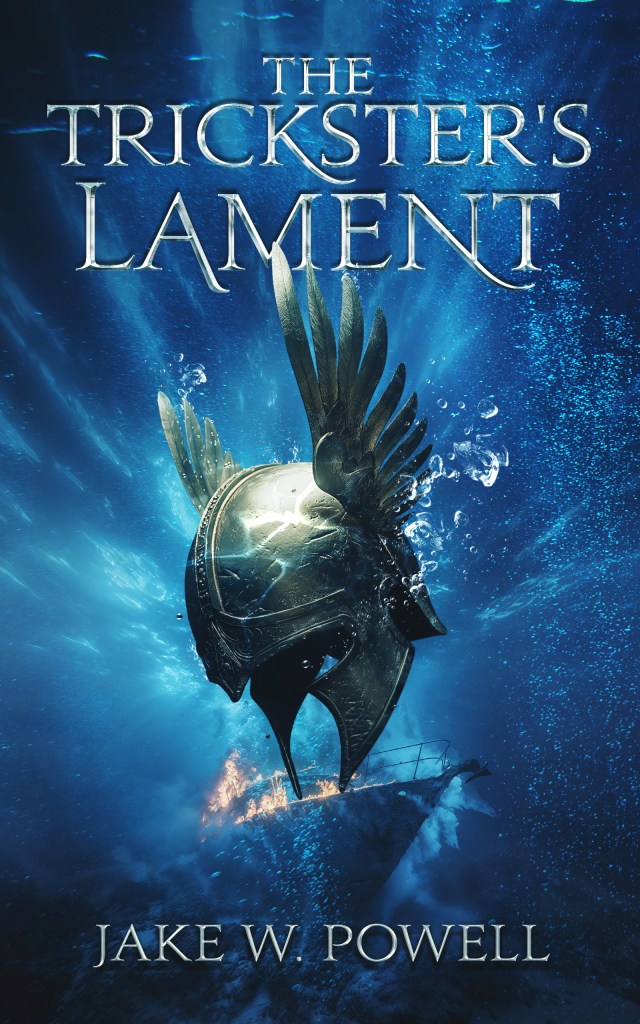
“Hermes is not having the best time. He walks a fine line, and his duty as messenger of Olympus weighs heavily on him. Being a god in the modern age means living in a world that no longer believes in gods. How much can one deity accomplish when no one respects him anymore? And why do his instincts tell him that he, the son of Zeus, is losing favor with his own family?

Tensions abound. The upstart Young Gods play dangerous games using entire cities as their boards. Formless monsters strike from the nighttime shadows, terrorizing hapless mortals. Agents of rival pantheons scheme to thwart Olympus’ designs. In the thick of it all, Hermes does what he does best: trick, lie, and cheat his way to victory.

The Computers of Yesteryear

Write about your first computer.

The first time I ever used a computer was back in the ancient days of dial-up, GeoCities and flip phones. My parents owned a word processor. No, not a computer. A word processor. As in, an electronic box with a blank, black screen on which you could type sentences and do nothing else. No programs, no Internet, no background wallpaper. This was a simpler time.

So, there I was, a kid not even in the double digits who thought he was going to write his first novel. Never got past the second page, of course. Or I was writing backstories for my action figures and posting them on my bedroom corkboard. Either way, those were the days when I first began cutting my teeth as a writer.

My first personal computer, as in the first I actually owned, was a bigtime birthday gift from my parents. I was in sixth grade, I think. It was a ponderous contraption. Computers weren’t flat back then. Like the word processor, it was a large box filled with many arcane electronic secrets. More importantly, it came with a tower, which was the actual device doing all the processing, because these were the days when the average PC couldn’t contain all that delicious data in just one piece. It needed a second box to actually run the data, and mine needed a whole desk cabinet to be kept in.

And then there were floppy discs and compact discs. Old PCs used to have slots into which you slid the CD or floppy in order to access them. Do computers even still have slots anymore? I have no idea. What with streaming and online gaming and the Internet in general, I doubt they’re needed anymore.

Those were the days. I’m not sure what kind of days, exactly, but those were them. Just turning on a computer felt like an amazing feat accomplished. Before digital phones and instant online access, personal computers were lighthouses of knowledge and wonder. Nowadays, computers are rather mundane and even old-fashioned. But I remember.

***

Many thanks for visiting my blog. I post updates on my writing career, I muse over storytelling and fiction, and I reflect on the curious and wonderful things in life.

“Hermes is not having the best time. He walks a fine line, and his duty as messenger of Olympus weighs heavily on him. Being a god in the modern age means living in a world that no longer believes in gods. How much can one deity accomplish when no one respects him anymore? And why do his instincts tell him that he, the son of Zeus, is losing favor with his own family?

Tensions abound. The upstart Young Gods play dangerous games using entire cities as their boards. Formless monsters strike from the nighttime shadows, terrorizing hapless mortals. Agents of rival pantheons scheme to thwart Olympus’ designs. In the thick of it all, Hermes does what he does best: trick, lie, and cheat his way to victory.

My Freeway Billboard

If you had a freeway billboard, what would it say?

“LOOK OUT!”

Gotta keep drivers on their toes, y’ know.

***

If this made you chuckle, consider checking out my other blog posts, which are a tad longer but no less entertaining (probably).

No Jetpacks, No Teleporters, No Space Colonies … Keep Pushing Back the Date, Writers!

You ever notice how writers underestimate the rate of technology’s advance? They never quite get it right.

In the 1950s, writers predicted that families would be getting lost in space in the year 1997 A.D. They didn’t. In the 1960s, some small-time director thought that 2001 would a true odyssey in space. It wasn’t. Manned spaceflight hasn’t even gotten past the moon.

In the 1980s, a certain movie about time travel had the audacity to suggest we’d have hoverboards by 2015. That one still hurts. I want a hoverboard!

But no, we don’t have any. We have electric unmanned cars that come to a dead halt in the middle of intersections if the power grid goes out, but no hoverboards.

But we writers have a simple solution for irritants like reality and historical fact. We ignore them.

Just keep pushing back the date. By 2040 we’ll have colonies on Mars, I’m sure. No? By 2070. No? By 2100. Repeat as needed.

Oh, but don’t go thinking writers are completely lacking in self-awareness. There was an overt change in tactics around the 2000s when space colonies were proving to not be coming any time soon.

Writers started cheating.

In the year -insert random year around two decades from now- mankind discovers alien technology on the moon or Mars or what have you and reverse engineers it. Or a benevolent alien race arrives and welcomes us into the greater galactic community. Huzzah!

The year doesn’t even matter anymore! Marvelous literary freedom unbound by the constraints of science and logic! Be it 2027 or 2227, humanity will eventually discover those long-lost alien ruins that will unlock the secrets of faster-than-light travel, teleportation, artificial gravity and hoverboards.

What? Impossible, you say? Excuse me, but how do you know there isn’t an alien vault on the moon? You have proof?

Besides, writers don’t need proof. We type it down, and it is so. Just like this: In 2036 we will have flying cars. See? That was easy.

Science fiction is easy. All you have to do is keep moving the goalposts. And pretend that you never believed we’d all have hoverboards in the 2010s.

***

Many thanks for visiting my blog. I post updates on my writing career, I muse over storytelling and fiction, and I reflect on the curious and wonderful things in life.

“Hermes is not having the best time. He walks a fine line, and his duty as messenger of Olympus weighs heavily on him. Being a god in the modern age means living in a world that no longer believes in gods. How much can one deity accomplish when no one respects him anymore? And why do his instincts tell him that he, the son of Zeus, is losing favor with his own family?

Tensions abound. The upstart Young Gods play dangerous games using entire cities as their boards. Formless monsters strike from the nighttime shadows, terrorizing hapless mortals. Agents of rival pantheons scheme to thwart Olympus’ designs. In the thick of it all, Hermes does what he does best: trick, lie, and cheat his way to victory.

Foxes in the Neighborhood

Do you ever see wild animals?

Animals have a way of sneaking into civilized areas. It’s hard to visit a place where there aren’t any animals at all, and if you do, it’s probably a place you shouldn’t be visiting if you value your health.

Living in a small town, I see my fair share of wildlife. There are, of course, the usual suspects – squirrels, crows, ravens, and various buzzing insects – but I have very rarely had the privilege of spying a deer warily crossing the street at dusk or dawn.

However, my most notable animal encounters were with the same animal: red foxes. Twice, I’ve seen them. Heck, it could have been the same fox. Both times, the bold beast was out in the open in early morning, fearless as could be, trotting across the plaza without a care in the world. Beautiful creatures, with fine, red-orange coats, and clearly well-fed and healthy. I imagine foxes are a lot like coyotes, making use of the garbage that humans throw out.

They were memorable moments. It’s strange to think of animals like foxes and deer as common in the U.S., and yet not see them very often. Unless you going to work early, like I do, you miss out on opportunities to witness them going about their day. But it’s lovely when you get the chance.

***

Many thanks for visiting my blog. I post updates on my writing career, I muse over storytelling and fiction, and I reflect on the curious and wonderful things in life.

“Hermes is not having the best time. He walks a fine line, and his duty as messenger of Olympus weighs heavily on him. Being a god in the modern age means living in a world that no longer believes in gods. How much can one deity accomplish when no one respects him anymore? And why do his instincts tell him that he, the son of Zeus, is losing favor with his own family?

Tensions abound. The upstart Young Gods play dangerous games using entire cities as their boards. Formless monsters strike from the nighttime shadows, terrorizing hapless mortals. Agents of rival pantheons scheme to thwart Olympus’ designs. In the thick of it all, Hermes does what he does best: trick, lie, and cheat his way to victory.

On the Beach

Do you prefer the mountains or the beach?

The sound of the waves rolling in and out. The distant cry of gulls on the wind. The soft, dry sand under my feet. Yes,  I prefer the beach. It is peaceful and relaxing, and I prefer things that way if I can help it.

Mountains offer better views, to be sure, and hikes and adventurous journeys, and I enjoy those, but at the end of a long day, I’d rather listen to the lull of the sea than the breezes rolling through rocky peaks. And I can go for a swim or turn over rocks to look for crabs or just fall asleep on my beach blanket. It’s bright and sunny. There are no bears around.

Maybe it’s just the awe of the vast ocean spread out in front of me, which is a different kind of awe from a mountain. Or maybe I’m just not as averse to sand as other people. I suppose, in the end, it’s just my preference.

***

Many thanks for visiting my blog. I post updates on my writing career, I muse over storytelling and fiction, and I reflect on the curious and wonderful things in life.

“Hermes is not having the best time. He walks a fine line, and his duty as messenger of Olympus weighs heavily on him. Being a god in the modern age means living in a world that no longer believes in gods. How much can one deity accomplish when no one respects him anymore? And why do his instincts tell him that he, the son of Zeus, is losing favor with his own family?

Tensions abound. The upstart Young Gods play dangerous games using entire cities as their boards. Formless monsters strike from the nighttime shadows, terrorizing hapless mortals. Agents of rival pantheons scheme to thwart Olympus’ designs. In the thick of it all, Hermes does what he does best: trick, lie, and cheat his way to victory.

Talkin’ About Pets

What is good about having a pet.

I like animals. I especially like dogs and cats. I used to be more of a dog person, but exposure to cats has gradually drawn me into the position of “likes both equally.” Pets are loyal, don’t judge, don’t criticize, and if they’re furry, are good for hugs and cuddles. A well-trained pet is a very good friend.

I used to have a pet of my own when I was a kid, a rabbit named Timmy. But that was a long time ago, and as I got older, I realized something.

I liked having a pet, but I like other people’s pets even more.

It’s a bit selfish. I visit friends and see their dogs or cats, and after hanging out, can go home where I don’t have to worry about feeding a pet, cleaning them, taking them in for medical checkups or otherwise dealing with the responsibilities of actually having to raise an animal. It’s kind of like having grandchildren or nieces and nephews. You visit for the day, have fun with them, then leave.

Well-behaved pets are friendly and loveable. I just happen to love them when they’re someone else’s responsibility. Oh, well.

***

Many thanks for visiting my blog. I post updates on my writing career, I muse over storytelling and fiction, and I reflect on the curious and wonderful things in life.

“Hermes is not having the best time. He walks a fine line, and his duty as messenger of Olympus weighs heavily on him. Being a god in the modern age means living in a world that no longer believes in gods. How much can one deity accomplish when no one respects him anymore? And why do his instincts tell him that he, the son of Zeus, is losing favor with his own family?

Tensions abound. The upstart Young Gods play dangerous games using entire cities as their boards. Formless monsters strike from the nighttime shadows, terrorizing hapless mortals. Agents of rival pantheons scheme to thwart Olympus’ designs. In the thick of it all, Hermes does what he does best: trick, lie, and cheat his way to victory.

I Don’t Want to Go to the Moon. There’s Nothing to Do There.

How much would you pay to go to the moon?

Not gonna lie, I don’t want to go to the moon. Which means I would save money, I suppose.

Why go to the moon? Because it’s there? Well, plenty have gone to the moon, and it’s a monumental achievement, make no mistake, but I have no interest in leaving Earth’s atmosphere. There’s still so much to do here, so much to see, so much to explore. Earth is a big place. You might think of it as a tiny speck in the cosmos, but if so, then what a speck! Billions of people, millions of cities, and swathes of forests, plains, mountains, jungles, lakes, oceans, rivers, islands, deserts, glaciers, and tundra.

What’s on the moon? Dust. A lot of dust. Dunes. Craters. A really lovely view of Earth, that’s true enough. But going to the moon simply because it isn’t Earth isn’t the most compelling of reasons. I like Earth. I want to see more of it. There’s more to do here than on the Moon.

What if I did decide to take a moon trip? I would pay an astronomical sum to see some astronomy. I’d take a rocket up to the big grey ball in the sky, fly around it and … What? There’s nothing on the moon! What’s the point of traveling all that way if there’s nothing to do at the end of the trip?

Yeah, I don’t want to go the moon. I couldn’t afford it anyway.

***

Many thanks for visiting my blog. I post updates on my writing career, I muse over storytelling and fiction, and I reflect on the curious and wonderful things in life.

“Hermes is not having the best time. He walks a fine line, and his duty as messenger of Olympus weighs heavily on him. Being a god in the modern age means living in a world that no longer believes in gods. How much can one deity accomplish when no one respects him anymore? And why do his instincts tell him that he, the son of Zeus, is losing favor with his own family?

Tensions abound. The upstart Young Gods play dangerous games using entire cities as their boards. Formless monsters strike from the nighttime shadows, terrorizing hapless mortals. Agents of rival pantheons scheme to thwart Olympus’ designs. In the thick of it all, Hermes does what he does best: trick, lie, and cheat his way to victory.

Would I Dare Ride a Horse?

What’s something you would attempt if you were guaranteed not to fail.

Horse racing. If I was guaranteed not to fail spectacularly, I would try horse racing.

I’m not worried much about losing. I don’t care if I don’t come in first place. But I would love to try it with the absolute certainty that I wouldn’t fall off, get kicked in the face, have my fingers bitten off or otherwise end up twisting my horse in circles as I fumble with the reins.

I’ve ridden a horse exactly once, as a child, on a school field trip. “Riding” is a generous word, as the horse was simply following a predetermined route, and I had no control or input.

But to actually ride a horse, to race against other jockeys, to feel my mount kick into a full gallop, to jump fences and feel the horse’s legs pounding underneath – that would be a joy. But I don’t think I ever will try it. I think I lack the confidence that I would come away unscathed. But if there was actually some sort way to guarantee that I couldn’t fall off or get kicked or bit, if there was a way to make such wishes come true, then I might just try it.

***

Many thanks for visiting my blog. I post updates on my writing career, I muse over storytelling and fiction, and I reflect on the curious and wonderful things in life.

“Hermes is not having the best time. He walks a fine line, and his duty as messenger of Olympus weighs heavily on him. Being a god in the modern age means living in a world that no longer believes in gods. How much can one deity accomplish when no one respects him anymore? And why do his instincts tell him that he, the son of Zeus, is losing favor with his own family?

Tensions abound. The upstart Young Gods play dangerous games using entire cities as their boards. Formless monsters strike from the nighttime shadows, terrorizing hapless mortals. Agents of rival pantheons scheme to thwart Olympus’ designs. In the thick of it all, Hermes does what he does best: trick, lie, and cheat his way to victory.

Out of Place, Out of Whack

Tell about a time when you felt out of place.

When I hear the phrase “out of place,” it makes me think that I have somehow misplaced myself or stumbled into something that is not meant for me. It implies being in the wrong place, not merely an awkward or unfitting one. And without a doubt, if I entered someone else’s home without their permission, I’d be very much out of place and rightfully kicked out.

Feeling out of place, though, is something different. That implies a sense of wrongness regardless of the reality. My position and my feelings on that position are at odds with each other. Things feel out of whack, not matching up, but I could very well still be exactly where I’m supposed to be.

I’ve felt out of place plenty of times, in places where I belong: at an employee staff meeting, hanging out with friends, and sometimes, even when writing my book. Sometimes it’s a brief flash of discomfort, sometimes it’s a persistent nagging in the back of my head.

Truth be told, I generally try to ignore it. We all end up somewhere in life, and if we feel out of place, it may well be because we took a wrong turn, but more often than not it’s because it takes time to settle into a new lifestyle, a new routine, a new step in our lives.

***

Many thanks for visiting my blog. I post updates on my writing career, I muse over storytelling and fiction, and I reflect on the curious and wonderful things in life.

“Hermes is not having the best time. He walks a fine line, and his duty as messenger of Olympus weighs heavily on him. Being a god in the modern age means living in a world that no longer believes in gods. How much can one deity accomplish when no one respects him anymore? And why do his instincts tell him that he, the son of Zeus, is losing favor with his own family?

Tensions abound. The upstart Young Gods play dangerous games using entire cities as their boards. Formless monsters strike from the nighttime shadows, terrorizing hapless mortals. Agents of rival pantheons scheme to thwart Olympus’ designs. In the thick of it all, Hermes does what he does best: trick, lie, and cheat his way to victory.