I must confess to a strange reading habit, one that might shock and horrify you. Do not judge me too harshly, for I shall explain myself.
When I start a fiction book, I like to skip to read the last couple of pages first.
“What?” I hear you cry out. “What is this blasphemy? Why ruin the story for yourself?” Calm yourself, please. Let me clear things up.
It’s true that I’m not sensitive to spoilers. I really don’t mind when plot twists are brought up in casual conversation. But this habit is more than just wanting to know how things end. Really, without context, knowledge of a story’s ending doesn’t have a terribly great impact on me as a reader. I have no grasp of the import of the scenes and dialogue. What I’m really interested in is catching a glimpse of the finished jigsaw puzzle, then going back to the beginning to see how the pieces fit together.
Rather than starting a book with no idea of how things end up, I know exactly how it ends. And so, the fun of the read shifts from the “what?” to the “why?” Why is this the ending? And how will my initial impression of it change as I get more pieces of the bigger picture?
I suppose I’m interested in perceiving the author’s mind. How do they assemble the various elements of the narrative into its final shape at story’s end? How are these characters and events inserted into the story? In short, how did we end up here?
Pieces click into place as I read on, and the ending’s significance becomes clearer. Sometimes, I feel like a detective solving a case in reverse. I already know whodunnit, but the howdunnit isn’t so obvious.
And I do it because I’m quirky and it’s kind of a fun exercise to try out. I neither recommend it nor warn against it. Reading style is a matter of personal preference. It’s up to you.
And there you have it. The true confessions of a skipper.
If you just so happen to be enjoying my blog, feel free to subscribe. I post updates on my writing career, I muse over storytelling and fiction, and I reflect on the curious and wonderful things in life.
The history of humanity is the history of crossing over the next hill.
Where are we without curiosity? Caves and mud huts. One day, someone steps outside with a mind filled with questions. What is over that next hill? What is in that valley? What is beyond that forest? Anther follows, and another. Further afield we walk, driven not by necessity but because we want to know.
Questions follow questions. Can I eat that? Can I grow it? Why does this reed make a sound when I blow through it? Food and music are discovered. Someone finds a sturdy stick. A walking stick, and soon a weapon. Lines are draw on sandy ground, then painted onto rock and hides. Maps are made to chart the wanderer’s path.
We cross the last hill and find a sea. But now is not the time to stop. Wood floats, this is known. A little later, and mankind sails out on boats across the water to find out what lies on the other side. They learn how to make the stars their guide. Navigation becomes more than simple wandering.
Where people grow tired and rest, they find new fruits and vegetables and animals. The nomad becomes the gardener and herdsman. Someone notices those mangy wolves following the camp for scraps. Someone tames them.
People build huts of straw and wood, of stone and brick. Cities appear. Curiosity turns inwards. How to make life better? Clever hands produce answers: the wheel, the hammer, the nail, the net, the plough, the saddle.
Not all stay in cities. Others keep wandering, looking for the next hill and sea and valley. They wander far afield, planting new cultures wherever they stop awhile. Downriver and up mountain and across desert. Because they can. Because they must know what is there.
The whole earth is charted. Mankind does not rest. The ocean deeps call out. The stars wink at humanity, inviting it to pay them a visit. Steam and electricity are harnessed. Fire no longer warms the camp, but lifts man and woman on ships of steel into the airless void to visit the moon. Other ships carry them beneath the ocean into the lightless abyss to glimpse its moody depths.
It is the never-ending journey. Why? Reasons are given, some long and eloquent, others little more than a careless shrug. Because we must know. Because we are curious creatures. Because we can scarce imagine what new mystery awaits us over the next hill.
If you just so happen to be enjoying my blog, feel free to subscribe. I post updates on my writing career, I muse over storytelling and fiction, and I reflect on the curious and wonderful things in life.
New Year’s Day is a day famous for resolutions. The day when people work up the courage to swear to permanent change in their lives. To resolve to start doing this, stop doing that, and make some adjustments to these other things. A time for fresh starts.
Now, let’s be honest with ourselves. How many of you have ever kept a resolution all the way through the entire year? If you have, you have my deep and abiding respect. You are a rare breed.
I don’t believe in New Year’s resolutions. I defy this societal concept. No, I’m not being contrary for contrariness’s sake, I just don’t understand the need for it. Why wait until one day out of 365 (or 366) when you can always decide to change TODAY? That is, if you really want to improve yourself. Maybe it’s just more comfortable to say, as little orphan Annie sings, “There’s always tomorrow.” And tomorrow always seems to be such a long time coming.
That being said, it’s all well and good to come up with new goals on New Year’s Day. It’s tempting to look out across the vastness of the new year, all those blank days ripe with promise, and imagine to oneself how this time you’ll do it differently. You’ll be better this year, just wait and see. You make that silent resolution to yourself. On the same day, of course, when everyone parties hard till midnight and carouses and gets drunk and gets into car accidents. A hangover and a car repair bill. An excellent start to the new year.
Some people take resolutions very seriously. And to those people who can keep them throughout the year, I say more power to you. Like I already said, you are a rare breed. Most people make a few half-hearted mentions of a few things in life they want to be different, then forget all about it in a couple weeks (or a couple drinks).
Which isn’t to say that the idea behind New Year’s resolutions is a bad thing. We should always strive to improve ourselves. But maturity and growth is a gradual process, not something that happens in leaps and spurts. It takes a lot of effort to change something about ourselves. We stubbornly cling to bad habits and thoughts because they’ve stuck with us for so long. A single day of swearing off a habit isn’t going to make much difference. You got to work at it every day. You got to practice. Change is slow.
So, I don’t bother with New Year’s resolutions. Why should I, when I can make that resolution any day of the year? Sometimes, I make the same resolution multiple times in a week or a month, because I stumble. We all stumble, especially after making a big show of the big changes in our lives. Life likes to set us up like that. It’s like setting the cute baby seal free into the ocean with cameras rolling and – oh, there’s the shark waiting to spoil the moment.
I will make resolutions as many days as it takes to improve myself for the better and change my bad habits. No one-and-done deals. One day’s quick and easy promises aren’t enough.
If you just so happen to be enjoying my blog, feel free to subscribe. I post updates on my writing career, I muse over storytelling and fiction, and I reflect on the curious and wonderful things in life.
Winter is approaching fast, and that means snow is on the way where I live. And snow means a clean split between those shivering with excitement and those groaning in despair.
Snow is weird. You want to paint a happy picture of winter fun? Throw in some snowmen and snowballs and snow forts. Want to paint a picture of a barren wasteland? Take OUT the snowmen and snowballs and snow forts.
Snow is great until it isn’t. Making snow angels and trekking through knee-deep drifts is all well and good until the melt seeps into your pants and you can’t feel your toes anymore. Or your fingers. Or your nose and ears. Hey, look! My pinkie just froze and snapped off! Isn’t this FUN?
When I was a kid, I loved snow. Snow meant days off school and winter play and running around trying to come up with new ways to use the stuff. I loved playing in it and rolling huge snowmen. Well, more like snow boulders. We would just roll a bunch of big uber-snowballs and leave them scattered across the field. And I have fond memories of watching snow slipping off the tallest tree branches during the thaw. Snow is fun – when you don’t have responsibilities.
Nowadays, I prefer to stay inside and enjoy it from a safe distance.
You see, kids don’t have to drive in snow. Or walk down to the mailbox in it. They might have to shovel the driveway, but pay them in cash or candy and they’re happy enough. Too bad adults can’t pay themselves for cracking their spines lugging shovelfuls of very heavy frozen water. Growing up is a terrible thing, sometimes.
Ah, yes, snow is water. Which means it melts. And that brings on the SLUSH. Nobody ever mentions SLUSH when discussing winter. It’s a wintry wonderland, happy and clean and pretty! And then it all turns to SLUSH. Dirty, half-melted bogs of detritus covering roads and pooling in every yard and gutter. The aftermath of winter.
There are people who never see snow, for whom the concept is a distant fantasy. These people probably enjoy snow very much because they never have to deal with it. Snow is a pleasant image on TV screens and picture books and never, ever interferes with their lives. They can safely imagine what it would be like to be in the snow without having to actually endure it.
Yeah, you grow up and little fun things become big pains. Alas. But, snow IS pretty, I’ll give it that. And freshly fallen snow is one of the purest, cleanest things you can see in the world. And the morning after a snowfall is so quiet and peaceful and contemplative. Or eerie and spooky if you’re so inclined.
To all the people who live in regions where there is snow most, if not all of, the year, hats off to you. You are tougher and more patient than I am. I would say that snow only belongs in regions uninhabited by all life, but since humanity always seems keen on colonizing the most desolate and inhospitable regions on Earth, I guess that bus has long since passed. At least some people know how to make really pretty art out of it.
Snow is just weird. It’s this twisted dichotomy of life and death. Snow-covered landscapes are either joyful, festive scenes or just pits of death. Maybe a person’s changing attitude toward snow is some sort of reflection of our changing nature from childhood into adulthood.
Or maybe we’re all crazy and should just stay inside where it’s warm.
Enjoying my blog? Don’t want to miss a single post? Subscribe for updates on when I post and follow my writing career, musings on fiction and storytelling, and reflections about life in general!
Escapist entertainment. What thoughts run through your head when you hear that phrase? Positive? Negative? Joy? Disapproval?
Escapism gets a bit of a bad rap. Life is serious business, and there’s a lot of work to be done. People are suffering. Injustice is rampant. And when are you going to pay those bills? Why are you wasting time on fluff?
But is escapism a bad thing?
Imagine yourself going up against the hard knocks of life every day. Life is a jerk. It hits you hard without letting up. And it doesn’t play fair. It pulls your hair, throws sucker punches, and it cheats you out of a rightful win.
Even when life lets up, work and responsibilities can weigh heavily. Imagine a rock on the coast, battered by the waves every hour of every day of every year. The rock stands tall for a time, but every wave takes a little bit of it into the sea. The stone is smoothed and weathered. Eventually, it wears away completely. That is a person who works and works and works, but never takes time for a moment’s respite. Life just … wears you down to nothing.
We need to escape, sometimes.
Some light reading, a silly movie, an action-filled comic book, a walk in the park, a thrilling sports activity. For someone somewhere in the world, they’re all ways to distance oneself from the daily grind and relax. They are ways to refresh the mind and body and forget about our troubles for a few precious moments. We need escapism for the sake of our sanity.
Escapist fiction allows us to suspend disbelief and accept that there can be stories that don’t have to reflect reality. Superman and James Bond and Indiana Jones aren’t high art, but they are fun. And what’s the point of entertainment that isn’t fun? There is art and literature that dwells on philosophical questions and searches for meaning in the tragedies of life, but here’s another nugget to chew on: Real life never goes away. It’s waiting for you right outside the door. There is plenty of time to dwell on the deep questions. But don’t we just want to – need to – take a break from it once in a while?
Ah, but here comes the counterpoint: Escapism is withdrawing from responsibility to society and ourselves. It’s evading the important things in life, the things that we must do to live healthily and productively. But all things in moderation. A life of nothing but escapist fantasy is as bad as a life of nothing but grim obligation to work.
Still, there’s a reason why people like fluff entertainment. There’s a reason why people want to laugh at silliness and cheer on the hero fighting the evil villain. Such stories are simple and inspiring. Why do you think cartoons and comics were thriving during the Great Depression? Or during the more recent Great Recession, for that matter? People need something good in their lives, and for many, that can only be found in stories. And it is a healthy thing, because people need hope. We all need a counterbalance against the mundane and dreary.
The greatest responsibility, then, of the escapist is to remember that there is a time and place for everything. A time to mourn, and a time to laugh. A time to work, and a time to play. But don’t forget to take a moment’s respite. You might need it more than you think.
Enjoying my blog? Don’t want to miss a single post? Subscribe for updates on when I post and follow my writing career, musings on fiction and storytelling, and reflections about life in general!
Is it a compulsion, a need? Do you wake up each day and not know peace until you write a sentence, a paragraph, a chapter? Do you fear that if you don’t then you will burst?
Do you write for fame and fortune? Do you envision filing whole shelves in the bookstore? Do you see websites devoted to you, adoring fans, #1 on the New York Times bestseller list?
Why do you write?
Is it a profession like any other? A way to pay the bills and keep a roof over your head? A means to put food on the table?
Maybe you’re a dilletante. Writing is self-entertainment, a way to vent your creative impulses in your spare time. Nothing worth publishing, just for fun.
Or maybe you write for friends and family. It’s a way to amuse them with your talents, a bonding experience.
Do you write for strangers? Potential followers? Or maybe for no one in particular?
Why do you write?
Do you have a message to send? A vision to share? A statement to make?
Is it about entertainment and laughter? Or maybe you seek to instill fear, or joy, or curiosity, or dread, or thoughtfulness, or …
Or no reason other than because you can.
Why do you write?
Enjoying my blog? Don’t want to miss a single post? Subscribe for updates on when I post and follow my writing career, musings on fiction and storytelling, and reflections about life in general!
“Cuddling up with a good book” is a phrase that invites images of coziness and comfort. It’s like being a rabbit holed up in your burrow, safe and secure. And we do like being comfortable. The same predictable genre or series over and over is a safe choice for when we get the itch to read something. But we are not rabbits. We humans benefit greatly from trying new things. Sometimes, we need to climb out of our burrows and take a close look at the landscape. A new book, a new genre, a new experience.
It’s not easy to do something we’ve never tried before, even with something as seemingly trivial as trying a new book. But it’s not trivial, is it? For some of us (myself included), it can be very daunting indeed. Reading is a time investment. Sinking time into something we might not even enjoy is time forever lost to us. Dare we take the risk?
I say we should. Life is short enough without limiting ourselves to a narrow view of it. Stories grow us and expand our perspective on the world. And who knows? You just might discover something new to love in literature. Trying new things is its own reward, and challenging ourselves to grow is always beneficial.
Rabbits are nervous, wary creatures. But rabbits can’t read and know the joy of encountering a new tale, of being lost in a new world of words. There are so many worlds out there, contained in the pages of a book or imprinted in the code of an eBook, and they’re all there for us to visit whenever we want. Why shouldn’t we try to explore as much as we can?
Alright, I’ll be honest. I’ve read books I didn’t enjoy. I’ve tried things recommended to me that I didn’t get much of a thrill doing. But, as they say, you never know until you try. On the other hand, I discovered some of my favorite franchises thanks to a friend or family member. And sometimes just from idle curiosity.
Whether you’re a writer or not, if you love literature, than never stop exploring its many corners. Leave your burrow and go out and see what there is to see!
Enjoying my blog? Don’t want to miss a single post? Subscribe for updates on when I post and follow my writing career, musings on fiction and storytelling, and reflections about life in general!
Do you like eBooks? I like eBooks. Convenient and affordable. But sometimes I want that tactile sensation of a paperback in my hands and to hear the soft flutter of turning pages. If you like that, too, then I have great news.
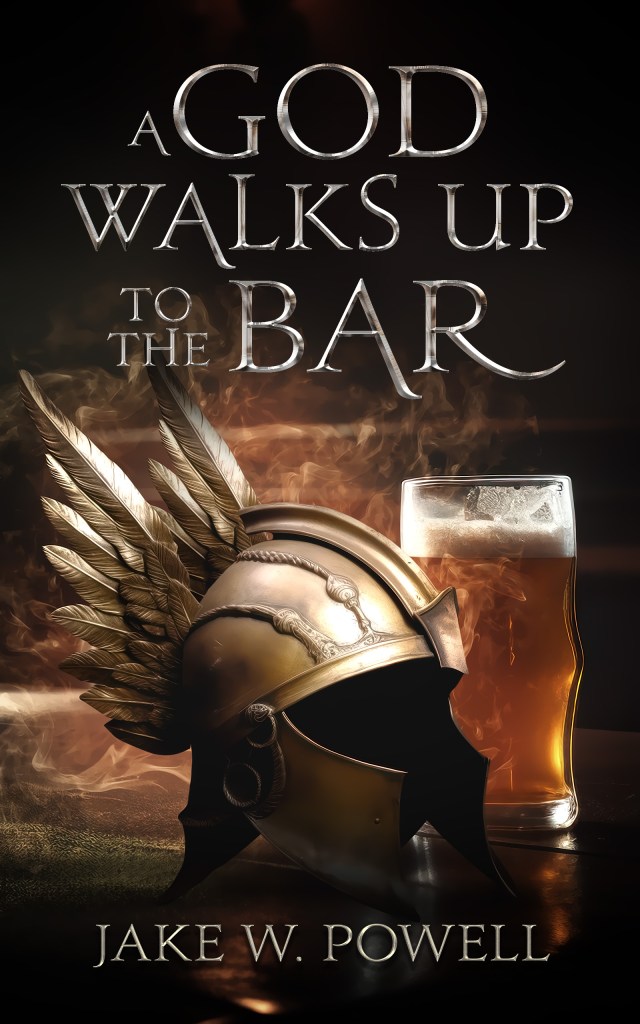
A God Walks Up to the Bar is available in paperback form on Amazon.com! Do you want to add a fun novella to your collection? Do you enjoy fantasy and classical mythology? Thrills? Chills? Humor? Gods beating up monsters? Then hop online and order yourself a copy! Or at the very least, do yourself the favor of admiring the lovely cover art.
And while you’re at it, don’t forget to like and subscribe to this blog. I’m just getting started!
What’s the most important number in the world? Let’s count.
One … two … three?
It’s an odd number to be fixated on. But we are. Look around you. Listen. Read. Everything comes in threes. We love things to be presented in trios.
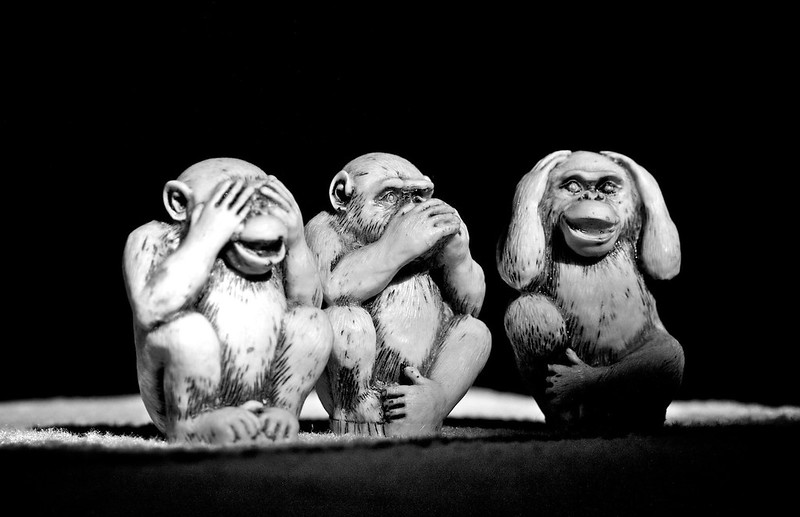
Land, sea, sky. Birth, life, death. Child, adult, elder. Beginning, middle, end. Ready, set, go. Lights, camera, action. I came, I saw, I conquered. See no evil, hear no evil, speak no evil.
It’s a habit of humanity to divvy things up into threes. Maybe because it’s a nice prime number, like 5 or 7. There’s a pleasant sense of completeness in three, a satisfaction that you can’t quite get with two, and going up to four is a step too far. Three is everywhere, and it’s found a home in our collective psyche. Things always feel right when they’re grouped into threes. Stories feel right.
The number three is storytelling’s superstar. Stories rely on patterns, and the number three is the smallest number you can use to set up a pattern and then deviate from it. Take a glance at fairy tales and note how many times the third brother gets the prize, or how many trials the hero must overcome to succeed, or how many times the evil witch tries to stop him. Set up the expectation and then throw in a twist the third time around.
Good stories tend to be efficient with their time and words. Why go through the same pattern four times to set up the fifth’s deviation, when you can cut out two repetitions and get the same result? Maybe early oral storytellers were just lazy and hit on a good tactic to keep listeners engaged without wearing out their throats.
Either way, if you’re going to be a writer, consider the usefulness of the rule of three. Most stories are divided into three acts: The setup, the middle action, and the climax. Want to reinforce that a plot element is important? Mention it three times: Once to introduce it, a second time to remind your audience of its existence, and a third time for the payoff (alternatively, a third time to reinforce it in audience’s minds, and then give them the payoff).
Remember the oath that witnesses make in court? “Tell the truth, the whole truth, and nothing but the truth, so help me, God.” Here we see the principle in action: “Tell the truth” (introducing the concept to speak truthfully), “the whole truth” (reinforce the concept that you will be honest), “and nothing but the truth, so help me, God” (grinding it into your head that you will tell the truth, doggonit!)
As weird as the rule of three is if you think about it too hard, we’ve been raised on it for so long that it’s been hardwired into most societies. We tend to think in terms of threes when writing, when talking with friends, or even when giving a speech. It’s just such a common, reliable, and trustworthy trope. It’s in schools, it’s in media, it’s even in the academic community.
Ha, ha, yes, I’m so very clever. But you get the point. Don’t you? Need me to repeat it again?
In all seriousness, we humans do like patterns, and the rule of three is such a basic pattern that it fits pretty much anywhere. We recognize it, at least on a subconscious level, because we’ve been exposed to it since childhood. I can make that statement with confidence because it’s just. That. Widespread. And yes, I did just use the rule again to prove my point. Really, this whole article could drown in its own metatext.
Being so common, the rule of three is a reliable standby for writers both beginner and veteran. I use. You use it. And – Well, you get the idea.
The gods and beings of ancient myth never went away. They just moved on with the times.
My book, A God Walks up to the Bar, is currently available on Amazon.com. Venture into the world of the Greek god Hermes, a world filled with demigods, vampires, nymphs, ogres, magic, and trickery. It’s a tough job, being a god!
Enjoying my blog? Don’t want to miss a single post? Subscribe for updates on when I post and follow my writing career, musings on fiction and storytelling, and reflections about life in general!
Waiting, waiting, waiting. All things come to those who wait, or so they say. It’s a bit glib, isn’t it? Besides, waiting is only half the game.
Patience isn’t just about waiting. It’s about focus. It’s about working without complaint. It’s about denying yourself instant gratification in favor of long-term benefits. It’s about enduring the terrible uncertainty of whether your hard work will pay off.
It’s not … fun, per se. It’s useful. And, in the words of knowing parents everywhere, patience “builds character.”
As you may have already gathered from my previous ramblings, writing isn’t a fast process. Therefore, it takes patience. And I learned to be so while writing and publishing my book. But you know what? The writing part wasn’t where patience came into play for me. I LIKE writing, so it never felt dull or slow.
The real test was submitting my work for beta reading and editing. Not because the people I worked with took an unduly long time to respond, mind you. I’ve had the pleasure of working with great people. But it tested ME. Waiting for critiques, I could only think, “What will others think of my book? Is it good enough? Is it bad?” And I couldn’t get instant feedback and sate my desires to know. I had to sit back and wait.
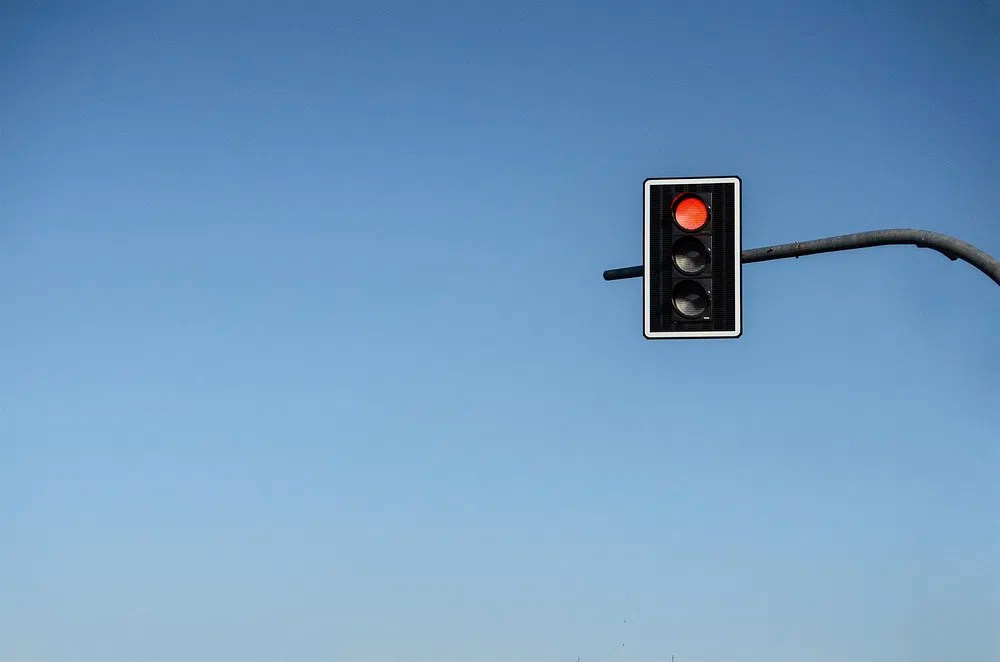
There’s fear in the waiting, sometimes. Patience requires a modicum of courage. The horrible question, “What if?” pervades our minds when we think about what COULD happen. And the longer we wait for something, anything, the more “What if?” needles our minds. What if my book is bad and nobody likes it? What if I don’t get to my child’s rehearsal in time because of this red light? What if I can’t get off work in time because of this one slow customer? And so on and so on.
So, I was tested. I had to wait in inaction for a little while. I didn’t like it, but watcha gonna do? And there is a certain cathartic relief when your patience pays off and the wait is over. Delayed gratification and all that.
Discipline, perseverance, and patience. These qualities are like muscles. They must be exercised on a regular basis to grow strong. My last lesson, however, is the hardest because it is something we can’t directly govern. Life is happy to teach it, and we either learn … or we don’t. I’ll discuss it in more detail in my next post.
The gods and beings of ancient myth never went away. They just moved on with the times.
My book, A God Walks up to the Bar, is currently available on Amazon.com. Venture into the world of the Greek god Hermes, a world filled with demigods, vampires, nymphs, ogres, magic, and trickery. It’s a tough job, being a god!
Enjoying my blog? Don’t want to miss a single post? Subscribe for updates on when I post and follow my writing career, musings on fiction and storytelling, and reflections about life in general!




 Jake W. Powell