Music While I Work

What do you listen to while you work?

I’m no music afficionado or expert. If you ask me what type of music I like best, I’ll probably only manage something banal like “The music that sounds best to me” or “I like what I like.”

I have a pretty broad taste in music, though it usually comes down to music without lyrics while I’m working. Bear in mind “working” for me usually means doing something clever on the computer, so hearing words while trying to think about what to type next can be a little confusing. At any rate, while the types of music I listen to encompasses a range of genres, the origin of the music is usually the same: video games.

Sounds weird, doesn’t it? What do Super Mario Bros. and Pac-Man have to offer the music world? Well, after forty-odd years, it turns out that the music has, uh, evolved. A lot.

There’s a ton of variety, and there’s always something new to listen to. I rarely get bored. I often listen to music when reading, too. It helps my mind process better.

At any rate, it helps me get through the day, and that’s what counts.

Many thanks for visiting my blog. I post updates on my writing career, I muse over storytelling and fiction, and I reflect on the curious and wonderful things in life.
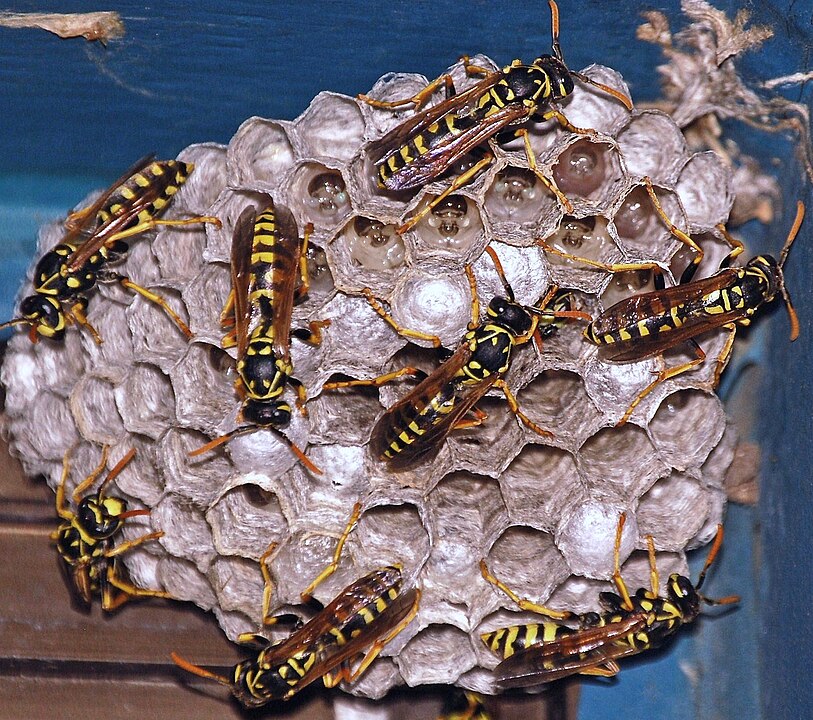
Big Buzzing Bullies

There are bullies under the summer sun. They have no sense of mercy, they inflict harm without cause, and they don’t even have the decency to enjoy it. They buzz around like yellow caution signs of doom. They set up shop exactly where it will worst inconvenience you – butting into your backyard and your homes like they own the place. And if you say anything, they stab you.

I am, of course, talking about wasps. Nature, for all its horrors, is pretty chill all told. Spiders only bother you when you bother them (“It’s not MY fault you walked into the web I set up at eye level”). Tigers and bears and wolves are just hungry, or you got too close to their cubs. Who doesn’t get angry when someone messes with their kids? Sharks are the victims of bad press. Just because someone can’t blink or smile or emote in any way comprehensible to human brains is no reason to discriminate (also, get out of the water). And crocodiles and hippos … okay, they’re pretty bad, but if you keep your distance they’re okay.

Wasps don’t keep their distance. Wasps don’t need a reason. Wasps go out looking for trouble. Those narrow, spindly bodies, those pitch-dark eyes … Just look at the villainous invertebrates!

Look at them! Look at the vile monstrosities!

Not at all like the humble bee. Bees are selfless. Bees are productive. Bees can coexist with mankind. If you rile them up, they’ll sting once and give their lives for the colony. See, even if you’re being swarmed by bees, they’re still quite heroic when you think about it. They give themselves for a greater cause. Not wasps. The only thing a wasp has to give is PAIN.

They don’t produce honey or wax or even jelly. They got nothing (except the aforementioned giving of pain). All animals, no matter how scary, are reasonable enough when you get to know them. Except wasps. They gang up on you because you looked at them funny. They are genocidal, resource-hording invaders. They’re under your feet. They’re in your walls. They want your PB&J sandwich. They’ve claimed your favorite climbing tree and will obliterate you if you get too close. Screw you, wasps.

Wasps are jerks.

Many thanks for visiting my blog. I post updates on my writing career, I muse over storytelling and fiction, and I reflect on the curious and wonderful things in life.

Image courtesy of Wikipedia; License under CC BY-SA 2.5

A Word of Wisdom from Terry Pratchett

Miss Tick sniffed. “You could say this advice is priceless,” she said. “Are you listening?”

“Yes,” said Tiffany.

“Good. Now … if you trust in yourself …”

“Yes?”

“… and believe in your dreams …”

“Yes?”

“… and follow your star …” Miss Tick went on.

“Yes?”

“… you’ll still get beaten by people who spent their time working hard and learning things and weren’t so lazy. Good-bye.”

Courtesy of The Wee Free Men by Sir Terry Pratchett, 2003

It’s true, you know.

It’s Only an Event if It Doesn’t Happen Every Day: My Thoughts on Crossovers

Crossover, crossovers. People from different worlds smashing into each other. Different genres, different styles, different stories. Throw them in a mixer and see what happens.

What’s the appeal? I’d say it comes down to simple curiosity. What would happen if Superman met Captain America? How would Greek myths get on with Chinese myths? Can a pirate really defeat a ninja?

It’s a popular trend these days. Maybe not so much in novel writing, but movies love them, video games really love them, and comics are practically built on them. And they’re fun. But there’s something about these companies’ strategy that is missing the point of a crossover. Every time one occurs (multiple times a year), it’s built up as the MOST INCREDIBLE THING EVER. And people get excited sure. But not like they used to.

Way back in 2008, when Nick Fury stepped out of the shadows at the end of the first Iron Man film to talk about “the Avenger Initiative,” fans squealed with joy and anticipation. Nowadays, the next big Marvel crossover film elicits a non-committal “Eh,” at best.

As a writer, my professional opinion is that crossovers are not easy to pull off anymore, largely because they’ve been done to death.

And that, I think, is the strength and weakness of the concept. Crossovers are big events. They’re something special, something noteworthy. Two completely different worlds colliding is interesting, and fans are curious to see if it can be pulled off. Batman and Elmer Fudd? Yeah, it’s been done, and it won’t be done again because you can’t capture that kind of lightning in a bottle twice. Crossovers are like a fine wine, best in small sips. Overuse just makes you feel overwhelmed. Try imagining a world where the Super Bowl happens every month.

Another example: Back in the 1980s, Mario and Sonic the Hedgehog were the pinnacle of dueling video game mascots. Who was better? Who was cooler? Then, one fateful day, they appeared together in the same game. Awesome! But they’ve done so again and again, and what was something that nobody ever saw coming is now ho-hum, another day in the neighborhood. Video game characters appear in each other’s franchises all the time, now. It’s practically an industry standard.

As it turns out, such “events” are best when served rare. Very rare. Otherwise, they aren’t events. They’re business as usual.

Many thanks for visiting my blog. I post updates on my writing career, I muse over storytelling and fiction, and I reflect on the curious and wonderful things in life.

Remembering Dinotopia

Do you remember your favorite book from your childhood?

In truth, there are so many books I loved as a child that I can’t remember them all. I just remember the hours spent in my room, lost in words and pictures. But there is one that does stick out in my memory.

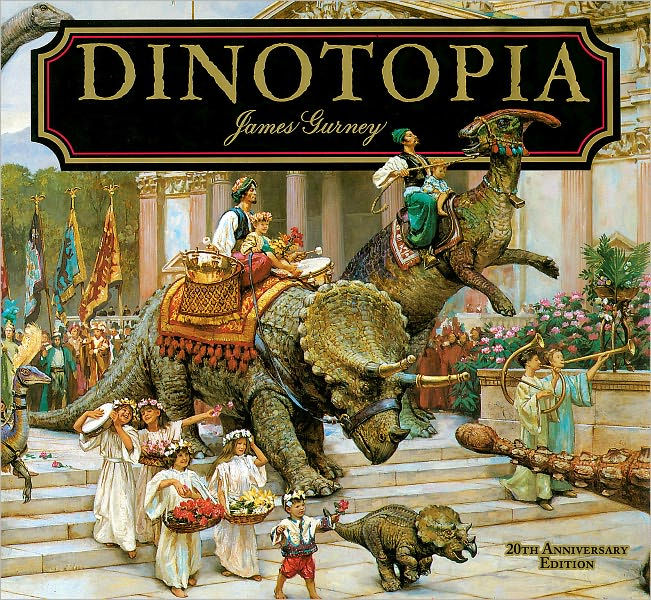
I have very fond memories of an illustrated book called Dinotopia: A Land Apart from Time. It has beautiful imagery, wonderful worldbuilding, and is a tour de force of creating a fully-realized fictional world, courtesy of National Geographic artist James Gurney.

Dinotopia is about an island hidden from the rest of the world where dinosaurs and humans live in peace and harmony. It is presented through the eyes of a 19th-century explorer and his son who are shipwrecked on the island and gradually become a part of its strange, beautiful, and intricate society. Gurney put a lot of thought into how such a world would function, not just the cities and the clothing and the festivals and the government, but such mundane things as bedding, waste disposal, and timekeeping.

And it’s gorgeous.

Remember what it was like to be a kid? When there were no strange grown-up responsibilities and nagging worries? Remember when nobody could take away your joy because you clung to it so fiercely? Dinotopia reminds me of those days, and it reminds me that we are still able to keep that joy throughout our lives.

Most of all, it reminds me how fun it is to curl up with a good book.

Many thanks for visiting my blog. I post updates on my writing career, I muse over storytelling and fiction, and I reflect on the curious and wonderful things in life.

Image: Cover of Dinotopia by James Gurney; Fair use

What is a Masterpiece?

Masterpiece. It’s a word you hear often. So often, I feel that its meaning has been drained out of it. Like “genius” and “magnum opus,” it’s a label we often apply to something that we enjoy on a personal level, regardless of whether it deserves the title.

A little harsh? Probably. There’s nothing wrong with liking something. In fact, I encourage you to like lots of things. Enjoy life. But I like to overthink things and write them down, so why not dig a little deeper?

Masterpiece. It’s actually two words. Master. Piece. A master piece. In ye olden days, guilds and academies required their apprentices and journeymen to submit a masterpiece as part of their application to the status of master. Hence, they presented a piece that marked mastery of their craft, be it carpentry, smithing, jewelry, baking, or what have you. Proof and demonstration that they were worthy of attaining the highest rank, as judged by their superiors.

So, it was something that was measured against quantifiable standards. A masterpiece was actually a lot like today’s college senior capstones: a final paper or project that demonstrates the graduate’s understanding of their degree subject. Or perhaps more appropriately, it is like a doctorate or master’s thesis (and there’s the word “master” again!). That’s not really surprising, considering that guilds, like schools, train people for careers.

But the word’s meaning changed over time, as words are wont to do. Now, a masterpiece has come to hold an even more elevated meaning. It is not simply proof of an individual’s skill, but it is the apex of their skill. Mona Lisa is Leonardo da Vinci’s masterpiece. Not his first work, but widely considered his best. 1984 is George Orwell’s masterpiece, and Star Wars is George Lucas’s.

So what does the word mean nowadays? It means something superlative, something that represents the epitome of the creator’s talent and understanding of the art. It is applied to anything that can be considered great or notable. And in so doing, we have, oddly enough, brought the word down. A masterpiece is declared as such by critics who are not necessarily practitioners of the art. Anyone who favors a particular artist or author and is eager to share that love can declare their favorite work to be a masterpiece, regardless of what merit it actually represents. That happens with all words – their meanings change and are shaped by usage into something quite different, and will again in a hundred years or so – but looking back at a word’s origin can make you look at it a little differently. A little more carefully.

A masterpiece was originally something that proved the apprentice was worthy of the master’s rank as judged by his teachers. It was a stepping stone from a lower tier to a higher one. It was a gateway and a turning point in one’s life. It was something singular and unique. It was the masterpiece of your career. It was something special.

Call me grumpy, but I think we can be more mindful when using words like masterpiece. They are powerful words, and applying them more prudently can in turn make us consider the media we consume more carefully. A bit of critical thinking put into evaluating whether something is truly a master’s piece. And that’s good practice for any artist.

Many thanks for visiting my blog. I post updates on my writing career, I muse over storytelling and fiction, and I reflect on the curious and wonderful things in life.

Weather for Reading, Weather for Writing

Rainy weather is the best for reading, I think. The cold and the wet outside isn’t inviting. There’s no work to be done beyond the front door, not if we can help it. Better to curl up on the couch with a good book and listen to the drumming of raindrops overhead as you sink into a comfortable half-doze. The sound of rain soothes and calms our minds for the act of reading. Relaxation. Rest. Quiet.

But sunny weather is good for writing. The sun invigorates us. A sunny day is a day to do things. Open the window and let the light shine cheerfully into your office. This is a time to accomplish goals. Reach your day’s word count, complete your chapter, finish your poem-in-progress. The sun beckons us to move and do. A bright mood to go with bright light. Energy. Vigor. Action.

Is this true for you, as well? Does the rain calm you into stillness? Does the sun motivate you into action? Or, perhaps, the other way around?

Many thanks for visiting my blog. I post updates on my writing career, I muse over storytelling and fiction, and I reflect on the curious and wonderful things in life.

Image: “Clouds” by CSLmedia Productions; Licensed under CC BY-NC-SA 2.0.

Ode to the Ant

Behold the ant

Small and squishy, or so they say

Feeble and tiny, or so they claim

And yet…

Watch the ant work without ceasing

Watch her climb and build and lift and strive

Alone she is ended by the bottom of a shoe

In her thousands she makes fodder of your toes

Behold the ant

She is small, but she is mighty

She lifts boulders bigger than herself

She builds cities beneath our own

She farms, she wars, she thrives

Don’t mess with the little ant

She’s clearly doing something right

And there’s more of her than you

Many thanks for visiting my blog. I post updates on my writing career, I muse over storytelling and fiction, and I reflect on the curious and wonderful things in life.

The Homegrown Charm of Amateur Theater

When was the last live performance you saw?

Not too long ago, my family and I saw a live radio play version of R.U.R.: Rossum’s Universal Robots at a local amateur theater. I am not an avid theater-goer, but seeing this performance gave me a new appreciation of the art, especially its homegrown incarnation.

Amateur performances are charming, and I mean that in the best way possible. I don’t use the word in the condescending sense of “look at this three-year-old’s watercolors splashed across the paper and table and floor, oh, bless his little heart, doesn’t he try so hard!” I mean charming as in witnessing the genuine passion and effort that non-professional actors put into their art. They do it because they love it and want to be part of the show.

I believe that all art has value. Amateur or professional, it’s all worthwhile if you enjoy it. Was the acting a little sketchy in places? Of course. Were the sound effects questionable? Sometimes. And did it have that coziness that is a distinctly different flavor of fun from the bombastic, big-budget hustle and bustle of professional theater and radio plays? Oh, yes. I went in not expecting very much, and came out thinking that maybe I should go to the theater more often.

Did you like what you just read? Are you a writer, or just looking for fun content? Do you want more, but are worried about missing new posts? Please subscribe! I post updates on my writing career, I muse over storytelling and fiction, and I reflect on the curious and wonderful things in life.

It hasn’t gone anywhere, and it won’t anytime soon! My first book, A God Walks Up to the Bar, is available on Amazon.com. Witness the modern day adventures of the Greek god Hermes in a world much like our own – plus with demigods, vampires, nymphs, ogres, and magic. The myths of old never went away, they just moved on with the times. It’s a tough job, being a god!

Fan Fiction: Not as Bad as It Sounds

It’s the worst insult you can toss at a writer. It’s the deepest cut, the ultimate condemnation.

This reads like bad fan fiction.

Amateurish, incompetent, dubious, self-indulgent, outright moronic – these are the connotations those six words carry. Fan fiction is the respite of those who cannot write, but insist on doing so. Taking what others have already made and twisting it into their personal playground of poorly conceived plots. The refuge of the untalented.

Except it’s not true. Well, mostly.

Stories written by fans about their favorite movies or books or other franchises have garnered a collectively dismal reputation. They’re just a means for disgruntled people to “fix” stories they felt were ruined by the original creators or a way to make up romances between two characters that they happen to like. Now, these types of stories aren’t necessarily poor quality, but they tend to be made purely for the author’s own self-gratification. Consequently, quality isn’t an issue, only that the author gets what they want out of the story without regard for whether others will enjoy it (which beggars the question why it is posted online).

On the other hand, there is fan fiction that is comparable to published works, displaying not only raw talent but an understanding of plot structure, characterization, and reader engagement. Some of them are indeed so-called “fix fics” and romances, but just as many are original ideas, what-if scenarios, unofficial sequels, and other creative content. There’s the bad, the good, and the exceptional.

I wonder how many fan fiction writers could become successful mainstream authors if they so chose.

But what does this matter to you or me? What can aspiring writers who seek to publish, whether independently or through traditional publishers, find of worth in the world of fan fiction?

To put it plainly, writing fan fiction is really good practice for a writer.

I’ve written fan fiction. I wrote fan fiction before I published A God Walks Up to the Bar specifically to cut my teeth on writing for an audience. Fan fiction sites don’t require author names. You can make up any username or web appellation that you want. Anonymity can motivate shy writers, among whom I can be counted. The boldness inspired by a sobriquet can finally push you to take the plunge into getting your work out to the world. Plus, you get your first taste of criticism, good and bad, and develop the thick skin you’ll need and the ability to discern between worthwhile critiques and meaningless heckling.

If you’re a serious writer, fan fiction isn’t an exercise in self-indulgence. You want to tell a good story, and sometimes, building off a preexisting idea can be just the spark you need to flex your storytelling muscles. You can explore freely, experiment with writing styles to see what works for you and what doesn’t, and most importantly, you get to write. Practice, practice, practice. That’s how you improve as a writer.

And just as important, it’s completely free. The barrier of entry is even lower than for an indie publisher. No need for a budget to pay editors, beta readers, and cover artists. No need to maintain an author’s website. No need even for a business license! And the marketing is free, too. Fan fiction, by its nature, is about something already popular and well-known, so your writing can possibly attract more readers than your other, original works. Which is, well, not really fair, I suppose, but let’s try to stay optimistic here. More readers means more criticism means more improvement. Writing fan fiction is a fantastically low-risk method of developing your writing. It’s a great way to discover your own identity as an author without worrying about finances and other aspects of publishing.

All of which is to say, if you’re interested in getting into professional writing and feel you want to practice your skills and test the waters of public reception, fan fiction is a great starting point. And as someone who loves things to come full circle, I’ll just end by saying that someday, you may look back on these early experiments and chuckle … because now people are writing fan fiction about your work.

Did you like what you just read? Are you a writer, or just looking for fun content? Do you want more, but are worried about missing new posts? Please subscribe! I post updates on my writing career, I muse over storytelling and fiction, and I reflect on the curious and wonderful things in life.

It hasn’t gone anywhere, and it won’t anytime soon! My first book, A God Walks Up to the Bar, is available on Amazon.com. Witness the modern day adventures of the Greek god Hermes in a world much like our own – plus with demigods, vampires, nymphs, ogres, and magic. The myths of old never went away, they just moved on with the times. It’s a tough job, being a god!