Taking A Risk

What’s the biggest risk you’d like to take — but haven’t been able to?

I’m not much of a big risk-taker in general, but then again, everyone’s definition of “risk” varies. What’s mundane for you can be nerve-rattling for me, and vice versa.

A friend of mine runs a podcast and has invited me to join it one day. For me, that’s a risk, not because I really stand to lose anything, but because I’m the nervous sort. Podcasts aren’t the same as public speaking, but they are public, and I’m neither the most photogenic nor the most outgoing person. The risk, then, would be the risk of me making a fool of myself across the Internet, or the corner of it that listens to my friend’s podcast, anyway.

There’s a lot of fear, there, but that’s what makes it a risk, right? And maybe someday I’ll muster up the courage to take him up on his offer.

Many thanks for visiting my blog. I post updates on my writing career, I muse over storytelling and fiction, and I reflect on the curious and wonderful things in life.
Persist

Persist. Persistence is needed in life. Get out of bed, go to work, clean the house. Balance your checkbook, cook dinner, take your kids to sports practice. Every day, there is the routine. Keep at it. Always keep at it, even when you’re screaming inside.

Because you know what? Today you feel rotten, tomorrow you feel amazing. Today is hard. Working is hard, writing is hard and even picking up your socks is too much. Tomorrow, the misery clears away and you can take on the world. Persist.

Sometimes, you need to be stubborn. Your job sucks, you want to go home. Endure it. Stubbornly do the work expected of you. It won’t last forever, you know.

Persistence is refusal. Refusal to give up hope, refusal to give in to discouragement. Persistence doesn’t care about feelings or being in the zone. Persistence does, whether it wants to or not. Whether you want to or not.

So persist. Persist in achieving your goals, persist in improving your life, persist in getting through another day.

Many thanks for visiting my blog. I post updates on my writing career, I muse over storytelling and fiction, and I reflect on the curious and wonderful things in life.

The Sound of Inspiration

What would your life be like without music?

A life without music would be dull, that’s easy enough to say. But for me, it would also be a great deal more difficult to write anything noteworthy.

It is my belief that music is the purest expression of emotions and feelings available to humankind, just as written words are the purest expression of structured ideas. How do we describe good music? Moving, exciting, stirring, heartbreaking, uplifting, thrilling, contemplative. Music makes us feel. Words can, too, of course, but where a written story might give us a good shove now and then, music slaps us in the face – in a good way. Take any scene from a movie or stage play and remove the music. What do you have left? A bunch of people yelling and prancing around, usually. But add the music, and your heart beats to a gallop, or sinks in defeat or halts in anticipation. You no longer see something silly, but an experience of deep sincerity.

So what does this have to do with my writing? Simple. I listen to music for inspiration. Lots of people do, and I’m one of them. If you’re a writer and haven’t tried music as a way to come up with new ideas and work through the details of current ones, then I highly recommend it. Music stirs up emotions into a bubbling well, and from that well I draw my inspiration to fuel my projects.

I suppose that music and words go hand in hand. Two different forms of passion that perfectly compliment each other.

Many thanks for visiting my blog. I post updates on my writing career, I muse over storytelling and fiction, and I reflect on the curious and wonderful things in life.

When You’re Fed Up with Life …

Whenever you are fed up with life, start writing: ink is the great cure for all human ills, as I have found out long ago.

C. S. Lewis

One of my favorite writers and thinkers, providing some advice to all writers out there – and anyone else who needs to work through life’s bullying moments.

Many thanks for visiting my blog. I post updates on my writing career, I muse over storytelling and fiction, and I reflect on the curious and wonderful things in life.

A Word of Wisdom Regarding Books and Dogs

Outside of a dog, a book is man’s best friend. Inside of a dog it’s too dark to read.

Groucho Marx (probably)

If you’re a cat person, then sorry, I really don’t know what to tell you.

Many thanks for visiting my blog. I post updates on my writing career, I muse over storytelling and fiction, and I reflect on the curious and wonderful things in life.

A Writer’s Lament

My friends and family know I’m a writer. They know that I’ve published one book and am currently working on a second. That arouses interest, and it invites a question. It’s a question I never feel I can adequately answer:

“How’s your book coming along?”

What do I say? Do I delve into the complexities of plotting and characterization or explain exactly how the story has evolved in the writing of it? Do I describe the process of drafting? Maybe we could have a chat about beta readers or commissioning cover art? Or perhaps I just jump into a lengthy spiel about how writing is so darn fun, the thrill you get when your ideas come together and your vision is realized?

It’s … hard to talk about my work with non-writers, not because of some elitist viewpoint that only writers can understand other writers, but, because I don’t have anything to show for my work until it’s done. That’s the weird thing about writing in the modern era. There’s no physical measure of progress.

I’m no artist or sculptor, whose progress is apparent from glimpsing the picture being painted or the block of stone being carved. I’m not an architect whose building people can watch being built day by day. I don’t even live in the era of the typewriter, when authors ground out their pages and stacked them into a pile. That’s progress you can see. But in this time of computers, all of my work is invisible. It’s in the hard drive, unseen and untouchable, and what isn’t there is in my head.

So, when people ask how my book is progressing, all I can really say, “It’s going good,” or “I’m on track.” Unless they want to be a reader reviewing my work, there’s nothing I can show them. The answer to their simple question – the full, glorious answer of what is going on inside a writer’s colorful mind – takes more than a quick word to fully portray. Microsoft Word documents aren’t glamorous. The writing process itself isn’t glamorous. You don’t see people lining up for tours to see authors at their desks. It isn’t fancy or visibly interesting. All the fun goes on in the writer’s imagination, unseen and unheard. It’s the result that grabs people’s attentions, and only the result.

Cal it a writer’s lament.

How’s my book coming along? Just fine, thank you for asking. But I can’t truly show you until it’s done.

Many thanks for visiting my blog. I post updates on my writing career, I muse over storytelling and fiction, and I reflect on the curious and wonderful things in life.

What Do You Do With Your Time?

When I was a kid, the thing I wanted to be when I grew up was an “everyologist.” I wanted to do everything: science, literature, travel, architecture, painting, history. A five-year-old can easily imagine doing all those things. After all, he has all the time in the world. When a single year is one-fifth your total lifespan, the future stretches out to infinity.

Of course, our lives aren’t infinite, and as we grow up we learn that we don’t have all the time we want. I’m not an “everyologist,” though I do maintain a variety of interests and love to learn new things. I focus on my writing, my job, being with friends, reading, and living quietly. The more I learn I can’t do everything, the more I learn to focus on what I actually find worth doing.

I’d probably be a lousy architect, for one. And I’ve toyed with the visual arts, but it doesn’t hold my attention like writing does. And hey, I can always cheat: the Internet has lots of ways to learn and explore without actually, well, doing anything. It’s something, right?

But the Internet itself takes up our time (yes, I am aware of the irony of that statement on a blog). Too much? Well, that’s up to you. What else do you hope to do today?

All that being said, something else I’ve learned in life is that I have a lot more time than I sometimes suspect. It’s the things I feel I have to do – little things, like finish this book by such-and-such a date, or catch up on that TV series everyone is talking about – that eat away at our “free” time. It’s not really free if we treat our hobbies as a strange set of obligations. A career is one thing, but entertainment quite another. Anyway, the point I’m trying to make is that viewing our lives from new angles reveals that we don’t need much to fill up our time in a satisfying way.

I’m not a master of everything, and I’m okay with that. I have time enough for what I enjoy.

Many thanks for visiting my blog. I post updates on my writing career, I muse over storytelling and fiction, and I reflect on the curious and wonderful things in life.

What is a Masterpiece?

Masterpiece. It’s a word you hear often. So often, I feel that its meaning has been drained out of it. Like “genius” and “magnum opus,” it’s a label we often apply to something that we enjoy on a personal level, regardless of whether it deserves the title.

A little harsh? Probably. There’s nothing wrong with liking something. In fact, I encourage you to like lots of things. Enjoy life. But I like to overthink things and write them down, so why not dig a little deeper?

Masterpiece. It’s actually two words. Master. Piece. A master piece. In ye olden days, guilds and academies required their apprentices and journeymen to submit a masterpiece as part of their application to the status of master. Hence, they presented a piece that marked mastery of their craft, be it carpentry, smithing, jewelry, baking, or what have you. Proof and demonstration that they were worthy of attaining the highest rank, as judged by their superiors.

So, it was something that was measured against quantifiable standards. A masterpiece was actually a lot like today’s college senior capstones: a final paper or project that demonstrates the graduate’s understanding of their degree subject. Or perhaps more appropriately, it is like a doctorate or master’s thesis (and there’s the word “master” again!). That’s not really surprising, considering that guilds, like schools, train people for careers.

But the word’s meaning changed over time, as words are wont to do. Now, a masterpiece has come to hold an even more elevated meaning. It is not simply proof of an individual’s skill, but it is the apex of their skill. Mona Lisa is Leonardo da Vinci’s masterpiece. Not his first work, but widely considered his best. 1984 is George Orwell’s masterpiece, and Star Wars is George Lucas’s.

So what does the word mean nowadays? It means something superlative, something that represents the epitome of the creator’s talent and understanding of the art. It is applied to anything that can be considered great or notable. And in so doing, we have, oddly enough, brought the word down. A masterpiece is declared as such by critics who are not necessarily practitioners of the art. Anyone who favors a particular artist or author and is eager to share that love can declare their favorite work to be a masterpiece, regardless of what merit it actually represents. That happens with all words – their meanings change and are shaped by usage into something quite different, and will again in a hundred years or so – but looking back at a word’s origin can make you look at it a little differently. A little more carefully.

A masterpiece was originally something that proved the apprentice was worthy of the master’s rank as judged by his teachers. It was a stepping stone from a lower tier to a higher one. It was a gateway and a turning point in one’s life. It was something singular and unique. It was the masterpiece of your career. It was something special.

Call me grumpy, but I think we can be more mindful when using words like masterpiece. They are powerful words, and applying them more prudently can in turn make us consider the media we consume more carefully. A bit of critical thinking put into evaluating whether something is truly a master’s piece. And that’s good practice for any artist.

Many thanks for visiting my blog. I post updates on my writing career, I muse over storytelling and fiction, and I reflect on the curious and wonderful things in life.

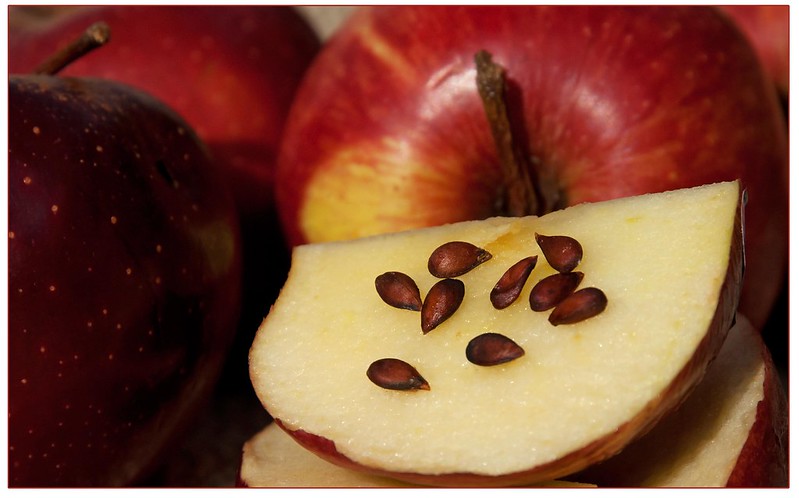
Of Apple Seeds and Dreams

Lately, I’ve been thinking of apple seeds.

Apple seeds are small and insignificant. They’re tiny specks of black that you carve out of an apple and throw away. They’re detritus tossed on the ground. But give it rich soil to take root in …

The apple tree comes from the small and insignificant seed. It is tall and strong. It’s branches are broad and its leaves green. It bears good fruit. Just give it time. Be patient. Nurture it. Graft in healthy branches. Care for it and watch it produce an abundance. Time invested is time rewarded.

So it is with dreams. Nurture your dreams, give them care, treat them patiently. They won’t emerge fully formed in a day. Months and years and decades. These are the lifespans of realized dreams. Work. Wait. Watch. They will grow. They will bear fruit.

Many thanks for visiting my blog. I post updates on my writing career, I muse over storytelling and fiction, and I reflect on the curious and wonderful things in life.

Image: “Apple Seeds” by Leonard J Matthews; Licensed under CC BY-NC-SA 2.0.

Why I Like Dark Stories

I like dark stories. I like stories that are grim and violent and seemingly hopeless. I like stories where the heroes are battered, bruised, beaten, foiled, and know great loss. I like stories filled with injustice and overwhelming evil trying to smother out the good.

I don’t like the darkness for its own sake. It’s true that I enjoy battle scenes and war stories and am not averse to violence. But I don’t enjoy the blood for its own sake, either. And I’m no masochist who watches bitter stories simply to sit alone later on and feel bad about the state of the world.

I like dark stories because the lights in them shine all the brighter. The sun is easily ignored on a sunny day, but it makes itself known when it breaks through the storm clouds. Moments of compassion and hope are all the more meaningful in a story filled with sorrow and cruelty.

We know what good is when it is juxtaposed against evil. We know what heroes are when they stand in the face of the impossible. We know what hope is when it defies despair.

When a writer understands that a dark story can still be uplifting and not merely a means to rage impotently against the wrongs they have known in life, then that story can be something great. We learn that life can be cruel, but we don’t have to be.

Did you like what you just read? Are you a writer, or just looking for fun content? Do you want more, but are worried about missing new posts? Please subscribe! I post updates on my writing career, I muse over storytelling and fiction, and I reflect on the curious and wonderful things in life.

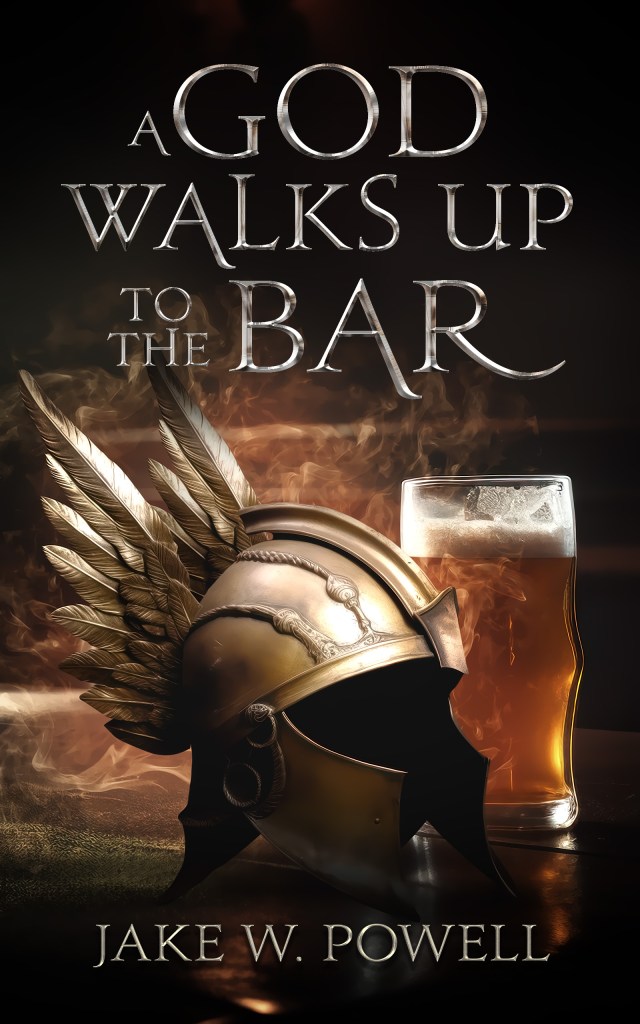
It hasn’t gone anywhere, and it won’t anytime soon! My first book, A God Walks Up to the Bar, is available on Amazon.com. Witness the modern day adventures of the Greek god Hermes in a world much like our own – plus with demigods, vampires, nymphs, ogres, and magic. The myths of old never went away, they just moved on with the times. It’s a tough job, being a god!