Once Upon a Time, I Broke the Law

Have you ever unintentionally broken the law?

Yes. I cut off a police officer’s vehicle while driving. It was an unfortunate incident, one of those galling moments that ambushes and commandeers an otherwise perfectly fine day.

I was driving home from dinner with some friends. So far, so good. It was after dark, and I was driving back from a part of town I hadn’t been to before, so navigation was a touch difficult. And, since I know some of you are already thinking it, no, I wasn’t drunk. I don’t drink. Anyway, I missed a turn and my sense of direction went topsy-turvy. I pulled into a parking lot to get my bearings, realized I was only a mile from home, and, in my eagerness to reach said home, quickly turned left out into the street.

As these things tend to go, that was the same moment a police officer was driving along. I didn’t see her, and I cut her off. I’ll never know how close it actually was because I didn’t spot her car, but I did spot the flashing lights and pulled over.

The officer also thought I might be drunk. I replied in the negative, she wrote out my ticket, and then, since this was the first (and so far only) driving infraction I had received, she very generously informed me that I could go to the county courthouse and pay to have the ticket removed from my record. And because I am not in the habit of desiring bad things to show on my permanent record, I did so ASAP.

What? Were you expecting explosions and gunfire? I broke the law, I never said it was a scene out of John Wick. I cut off a police officer, got a ticket, paid the ticket off. The end. Always remember to pay attention when you’re driving.

***

Many thanks for visiting my blog. I post updates on my writing career, I muse over storytelling and fiction, and I reflect on the curious and wonderful things in life.

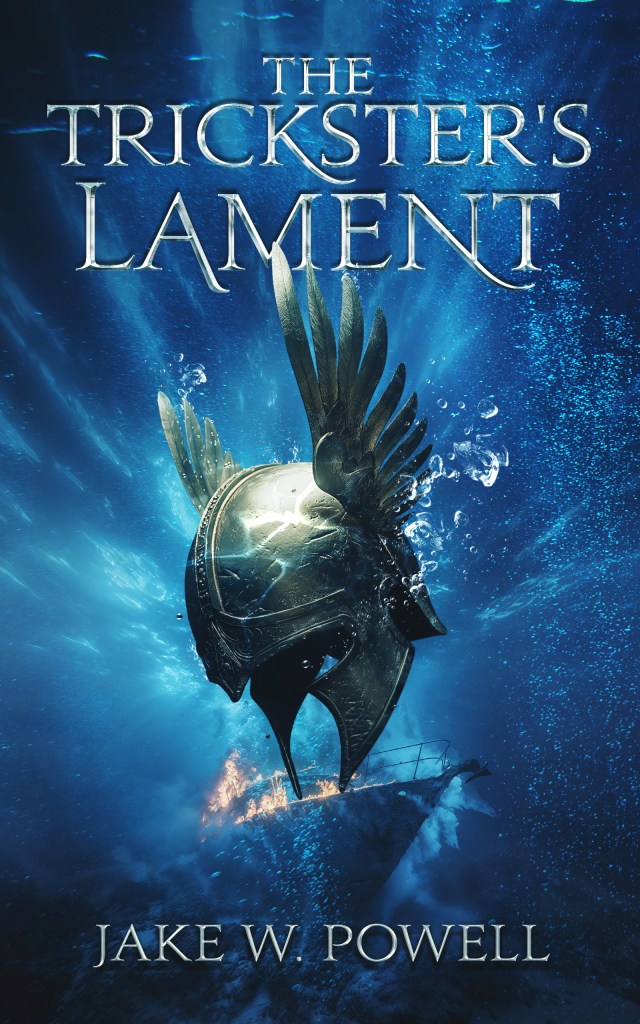
“Hermes is not having the best time. He walks a fine line, and his duty as messenger of Olympus weighs heavily on him. Being a god in the modern age means living in a world that no longer believes in gods. How much can one deity accomplish when no one respects him anymore? And why do his instincts tell him that he, the son of Zeus, is losing favor with his own family?

Tensions abound. The upstart Young Gods play dangerous games using entire cities as their boards. Formless monsters strike from the nighttime shadows, terrorizing hapless mortals. Agents of rival pantheons scheme to thwart Olympus’ designs. In the thick of it all, Hermes does what he does best: trick, lie, and cheat his way to victory.

Tuesday

Poor, poor Tuesday. What is there to say about you? All the other days are praised or cursed, but what does Tuesday get?

Monday is a day despised, the beginning of the long slog, the harbinger of work and drudgery. Everyone hates Monday.

Wednesday is the halfway point, the glimmer of hope, where everything after is all downhill.

Thursday is the Day Before Friday, or Friday Eve, if you prefer, and ends with the resounding declaration, “One more day until the weekend!”

Friday is the end of the slog, the joyous day of freedom when the weekend is at its longest and moods are brightest.

Saturday is the day of fun and relaxation, a day where one can kick back and catch a breath. Everyone loves Saturday.

Sunday is the day of rest, but it carries the double edge of being the Day Before Monday, when fun is mingled with the imminence of the new week.

But what about Tuesday? What does anyone have to say about Tuesday?

It’s not as miserable as Monday, but not as hopeful as Wednesday or Thursday nor as exciting as Friday. And it’s certainly not a Saturday or Sunday. Tuesday simply … is. There is nothing to say about Tuesday. It is a day ignored, a day to be endured, a day to be forgotten. No one cares about Tuesday.

Poor Tuesday.

***

Many thanks for visiting my blog. I post updates on my writing career, I muse over storytelling and fiction, and I reflect on the curious and wonderful things in life.

“Hermes is not having the best time. He walks a fine line, and his duty as messenger of Olympus weighs heavily on him. Being a god in the modern age means living in a world that no longer believes in gods. How much can one deity accomplish when no one respects him anymore? And why do his instincts tell him that he, the son of Zeus, is losing favor with his own family?

Tensions abound. The upstart Young Gods play dangerous games using entire cities as their boards. Formless monsters strike from the nighttime shadows, terrorizing hapless mortals. Agents of rival pantheons scheme to thwart Olympus’ designs. In the thick of it all, Hermes does what he does best: trick, lie, and cheat his way to victory.

The Computers of Yesteryear

Write about your first computer.

The first time I ever used a computer was back in the ancient days of dial-up, GeoCities and flip phones. My parents owned a word processor. No, not a computer. A word processor. As in, an electronic box with a blank, black screen on which you could type sentences and do nothing else. No programs, no Internet, no background wallpaper. This was a simpler time.

So, there I was, a kid not even in the double digits who thought he was going to write his first novel. Never got past the second page, of course. Or I was writing backstories for my action figures and posting them on my bedroom corkboard. Either way, those were the days when I first began cutting my teeth as a writer.

My first personal computer, as in the first I actually owned, was a bigtime birthday gift from my parents. I was in sixth grade, I think. It was a ponderous contraption. Computers weren’t flat back then. Like the word processor, it was a large box filled with many arcane electronic secrets. More importantly, it came with a tower, which was the actual device doing all the processing, because these were the days when the average PC couldn’t contain all that delicious data in just one piece. It needed a second box to actually run the data, and mine needed a whole desk cabinet to be kept in.

And then there were floppy discs and compact discs. Old PCs used to have slots into which you slid the CD or floppy in order to access them. Do computers even still have slots anymore? I have no idea. What with streaming and online gaming and the Internet in general, I doubt they’re needed anymore.

Those were the days. I’m not sure what kind of days, exactly, but those were them. Just turning on a computer felt like an amazing feat accomplished. Before digital phones and instant online access, personal computers were lighthouses of knowledge and wonder. Nowadays, computers are rather mundane and even old-fashioned. But I remember.

***

Many thanks for visiting my blog. I post updates on my writing career, I muse over storytelling and fiction, and I reflect on the curious and wonderful things in life.

“Hermes is not having the best time. He walks a fine line, and his duty as messenger of Olympus weighs heavily on him. Being a god in the modern age means living in a world that no longer believes in gods. How much can one deity accomplish when no one respects him anymore? And why do his instincts tell him that he, the son of Zeus, is losing favor with his own family?

Tensions abound. The upstart Young Gods play dangerous games using entire cities as their boards. Formless monsters strike from the nighttime shadows, terrorizing hapless mortals. Agents of rival pantheons scheme to thwart Olympus’ designs. In the thick of it all, Hermes does what he does best: trick, lie, and cheat his way to victory.

My Freeway Billboard

If you had a freeway billboard, what would it say?

“LOOK OUT!”

Gotta keep drivers on their toes, y’ know.

***

If this made you chuckle, consider checking out my other blog posts, which are a tad longer but no less entertaining (probably).

No Jetpacks, No Teleporters, No Space Colonies … Keep Pushing Back the Date, Writers!

You ever notice how writers underestimate the rate of technology’s advance? They never quite get it right.

In the 1950s, writers predicted that families would be getting lost in space in the year 1997 A.D. They didn’t. In the 1960s, some small-time director thought that 2001 would a true odyssey in space. It wasn’t. Manned spaceflight hasn’t even gotten past the moon.

In the 1980s, a certain movie about time travel had the audacity to suggest we’d have hoverboards by 2015. That one still hurts. I want a hoverboard!

But no, we don’t have any. We have electric unmanned cars that come to a dead halt in the middle of intersections if the power grid goes out, but no hoverboards.

But we writers have a simple solution for irritants like reality and historical fact. We ignore them.

Just keep pushing back the date. By 2040 we’ll have colonies on Mars, I’m sure. No? By 2070. No? By 2100. Repeat as needed.

Oh, but don’t go thinking writers are completely lacking in self-awareness. There was an overt change in tactics around the 2000s when space colonies were proving to not be coming any time soon.

Writers started cheating.

In the year -insert random year around two decades from now- mankind discovers alien technology on the moon or Mars or what have you and reverse engineers it. Or a benevolent alien race arrives and welcomes us into the greater galactic community. Huzzah!

The year doesn’t even matter anymore! Marvelous literary freedom unbound by the constraints of science and logic! Be it 2027 or 2227, humanity will eventually discover those long-lost alien ruins that will unlock the secrets of faster-than-light travel, teleportation, artificial gravity and hoverboards.

What? Impossible, you say? Excuse me, but how do you know there isn’t an alien vault on the moon? You have proof?

Besides, writers don’t need proof. We type it down, and it is so. Just like this: In 2036 we will have flying cars. See? That was easy.

Science fiction is easy. All you have to do is keep moving the goalposts. And pretend that you never believed we’d all have hoverboards in the 2010s.

***

Many thanks for visiting my blog. I post updates on my writing career, I muse over storytelling and fiction, and I reflect on the curious and wonderful things in life.

“Hermes is not having the best time. He walks a fine line, and his duty as messenger of Olympus weighs heavily on him. Being a god in the modern age means living in a world that no longer believes in gods. How much can one deity accomplish when no one respects him anymore? And why do his instincts tell him that he, the son of Zeus, is losing favor with his own family?

Tensions abound. The upstart Young Gods play dangerous games using entire cities as their boards. Formless monsters strike from the nighttime shadows, terrorizing hapless mortals. Agents of rival pantheons scheme to thwart Olympus’ designs. In the thick of it all, Hermes does what he does best: trick, lie, and cheat his way to victory.

Would I Dare Ride a Horse?

What’s something you would attempt if you were guaranteed not to fail.

Horse racing. If I was guaranteed not to fail spectacularly, I would try horse racing.

I’m not worried much about losing. I don’t care if I don’t come in first place. But I would love to try it with the absolute certainty that I wouldn’t fall off, get kicked in the face, have my fingers bitten off or otherwise end up twisting my horse in circles as I fumble with the reins.

I’ve ridden a horse exactly once, as a child, on a school field trip. “Riding” is a generous word, as the horse was simply following a predetermined route, and I had no control or input.

But to actually ride a horse, to race against other jockeys, to feel my mount kick into a full gallop, to jump fences and feel the horse’s legs pounding underneath – that would be a joy. But I don’t think I ever will try it. I think I lack the confidence that I would come away unscathed. But if there was actually some sort way to guarantee that I couldn’t fall off or get kicked or bit, if there was a way to make such wishes come true, then I might just try it.

***

Many thanks for visiting my blog. I post updates on my writing career, I muse over storytelling and fiction, and I reflect on the curious and wonderful things in life.

“Hermes is not having the best time. He walks a fine line, and his duty as messenger of Olympus weighs heavily on him. Being a god in the modern age means living in a world that no longer believes in gods. How much can one deity accomplish when no one respects him anymore? And why do his instincts tell him that he, the son of Zeus, is losing favor with his own family?

Tensions abound. The upstart Young Gods play dangerous games using entire cities as their boards. Formless monsters strike from the nighttime shadows, terrorizing hapless mortals. Agents of rival pantheons scheme to thwart Olympus’ designs. In the thick of it all, Hermes does what he does best: trick, lie, and cheat his way to victory.

Where Are My Glasses?

What is the most important thing to carry with you all the time?

What do I carry with me? That question can be a profound one. What abstract qualities do I carry that sustain me through the day? What precious items do I keep with me at all times that show what I truly value?

Well, it could be a profound question. Or it could be remarkably mundane and ordinary. Let’s go in that direction. There’s time for profundity later.

I always carry my glasses. Why? Because I need them. I can’t see well without them. I’d say that’s pretty important, wouldn’t you? My glasses are a part of me, whether I like it or not, and so they are either on my face or close at hand all the time.

It’s not emotional. It’s not soul-stirring. It’s not philosophical. But it’s real. If I didn’t have my glasses, I’d be straining to read these words as I’m writing them. If I couldn’t find them, I’d be tearing apart my room looking for them, crying fruitlessly, “Where are my glasses?”

***

Many thanks for visiting my blog. I post updates on my writing career, I muse over storytelling and fiction, and I reflect on the curious and wonderful things in life.

“Hermes is not having the best time. He walks a fine line, and his duty as messenger of Olympus weighs heavily on him. Being a god in the modern age means living in a world that no longer believes in gods. How much can one deity accomplish when no one respects him anymore? And why do his instincts tell him that he, the son of Zeus, is losing favor with his own family?

Tensions abound. The upstart Young Gods play dangerous games using entire cities as their boards. Formless monsters strike from the nighttime shadows, terrorizing hapless mortals. Agents of rival pantheons scheme to thwart Olympus’ designs. In the thick of it all, Hermes does what he does best: trick, lie, and cheat his way to victory.

Charley Horse

Charley Horse is riding again

Up and down, up and down

Fast enough to make my head spin

Riding hard and fast as the stormy wind

He rides in the night silent as a lamb

I don’t hear him coming

Then bam!

He tramples my leg, turns it outside in

I scowl and I seethe and I hang on tight

Charley Horse ain’t slowing down

I hold on fast and try to rein in his might

But Charley Horse is away. He’ll be back again.

***

Many thanks for visiting my blog. I post updates on my writing career, I muse over storytelling and fiction, and I reflect on the curious and wonderful things in life.

“Hermes is not having the best time. He walks a fine line, and his duty as messenger of Olympus weighs heavily on him. Being a god in the modern age means living in a world that no longer believes in gods. How much can one deity accomplish when no one respects him anymore? And why do his instincts tell him that he, the son of Zeus, is losing favor with his own family?

Tensions abound. The upstart Young Gods play dangerous games using entire cities as their boards. Formless monsters strike from the nighttime shadows, terrorizing hapless mortals. Agents of rival pantheons scheme to thwart Olympus’ designs. In the thick of it all, Hermes does what he does best: trick, lie, and cheat his way to victory.

Dealing With a Flooded Bathroom and Interrupted Plans

I start out every week with a plan. I map out the days and what I’ll do on each of them. I have everything laid out in my mind, all stacked up like alphabet blocks in neat rows and columns. And for months and months, everything goes according to the plan.

Oh, sure, there’s a hiccup here and there, but it’s always controllable, negligible, minor enough for me to fall into the illusion that I’m in control.

And then I get home from shopping after work one day and find a strange man at my door. And I ask him who he is, and he tells me that he’s a handyman sent from my apartment’s landlord to investigate a leak dripping into the carport.

And so we both walk in. I smell the water right away. Enough water to cover my bathroom floor an inch deep. And more than enough to flow over the threshold and make a nice, mushy bog of the carpeting beyond.

And my expectations of the afternoon are out the window. Happy Monday, presumptuous sucker.

He sucks up the water with a wet-vac. Then he leaves a dinky fan to dry out the carpet overnight … and all next day, as the case happens to be. I have a fan of my own, and I add its might to the air flow.

And so my plans are disrupted by an adventure I didn’t want. And I didn’t go in to work today, but instead worked from home because I needed to wash and dry the rugs soaked by the flood and expected that the handyman returns during the day to reclaim his fan. Which he didn’t. Because our plans aren’t always someone else’s plans, either.

But at least we all got a blog post out of it, didn’t we?

***

Many thanks for visiting my blog. I post updates on my writing career, I muse over storytelling and fiction, and I reflect on the curious and wonderful things in life.

“Hermes is not having the best time. He walks a fine line, and his duty as messenger of Olympus weighs heavily on him. Being a god in the modern age means living in a world that no longer believes in gods. How much can one deity accomplish when no one respects him anymore? And why do his instincts tell him that he, the son of Zeus, is losing favor with his own family?

Tensions abound. The upstart Young Gods play dangerous games using entire cities as their boards. Formless monsters strike from the nighttime shadows, terrorizing hapless mortals. Agents of rival pantheons scheme to thwart Olympus’ designs. In the thick of it all, Hermes does what he does best: trick, lie, and cheat his way to victory.

Have You Thought About Your Toothbrush Today?

Let us consider the toothbrush.

No one does until one needs a toothbrush. Then one calls out for salvation from cavities and bad breath. The toothbrush is an unsung hero. No one goes through the day anticipating that most exciting and thrilling of activities – oh, yes, isn’t it just! – that is brushing their teeth.

Some things are so ordinary, so utterly normal, that they slip beneath notice. But we must be thankful for the toothbrush. Without it, we would all dwell in a mire of poor hygiene. Only when we don’t have something do we understand how important it is.

Toothbrushes, floss, old slippers, fluffy carpets, dishcloths – mundane, lowly, easily forgotten, yet so, so precious in their own odd ways.

***

Many thanks for visiting my blog. I post updates on my writing career, I muse over storytelling and fiction, and I reflect on the curious and wonderful things in life.

“Hermes is not having the best time. He walks a fine line, and his duty as messenger of Olympus weighs heavily on him. Being a god in the modern age means living in a world that no longer believes in gods. How much can one deity accomplish when no one respects him anymore? And why do his instincts tell him that he, the son of Zeus, is losing favor with his own family?

Tensions abound. The upstart Young Gods play dangerous games using entire cities as their boards. Formless monsters strike from the nighttime shadows, terrorizing hapless mortals. Agents of rival pantheons scheme to thwart Olympus’ designs. In the thick of it all, Hermes does what he does best: trick, lie, and cheat his way to victory.